

Common Neurological Disorders – Neurological disorders affect the brain, and spinal cord, and nerve system of humans. The disorders disrupt body functions through their impact on movement and speech and memory and sensation and coordination.
Some neurological conditions are temporary, and manageable, while others require ongoing treatment, because they progress over time.
The combination of early detection, and medical care together with lifestyle modifications serves as the main method for controlling symptoms, and enhancing quality of life.
Migraine
Migraine is a neurological condition characterized by intense, recurring headaches that may last for hours or even days. It can significantly affect daily activities, and quality of life.
Symptoms
- Throbbing or pulsating headache
- Nausea, and vomiting
- Sensitivity to light, and sound
- Visual disturbances
Causes
- Stress
- Hormonal changes
- Lack of sleep
- Certain trigger foods
Treatment Options
- Pain- relief medications
- Preventive medicines
- Stress management
- Adequate rest, and hydration
Epilepsy
Epilepsy is a chronic neurological disorder marked by recurrent seizures, due to abnormal electrical activity in the brain. It can affect people of all ages.
Symptoms
- Repeated seizures
- Loss of consciousness
- Uncontrolled jerking movements
- Temporary confusion
Causes
- Brain injury
- Genetic factors
- Brain infections
- Stroke
Treatment Options
- Anti- seizure medications
- Surgery
- Vigus nerve stimulation
- Lifestyle adjustments.
Common Neurological Disorders
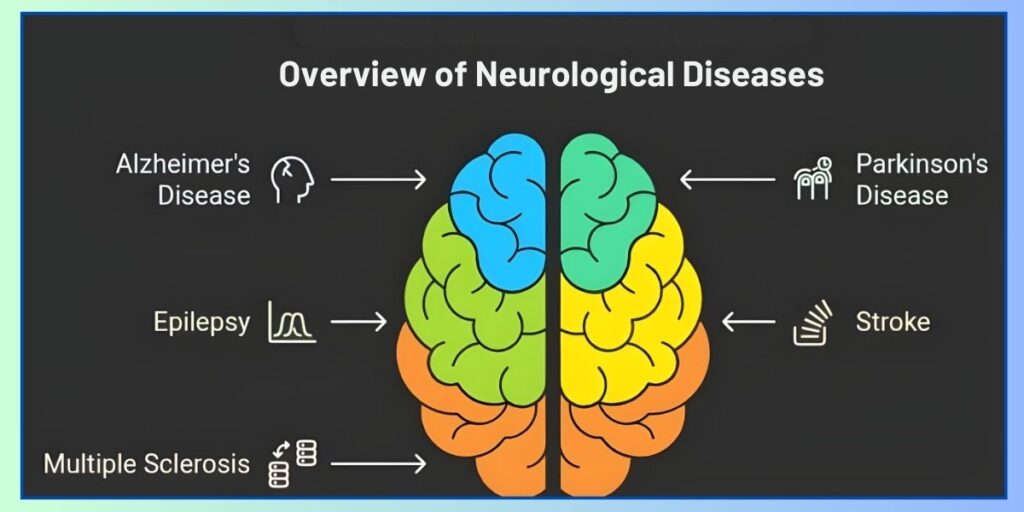
Parkinson’s Disease
Parkinson’s disease is a progressive neurological disorder that mainly affects movement, and coordination. It commonly occurs in older adults.
Symptoms
- Tremors
- Slow movement
- Muscle stiffness
- Balance problems
Causes
- Loss of dopamine-producing brain cells
- Genetic predisposition
- Environmental factors
Treatment Options
- Dopamine replacement therapy
- Physical therapy
- Occupational therapy
- Deep brain stimulation
Alzheimer’s Disease
Alzheimer’s disease is a degenerative brain disorder that gradually destroys memory, and thinking skills. It is the most common cause of dementia in older adults.
Symptoms
- Memory loss
- Confusion
- Difficulty speaking
- Personality changes
Causes
- Brain cell degeneration
- Aging
- Family history
Treatment Options
- Medications to slow progression
- Cognitive therapy
- Supportive care
- Healthy lifestyle practices
Stroke
Common Neurological Disorders – It occurs when blood supply to the brain is interrupted or reduced, leading to brain damage. It is a medical emergency.
Symptoms
- Sudden weakness or numbness
- Face drooping
- Slurred speech
- Severe headache
Causes
- High blood pressure
- Blocked arteries
- Heart disease
- Smoking
Treatment Options
- Emergency clot- dissolving medication
- Surgery
- Rehabilitation therapy
- Lifestyle modifications
General Risk Factors
Many neurological disorders share similar risk factors that increase the likelihood of developing these conditions.
Important Points
- High blood pressure
- Diabetes
- Smoking
- Obesity
- Family history
- Brain injury
Prevention Tips
Maintaining a healthy lifestyle can reduce the risk of neurological disorders
- Eat a balanced diet
- Exercise regularly
- Manage stress
- Get 7–8 hours of sleep
- Avoid alcohol, and smoking
- Regular medical check-ups
FAQs for Neurological disorders
- What are early warning signs of neurological disorders?
Persistent headaches, memory loss, seizures, tremors, weakness, or sudden speech problems may indicate a neurological issue. - Are neurological disorders curable?
Some conditions are manageable with treatment, while others require long-term care but can be controlled. - When should I see a neurologist?
If you experience seizures, sudden weakness, memory decline, or severe unexplained headaches. - Can lifestyle changes prevent neurological diseases?
Yes, healthy diet, exercise, stress control, and avoiding smoking can lower risk. - Is stroke a medical emergency?
Yes, stroke requires immediate medical attention to prevent permanent brain damage.