

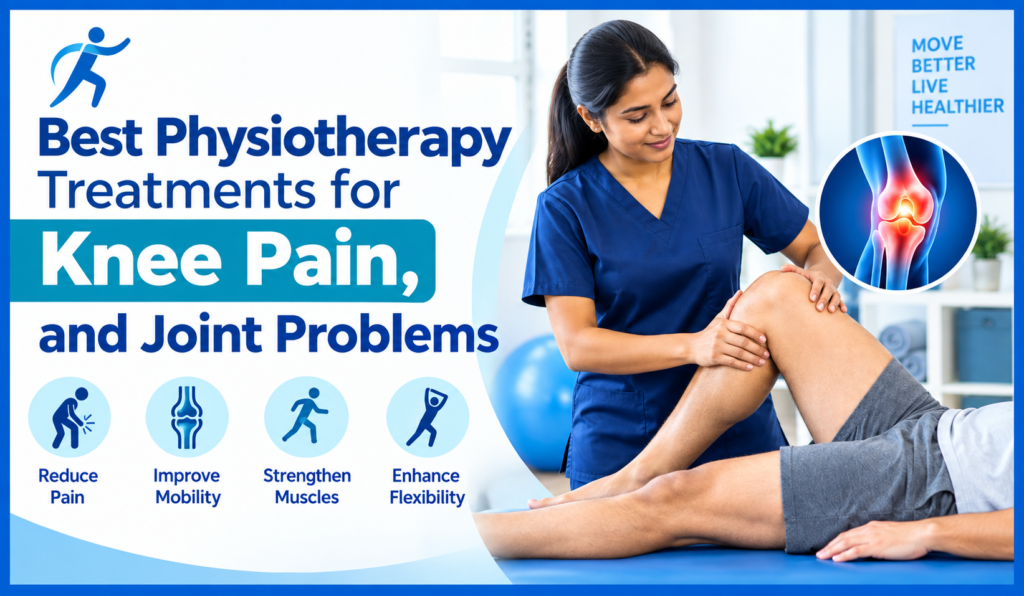
Best Physiotherapy Treatments – Knee pain, and joint problems are common concerns for aged people. They may develop because of injuries, arthritis, overuse, muscle weakness, age-related changes, poor posture, or reduced physical activity.
Once knee pain occurs, it is difficult for a person to have normal activities like walking, claiming stairs, sitting. Physiotherapy is one of the best options to overcome the knee, and joint problems.
This article briefly explained, A physiotherapist prepares a individualized treatment plan based on the patient’s symptoms, movement, muscle strength, flexibility, balance, and functional limitations. The goal is not only to relieve current discomfort but also to improve joint function, and reduce the risk of recurring problems.Read more.
Causes of knee pain, and joint problems
There are several causes of knee pain, and joint problems. The treatment depends on the underlying condition.
These are the causes are included,
- Osteoarthritis, and other forms of arthritis
- Sports-related injuries
- Ligament, and tendon injuries
- Muscle weakness around the knee
- Meniscus injuries
- Knee stiffness after surgery, or injury
- Overuse, and repetitive strain
- Poor posture, or abnormal movement patterns
- Previous fractures, or joint injuries
- Age-related changes in the joints
Because different conditions require different approaches, professional assessment is important before starting exercises, or rehabilitation.
How Physiotherapy helps knee pain
Physiotherapy uses a combination of techniques to improve knee function, and support recovery. The treatment plan may change according to the patient’s age, condition, pain level, activity level, and overall health.
Therapeutic Exercises
Exercise is one of the most important components of physiotherapy for knee pain. Specific exercises can strengthen the muscles that support the knee, and improve joint stability.
Physiotherapist recommend any of the Therapeutic exercises as follows,
- Quadriceps strengthening exercises
- Hamstring exercises
- Leg raises
- Knee bending, and stretching exercises
- Hip, and glute strengthening
- Balance exercises
- Low-impact functional exercises
Regularly performing prescribed exercises can help improve strength, and movement while supporting everyday activities.
Stretching, and Flexibility exercises
Tight muscles can affect movement around the knee, and may contribute to discomfort. Stretching exercises can help improve flexibility in the hamstrings, quadriceps, calves, and hip muscles.
A physiotherapist can demonstrate appropriate stretches, and guide the patient on how often they should be performed. Stretching should be comfortable, and controlled rather than forced.
Manual Therapy
Manual therapy involves few techniques performed by a trained physiotherapist. Depending on the condition, these techniques may be used to improve joint, and soft-tissue mobility.
Therapy helps as follows
- Reduce stiffness
- Improve range of motion
- Support normal movement
- Reduce muscle tightness
- Improve functional mobility
It is generally used alongside an exercise-based rehabilitation program, rather than as the only treatment.
Pain Relief Techniques
Physiotherapists may use different techniques to help manage pain, and improve comfort during rehabilitation. Depending on the patient’s condition, treatment may include therapeutic modalities such as heat, or cold applications, and other clinically appropriate methods. The choice of treatment depends on the cause of the pain, and the patient’s individual needs.
Balance, and stability training
Poor balance, and reduced joint stability can increase the risk of falls, and injuries. Physiotherapy may include balance, and coordination exercises to improve control of the lower limb.
These exercises can be particularly useful for older adults, and people recovering from injury, or surgery.
Gait, and Movement Training
Knee problems can change the way a person walks. An altered walking pattern may place additional stress on other joints, and muscles.
A physiotherapist may assess walking patterns, and teach appropriate movement strategies. Gait training can help patients improve walking efficiency, balance, and confidence.
After Surgery Rehabilitation
Physiotherapy can play an important role after certain knee surgeries. Rehabilitation may begin with gentle movement, and gradually progress to strengthening, and functional exercises.
It may focus on
- Reducing stiffness
- Restoring range of motion
- Improving muscle strength
- Regaining balance
- Improving walking ability
- Returning gradually to daily activities
The exact rehabilitation plan should follow the surgeon’s, and physiotherapist’s recommendations.
Physiotherapy for Arthritis related knee pain
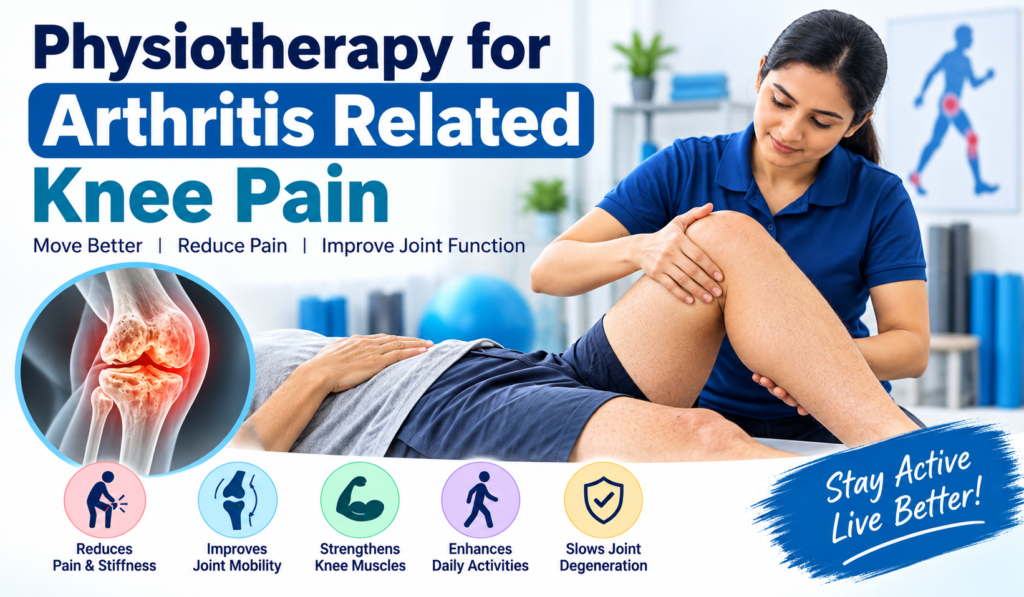
Arthritis can cause pain, stiffness, and reduced mobility. Physiotherapy can help people with arthritis maintain movement, and strengthen the muscles supporting the affected joint.
Treatment may include low-impact exercises, strengthening activities, flexibility work, movement education, and strategies for managing daily activities. A physiotherapist can also help patients understand how to remain physically active while avoiding unnecessary strain on painful joints.
Physiotherapy benefits for Knee Problems
A properly designed physiotherapy program may provide several benefits
- Improved muscle strength
- Better joint flexibility
- Increased range of motion
- Improved balance, and coordination
- Better walking ability
- Reduced movement-related discomfort
- Improved confidence during daily activities
- Better physical function
- Support for recovery after injury, or surgery
Results vary depending on the underlying condition, severity of symptoms, consistency with treatment, and overall health.
When should you see a Physiotherapist?
You may consider consulting a physiotherapist if knee pain, or joint stiffness is affecting your normal activities. Professional evaluation can be particularly useful when symptoms continue, movement becomes difficult, or pain develops after an injury.
Seek prompt medical assessment after significant trauma, especially if you cannot bear weight, the joint appears deformed, there is severe swelling, or the pain is intense.
Tips to support knee health
Along with physiotherapy, healthy daily habits can support joint function, and mobility.
- Follow your prescribed exercise program consistently
- Avoid suddenly increasing active physical activity
- Maintain a healthy body weight
- Choose suitable low-impact activities
- Wear comfortable, and supportive footwear
- Take appropriate breaks during repetitive activities
- Follow medical advice after injuries, or surgery
- Do not ignore persistent, or worsening knee pain
Choosing the right physiotherapy treatment
There is no single physiotherapy treatment, that works for every knee problem. The best approach depends on the cause of the pain, and the patient’s individual condition. A professional assessment helps identify limitations, and develop an appropriate rehabilitation program.
If knee pain is interfering with walking, exercise, work, or daily activities, consulting a qualified physiotherapist can help determine the type of treatment for further proceedings.
FAQs about Best Physiotherapy Treatments
- Can physiotherapy help knee pain?
Yes. Physiotherapy can help manage many causes of knee pain by improving strength, flexibility, mobility, balance, and movement patterns. - How often should I attend physiotherapy?
The frequency depends on your condition, symptoms, treatment goals, and rehabilitation plan. Your physiotherapist can recommend an appropriate schedule. - Can physiotherapy help knee arthritis?
Yes. Exercise-based physiotherapy can help improve muscle strength, mobility, physical function, and management of symptoms associated with arthritis. - Is physiotherapy useful after knee surgery?
Yes. Physiotherapy is commonly used during rehabilitation after certain knee surgeries to restore movement, strength, balance, and functional ability. - When should I see a physiotherapist for knee pain?
Consider professional assessment when knee pain, stiffness, weakness, or reduced movement persists, or interferes with your daily activities.