

Type 1 Diabetes Specialist Near Me – Type 1 Diabetes is a chronic health condition, that affects the body’s ability to regulate blood sugar levels. It occurs, when the immune system mistakenly attacks, and destroys the insulin producing cells in the pancreas. As a result, the body produces little, or no insulin, making regular insulin treatment essential for managing blood glucose levels.
This article briefly explains about the Type 1 Diabetes, and finding a Type 1 Diabetes Specialist Near Me. It is an important step towards receiving proper medical guidance, maintaining healthy blood sugar levels, and preventing long-term complications. People living with Type 1 Diabetes can lead active, and healthy lives with the right treatment, regular monitoring, and healthy lifestyle habits.
People living near south Chennai, may find it easy to locate one of the best hospitals At Jolen Hospital, Sembakkam. This hospital provides various treatments and provides special attention to people with Type 1 Diabetes. Unlike other disease, this disease requires special treatment plan, with guidance from specialists for continuous monitoring, which Jolen Hospital is specialised in it with years of expertise.
What is Type 1 Diabetes?
Insulin is a hormone that helps glucose enter the body’s cells to provide energy. When our autoimmune systems mistakenly attack, and destroys the insulin production from pancreas, which leads to increase in glucose level, resulting in Type 1 Diabetes disease.
Type 1 Diabetes, can develop at any age, although it is commonly diagnosed during childhood, and adolescence. Unlike Type 2 Diabetes, it is not caused by eating too much sugar, or having an unhealthy lifestyle.
Early diagnosis, and appropriate treatment are essential for managing this condition effectively.
Symptoms of Type 1 Diabetes
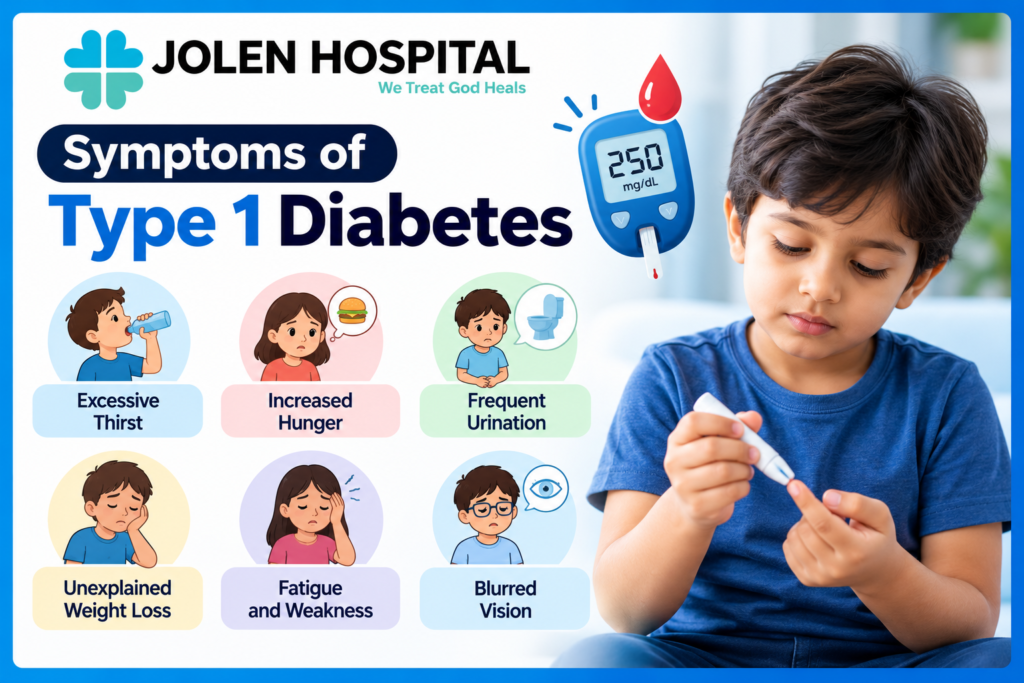
Recognising the early warning signs of Type 1 Diabetes is one of the important steps. This helps the people seek medical attention without delay. Below symptoms should not be ignored, and should be treated by healthcare professional.
Symptoms of this disease are as follows,
- Frequent Urination – Increased blood sugar levels can cause the kidneys to remove excess glucose through urine
- Excessive Thirst – Frequent urination may lead to dehydration, and increased thirst
- Unexplained Weight Loss – The body may start using stored fat, and muscle for energy because glucose cannot enter cells properly resulting in unexplained weight loss
- Increased Hunger – People may feel hungry frequently even after eating meals
- Extreme Tiredness – Insufficient energy reaching the body’s cells can cause weakness, and fatigue
- Blurred Vision – High blood sugar levels can affect the fluid balance in the eyes, and cause temporary vision changes like blurred vision
- Slow Healing – Some people may notice that wounds take longer to heal is one of the symptoms, people should not avoid
Causes, and Risk Factors of Type 1 Diabetes
The exact cause of Type 1 Diabetes is not fully understood. However, it is believed to develop due to a combination of genetic, and environmental factors. Type 1 Diabetes is not only caused by poor eating habits, or lack of physical activity. There are also other risk factors.
Below are the risk factors to be considered,
- Family history of Type 1 Diabetes
- Genetic susceptibility
- Autoimmune reactions affecting pancreatic cells
Why should you consult a Type 1 Diabetes specialist?
Type 1 Diabetes requires continuous medical attention, and proper treatment planning. Only a specialists can help in charter an appropriate plan based on patient’s medical attention.
Factors to be considered for consulting a specialist are a follows
- Accurate Diagnosis – Medical evaluation, and blood tests help identify diabetes, and assess blood glucose levels
- Insulin Management – Patients receive guidance on insulin treatment, dosage adjustments, and administration
- Blood Sugar Monitoring – Regular monitoring helps patients understand glucose fluctuations, and manage their levels
- Dietary Guidance – A balanced meal plan can help patients coordinate food intake with insulin requirements
- Prevention of Complications – Regular check-ups help identify potential health problems at an early stage
- Continuous Medical Support – Ongoing consultations help patients manage changes in their blood sugar levels, and treatment needs
Diagnosis, and Tests for Type 1 Diabetes
Early diagnosis plays an important role in preventing serious complications. Specialist recommend various test based on patient’s health condition and complications.
Following tests are recommended by specialist,
- Fasting Blood Sugar Test – Measures blood glucose after fasting
- Random Blood Sugar Test – Measures blood glucose at any time of the day
- HbA1c Test – Provides an estimate of average blood glucose levels over approximately three months
- Autoantibody Tests – Help identify autoimmune markers associated with Type 1 Diabetes
C-Peptide Test – These tests help assess how much insulin the pancreas is producing
Treatment options for Type 1 Diabetes
Type 1 Diabetes requires lifelong insulin replacement because the pancreas cannot produce sufficient insulin.
Common treatment suggested by specialist approaches include
Insulin Therapy
This therapy involves Insulin injections, or insulin pumps help regulate blood glucose levels. The treatment plan is individualised according to the patient’s age, lifestyle, food intake, and glucose readings.
Regular Blood Sugar and glucose monitoring
Checking blood sugar and glucose levels regularly helps patients understand how food, exercise, illness, and insulin affect glucose levels.
Balanced Diet
A balanced diet containing vegetables, whole grains, proteins, and healthy fats supports overall health. Understanding carbohydrate intake is particularly important for insulin management.
Physical Activity
Regular physical activity supports cardiovascular health, and overall well-being. However, people with Type 1 Diabetes should monitor glucose levels, and follow medical advice before, and after exercise.
Possible complications of Uncontrolled Type 1 Diabetes
If blood sugar levels remain high for extended periods, Type 1 Diabetes may increase the risk of several complications.
It includes,
- Diabetic eye disease
- Kidney damage
- Nerve damage
- Heart, and blood vessel problems
- Foot-related complications
A serious short-term complication is diabetic ketoacidosis, which occurs when the body produces excessive ketones due to insufficient insulin. DKA is a medical emergency, and requires immediate hospital treatment.
Tips for Living Well with Type 1 Diabetes
People with Type 1 Diabetes can maintain a healthy, and active lifestyle by following appropriate medical advice.
Here are some useful tips
- Take insulin exactly as prescribed
- Monitor blood sugar levels regularly
- Follow a balanced, and personalised meal plan
- Stay physically active with proper glucose monitoring
- Carry a fast-acting source of glucose to treat low blood sugar
- Learn to recognise symptoms of hypoglycaemia
Consistency, and proper medical guidance can make diabetes management easier.
Why Choose Jolen Hospital for Diabetes Care in Sembakkam?
Finding the right medical support is important when managing a long-term condition like Type 1 Diabetes.
Jolen Hospital, located in Sembakkam, Chennai, provides healthcare services for patients seeking medical consultation, and support for all diabetes-related concerns.
Patients can seek guidance regarding blood sugar monitoring, diabetes evaluation, treatment planning, and regular follow-up care.
If you are searching online for a Type 1 Diabetes Specialist Near Me, consider consulting a qualified healthcare professional for an appropriate diagnosis, and personalised treatment recommendations.
Hospital Name – Jolen Hospital
Location – Velachery Road, Sembakkam, Chennai – 600073
Phone – 7305855991
Landline – 044 2228 3001
Book your appointment, and take an informed step towards better diabetes management.
FAQs about Type 1 Diabetes
- What are the early symptoms of Type 1 Diabetes?
Frequent urination, excessive thirst, unexplained weight loss, increased hunger, and tiredness are common early symptoms. - Can Type 1 Diabetes be cured permanently?
Currently, there is no established permanent cure. Insulin treatment, and regular monitoring are essential for managing the condition. - Which doctor should I consult for Type 1 Diabetes?
Consult a qualified endocrinologist, or diabetologist experienced in managing Type 1 Diabetes. - Can children develop Type 1 Diabetes?
Yes. Type 1 Diabetes commonly develops during childhood, and adolescence, but it can occur at any age. - How often should Type 1 Diabetes patients check blood sugar?
Monitoring frequency depends on the individual’s treatment plan. The doctor may recommend regular finger-prick testing, or continuous glucose monitoring.