

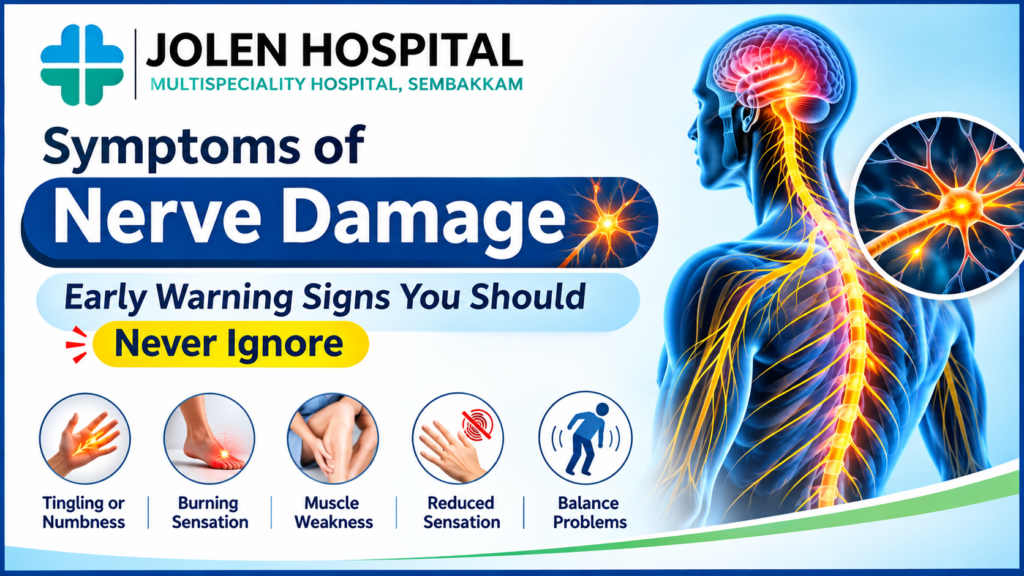
Symptoms of Nerve Damage – Nerves are part of our body which runs into our entire body from head to toe. Nerves help body in passing the blood across the entire body. Nerve damage can affect your movement, sensation, and overall health. The nervous system carries messages between your brain, and body. Therefore, healthy nerves are essential for everyday activities. If any damage occurs in the nerve, blood flow will get affected and results in nerve damages.
Nerve damages may develop gradually, or suddenly. Understanding early symptoms helps you seek medical attention. Below are important warning signs, causes, diagnosis, and treatment options.Read more.
Nerve Damages
Nerve damages occur when nerves become injured, or stop functioning properly. It can affect sensory, motor, and autonomic nerves. Depending on the symptoms, and condition of nerves, symptoms may vary from person to person.
Early symptoms of nerve damages
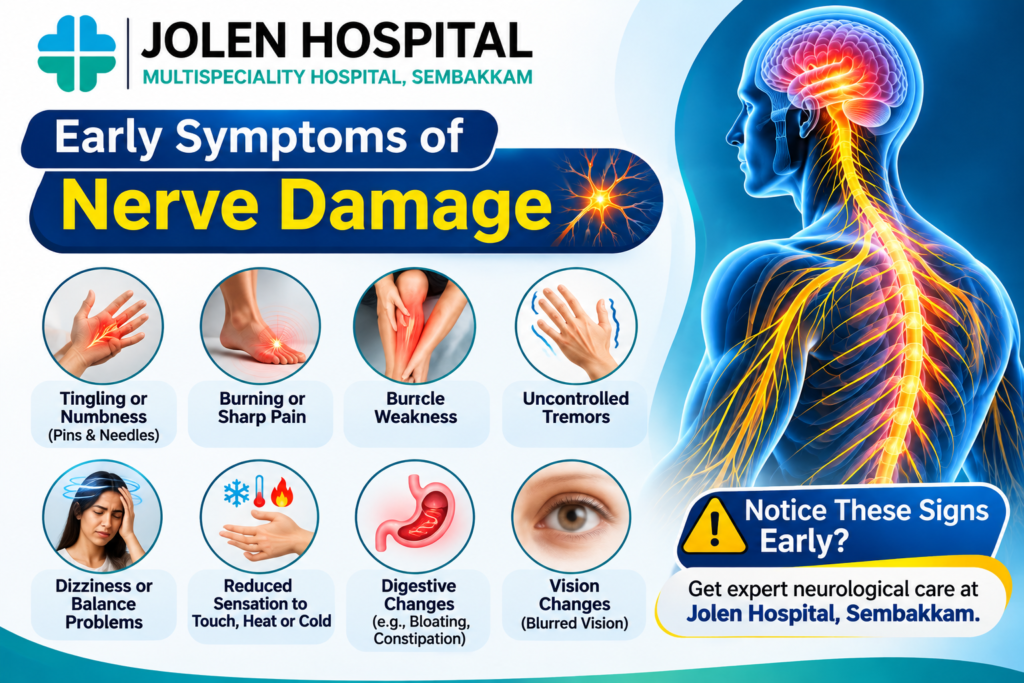
Below are the 10 important early symptoms of nerve damages. These are nothing but warning signs and should not be ignored casually.
- Prickly or Tingling Sensation: A frequent “pins and needles” feeling in your fingers or toes for no clear reason is an early sign of nerve trouble that a doctor should check.
- Numbness: Losing feeling in your hands, feet, arms, or legs can make it dangerously hard to sense pain, heat, or cold.
- Burning Pain: An unexplained burning feeling in your hands or feet that often gets worse at night is a common warning sign of nerve irritation.
- Muscle Weakness: When nerve damage affects your muscles, everyday tasks like climbing stairs or lifting objects can suddenly feel much harder.
- Sharp or Shooting Pain: Sudden, electric shock-like pains that flare up even from a gentle touch need prompt evaluation by a specialist.
- Loss of Balance and Coordination: Damaged nerves can throw off your sense of body position, leading to unsteady walking, frequent stumbling, or unexpected falls.
- Increased Sensitivity to Touch: Your skin can become so overly sensitive that even the light brush of clothing feels painful and disrupts your sleep.
- Muscle Cramps and Twitching: Ongoing involuntary muscle spasms, cramps, or twitching are signals from irritated nerves that require a proper medical checkup.
- Temperature Sensitivity: Struggling to tell if objects are hot or cold puts you at high risk for accidental burns and injuries.
- Changes in Sweating and Digestion: Damage to the nerves controlling automatic body functions can cause unusual sweating, stomach issues, dizziness, or shifts in heart rate and blood pressure.
Causes of Nerve Damages
Several medical conditions, and lifestyle factors can contribute to nerve damage. These are the causes which helps identify potential health risks of nerve damages,
- Diabetes -Uncontrolled blood sugar can damage peripheral nerves over time
- Vitamin B12 Deficiency – Low vitamin levels can affect normal nerve function
- Physical Injuries – Accidents, and pressure can damage nerve tissues
- Infections – Certain infections can affect the nervous system
- Alcohol Misuse – Excessive alcohol consumption can contribute to neuropathy
- Kidney Disease – Advanced kidney problems may affect nerve function
- Autoimmune Conditions – Some immune disorders can damage nerve tissues
- Certain Medications – Some medicines can cause nerve-related complications
How nerve damages are diagnosed?
Doctors evaluate your symptoms, and understand the medical history before recommending any kind of diagnostic tests. Based on the result of the tests, doctors will continue their treatment and procedures. Below is the list of few tests,
- Neurological Examination – Checks muscle strength, reflexes, and sensation
- Blood Tests – Identify diabetes, and certain vitamin deficiencies
- Nerve Conduction Study – Measures electrical signals travelling through nerves
- Electromyography – Evaluates electrical activity within muscles
- Imaging Tests – Help identify certain structural problems affecting nerves
Treatment Options for Nerve Damage
Nerve damage treatment depends on its underlying cause, and severity. Doctors recommend suitable treatments after evaluating your condition.
- Medications – Certain medicines help manage nerve pain
- Blood Sugar Management – Helps control diabetes-related nerve complications
- Vitamin Supplements – Correct specific nutritional deficiencies when identified
- Physiotherapy – Improves muscle strength, movement, and balance
- Lifestyle Changes – Healthy habits support overall nerve health
- Underlying Condition Management – Treating existing illnesses may prevent further complications
Tips to maintain healthy nerves
Healthy nerves help in sustaining our body in various ways. Healthy lifestyle habits can not only support your body especially your nervous system.
Below are the simple practices to maintain healthy nervous system,
- Maintain healthy blood sugar levels
- Eat a balanced, and nutritious diet
- Include vitamin-rich foods in your meals
- Exercise regularly as medically appropriate
- Avoid smoking, and excessive alcohol consumption
- Maintain a healthy body weight
- Manage existing medical conditions
- Attend regular health check-ups
When should you consult a doctor?
Never ignore persistent, or unexplained nerve-related symptoms. Early medical attention helps identify underlying health conditions.
You should consult a healthcare provider or neurologists if you experience any of the below symptoms
- Continuous tingling, or numbness
- Frequent burning, or shooting pain
- Unexplained muscle weakness
- Difficulty walking, or maintaining balance
- Reduced sensation in your hands, or feet
- Persistent muscle cramps, or twitching
Important – Sudden weakness, or numbness, especially on one side, may indicate a stroke. Seek emergency medical attention immediately.
Frequently Asked Questions About Nerve Damage
- What are the first signs of nerve damage?
Tingling, numbness, burning sensations, and muscle weakness are common early symptoms. - Can nerve damages be reversed?
Some nerve damage can improve with treatment. Recovery depends on its cause, and severity. - What causes nerve damage in the feet?
Diabetes, vitamin B12 deficiency, injuries, and certain medical conditions can cause nerve damage. - Who are specialists in handling Nerve Damage?
A neurologist can evaluate nerve-related symptoms, and recommend appropriate treatment.