

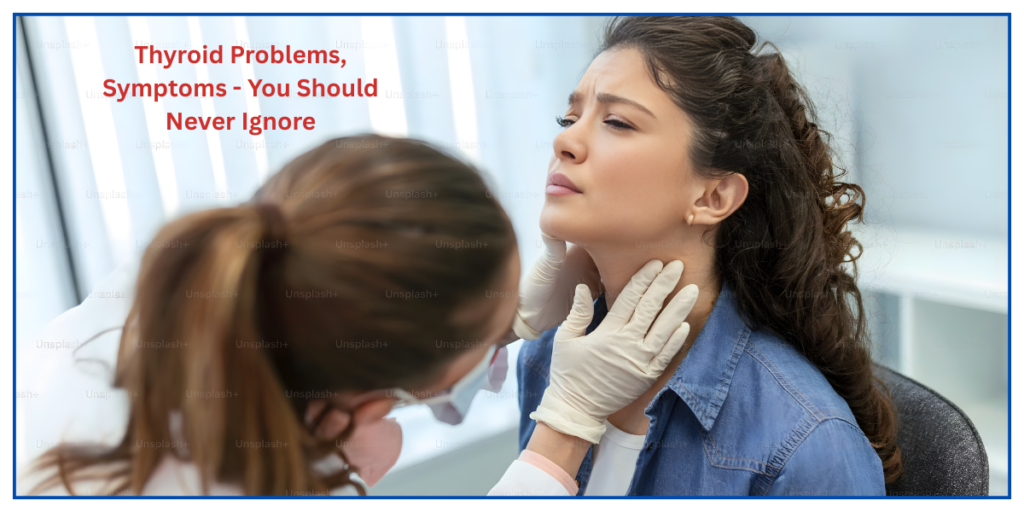
Thyroid Problems, Symptoms – The thyroid is a small, butterfly-shaped the gland located, at the front of your neck, but it plays a huge role in keeping your body functioning smoothly. It controls metabolism, and energy levels, heart rate, body temperature, and even mood.
When the thyroid doesn’t work properly, it can lead to many health problems, that often go unobserved in the early stages. Identifying the warning signs early can make a big difference in preventing the complications, and maintaining overall well-being. This article explains briefly the Thyroid problems and symptoms.
Thyroid Problems
It includes, Thyroid disorders mainly occur in two forms hypothyroidism, and hyperthyroidism. The condition of hypothyroidism occurs, when the thyroid fails to create sufficient hormones, which results in reduced body functions.
The body experiences enhanced metabolism, because of unnecessary hormone production in hyperthyroidism. Both conditions can affect people of all the ages, but are more common in women.
The failure to recognize, initial signs of a condition, will result in severe medical complications, which include cardiovascular diseases, and infertility, and weight disorders, and psychological issues. That’s why it’s important to pay attention to even slight changes in your body.
Symptoms
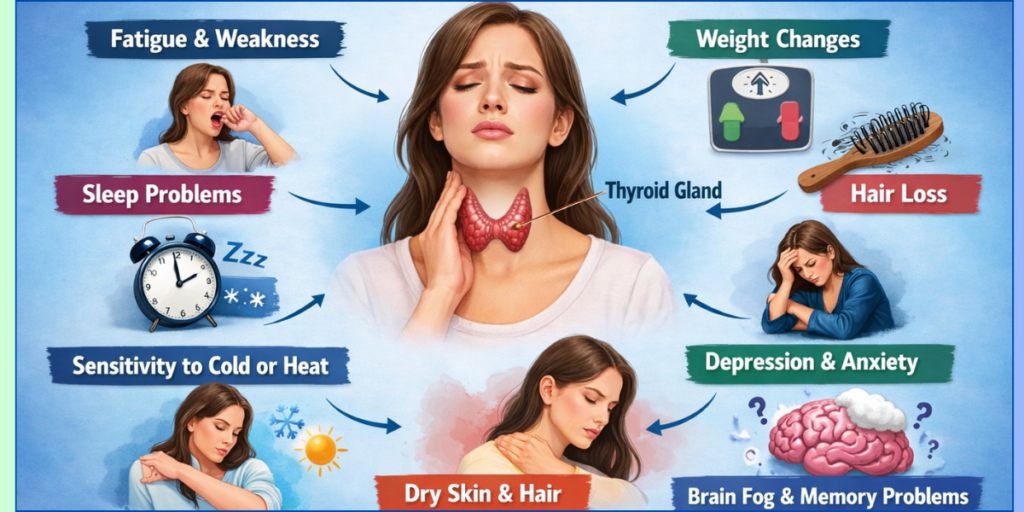
Unexplained Weight Changes
Sudden weight gain or weight loss, without any change in diet or exercise is one of the most common signs of thyroid imbalance.
- Weight gain is often linked to hypothyroidism
- Weight loss may indicate hyperthyroidism
Persistent Fatigue, and Weakness
- Hypothyroidism causes sluggishness and low energy
- Hyperthyroidism may lead to fatigue despite rest, due to overactivity
- Feeling tired all the time, even after getting enough sleep, can signal a thyroid problem
Changes in Heart Rate
- Slow heartbeat may be due to hypothyroidism
- Rapid or irregular heartbeat can be a sign of hyperthyroidism
- Your thyroid directly affects your heart
Hair and Skin Changes
Noticeable changes in your appearance can also be a warning sign.
- Dry skin and hair thinning are common in hypothyroidism
- Excessive sweating and fine hair may occur in hyperthyroidism
Mood Swings and Mental Health Issues
- Thyroid hormones influence brain function
- Depression, memory issues, and brain fog are linked to hypothyroidism
- Anxiety, irritability, and restlessness are common in hyperthyroidism
Sensitivity to Temperature
- Your body’s ability to control temperature depends on thyroid hormones
- Feeling unusually cold, may indicate hypothyroidism
- Feeling overly hot or sweating excessively, may point to hyperthyroidism
Swelling in the Neck
A visible swelling or lump in the neck, can indicate an enlarged thyroid gland. This should never be ignored, and requires immediate medical evaluation.
Irregular Menstrual Cycles
Women with thyroid disorders, often the experience changes in their menstrual cycle.
- Heavy or irregular periods, may be linked to hypothyroidism
- Lighter or missed periods, may indicate hyperthyroidism
Digestive Issues
Your digestion can also be affected.
- Constipation is common in hypothyroidism
- Frequent bowel movements may occur in hyperthyroidism
Sleep Problems
Sleep disturbances are another key symptom.
- Excessive sleepiness is seen in hypothyroidism
- Insomnia or difficulty sleeping is common in hyperthyroidism
Why Early Detection Matters
Thyroid problems, can silently affect multiple systems in your body. If left untreated, they may lead to complications such as
- Heart disease
- Infertility
- Obesity or severe weight loss
- Osteoporosis
- Mental health disorders
Early diagnosis through simple blood tests, can help to manage the condition effectively. Treatment usually includes medication, lifestyle changes, and regular monitoring.
When to See a doctor
You should consult a doctor, if you notice
- Sudden or unexplained weight changes
- Constant fatigue or weakness
- Changes in heart rate
- Neck swelling or discomfort
- Mood changes or depression
- Menstrual irregularities
Regular health check-ups are especially important, if you have a family history of thyroid disorders.
Tips to Maintain Thyroid Health
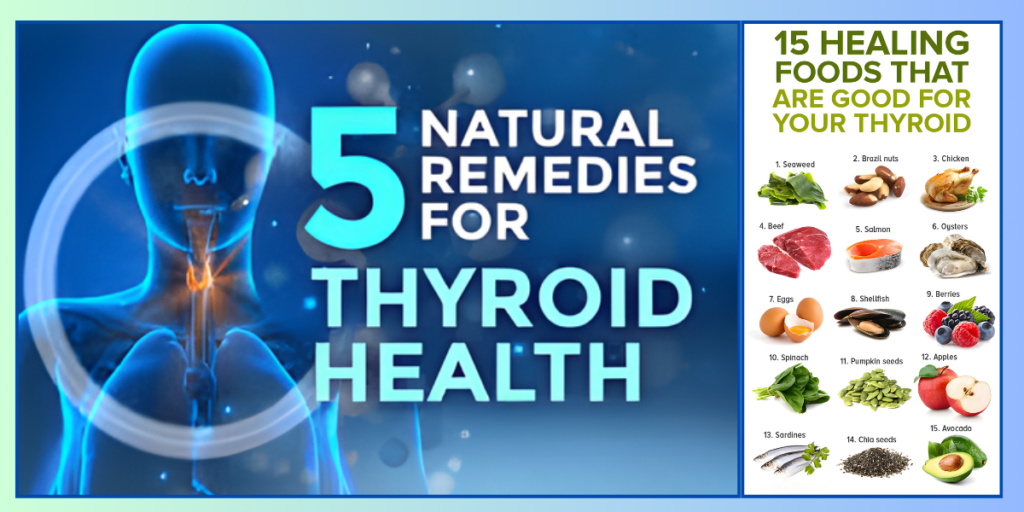
Taking care of your thyroid is essential for overall health.
These are some simple tips
- Eat a balanced diet rich in iodine, selenium, and zinc
- Avoid excessive processed foods
- Manage stress through yoga or meditation
- Exercise regularly
- Get routine thyroid function tests, if at risk
FAQS about Thyroid Problems
- What are the early signs of thyroid problems?
Early signs include fatigue, weight changes, hair loss, mood swings, and sensitivity to temperature. - Can thyroid problems be cured?
Most thyroid disorders can be effectively managed with medication and lifestyle changes, though some may require lifelong treatment. - Who is at risk of thyroid disorders?
Women, people with a family history, and those with autoimmune diseases are at higher risk. - How is thyroid disease diagnosed?
It is diagnosed, through blood tests, that measure thyroid hormone levels (TSH, T3, and T4). - Can diet affect thyroid health?
Yes, a proper diet with essential nutrients like iodine, and selenium supports healthy thyroid function.