

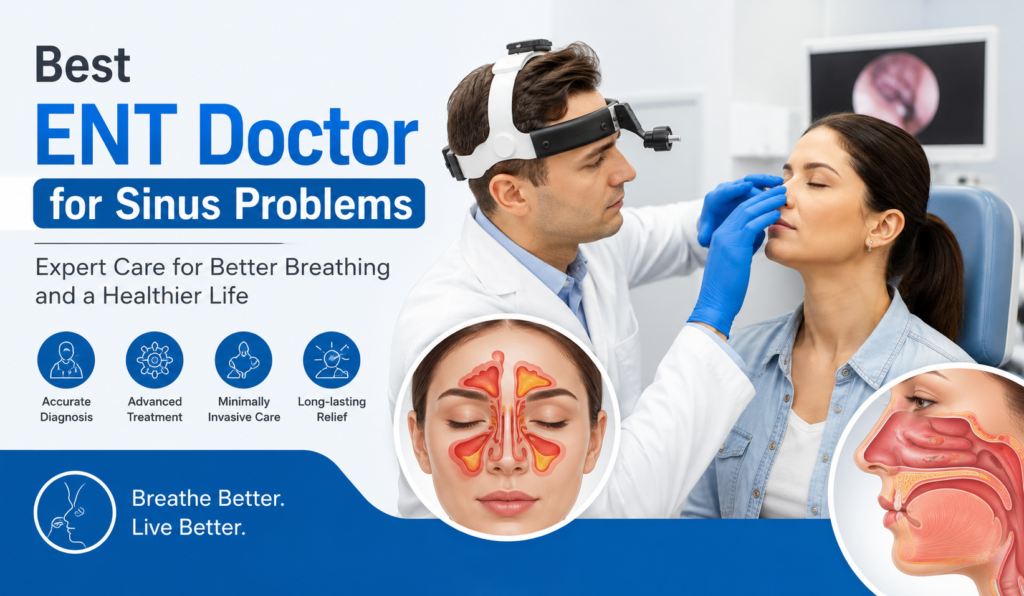
Best ENT Doctor for Sinus Problems – Most common health concerns among all ages of people is Sinus problems. When someone catches a cold, there is often nasal congestion, and it usually settles in a few days, not longer. But if the sinus trouble keeps going, it can start to mess with everyday rhythm, make it difficult to breathe, sleep, work, and even appreciate the smaller ordinary moments.
This article kind of described, how a seasoned ENT doctor works through sinus problems by first diagnosing, then treating in a careful way, sometimes using modern diagnostic tools, along with a plan that is tailored to the person. In other words, nothing is rushed, or generic, which is important when the symptoms come back again and again.
What Are Sinus Problems?
The sinuses are air-filled spaces located around your nose, forehead, cheeks, and eyes. These spaces produce mucus that keeps the nasal passages moist, and helps trap dust, bacteria, and allergens.
When the sinuses become inflamed, or blocked, mucus cannot drain properly, leading to sinus infections, and discomfort. Sinus inflammation may be temporary, or long-lasting. Identifying the underlying cause is essential for effective treatment, and preventing future complications.
Symptoms of Sinus
There are variety of symptoms depending on the severity, and cause. If these symptoms continue for more than ten days, or recur frequently, it is advisable to consult an ENT specialist.
- Persistent nasal congestion
- Thick yellow, or green nasal discharge
- Facial pain, or pressure
- Headaches, especially around the forehead, and eyes
- Difficulty breathing through the nose
- Reduced, or loss of smell
- Postnasal drip
- Sore throat due to mucus drainage
- Ear pressure, or fullness
- Bad breath
- Fatigue
- Mild fever during infections
- Tooth pain in the upper jaw
Causes of Sinus Problems
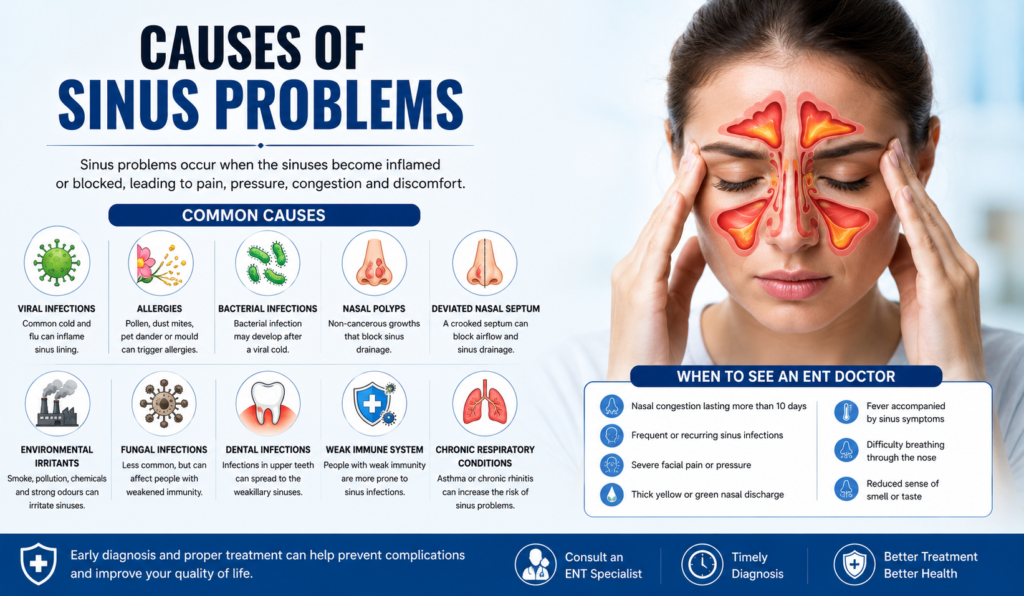
Several factors can contribute to sinus inflammation, and blockage. Understanding the cause helps determine the most suitable treatment.
1.Viral Infections
The common cold is one of the leading causes of acute sinusitis. Viral infections often cause temporary swelling of the nasal passages
2.Bacterial Infections
Sometimes bacteria infect blocked sinuses, leading to severe pain, thick mucus, fever, and prolonged symptoms
3.Allergies
Seasonal allergies, and dust allergies can trigger ongoing inflammation that blocks normal sinus drainage
4.Nasal Polyps
Soft, non-cancerous growths inside the nose may obstruct airflow, and prevent proper mucus drainage
5.Deviated Nasal Septum
A crooked nasal septum may narrow the nasal passages, and increase the risk of chronic sinus infections
6.Environmental Irritants
Smoke, pollution, strong chemical fumes, and dust can irritate the nasal lining, and worsen sinus symptoms
7.Weak Immune System
People with reduced immunity are more likely to develop repeated sinus infections
When Should You Visit an ENT Doctor?
Many mild sinus infections improve with rest, and supportive care. However, professional evaluation becomes important, if you experience
- Symptoms lasting more than 10–14 days
- Frequent sinus infections throughout the year
- Severe facial pain
- Difficulty breathing through the nose
- High fever with sinus symptoms
- Blood in nasal discharge
- Loss of smell that does not improve
- Persistent headaches
- Swelling around the eyes
- Poor response to home remedies, or medications
Early consultation helps prevent complications, and ensures faster recovery.
Best ENT Doctor for Sinus Problems- How an ENT Doctor Diagnoses Sinus Problems
An ENT specialist performs a detailed examination to identify the exact cause of your symptoms. Accurate diagnosis allows the doctor to create an individualized treatment plan.
These are the Diagnostic methods are included
- Detailed medical history
- Physical examination
- Nasal endoscopy to examine the nasal passages
- Allergy evaluation, if allergies are suspected
- CT scan of the sinuses for chronic conditions
- Nasal culture in selected cases to identify infection
Effective Treatments for Sinus Problems
Treatment depends on the underlying cause, severity of symptoms, and duration of the condition.
Medications
Several patients improve with appropriate medications prescribed by an ENT specialist,
These are the Medications are included
- Nasal saline sprays, or rinses
- Steroid nasal sprays
- Antihistamines for allergies
- Antibiotics when bacterial infection is confirmed
- Pain relievers for headache, and facial discomfort
- Decongestants for short-term symptom relief
- Patients should always take medications exactly as prescribed
Allergy Management
For allergy-related sinus problems, treatment focuses on reducing exposure to allergens, and controlling inflammation. This may include allergy medications, and lifestyle changes to minimize triggers.
Nasal Endoscopy
Nasal endoscopy is a simple procedure that allows the ENT doctor to examine the inside of the nose, and sinuses using a thin camera. It helps identify blockages, polyps, infections, or structural abnormalities.
Functional Endoscopic Sinus Surgery
When medications fail to provide relief, or chronic sinusitis persists, Functional Endoscopic Sinus Surgery may be recommended.
This minimally invasive procedure removes blockages, improves sinus drainage, and restores normal airflow while preserving healthy tissue. Most patients experience significant improvement in breathing, and fewer recurrent infections after surgery.
Tips to Improve Sinus Health Naturally
Healthy lifestyle habits can reduce the frequency of sinus infections, and improve overall nasal health.
These are the tips for improve sinus health
- Drink plenty of water to keep mucus thin
- Use saline nasal rinses regularly
- Avoid smoking, and second-hand smoke
- Control allergies with proper treatment
- Wash your hands frequently to reduce infections
- Maintain indoor humidity at comfortable levels
- Avoid exposure to dust, and pollution whenever possible
- Eat a balanced diet rich in fruits, and vegetables
- Get adequate sleep every night
- Exercise regularly to strengthen immunity
- Simple preventive measures can make a significant difference in long-term sinus health
Benefits of Early ENT Treatment
Seeking medical attention at the right time offers many advantages.
These are the Benefits of early Ent treatment
- Faster relief from symptoms
- Improved breathing
- Better sleep quality
- Reduced risk of chronic sinusitis
- Fewer recurring infections
- Improved sense of smell
- Reduced headaches, and facial pain
- Better quality of life, and Prevention of complications
- Personalized treatment based on the exact cause
Why Choose an Experienced ENT Doctor?
An experienced ENT specialist has the expertise to accurately diagnose complex sinus conditions, and recommend the most appropriate treatment.
Modern diagnostic tools, minimally invasive procedures, and patient-centred care help achieve better outcomes with faster recovery.
Whether you have occasional sinus infections, or long-term nasal blockage, consulting an ENT doctor ensures you receive comprehensive care tailored to your specific needs.
Frequently Asked Questions (FAQs)
- How do I know if I need to see an ENT doctor for sinus problems?
If your symptoms last more than 10–14 days, keep returning, or cause severe facial pain, breathing difficulty, or persistent headaches, you should consult an ENT specialist. - Can allergies cause chronic sinus problems?
Yes. Untreated allergies can lead to ongoing inflammation, blocked sinuses, and repeated sinus infections. - Is sinus surgery safe?
Yes. Functional Endoscopic Sinus Surgery (FESS) is a safe, minimally invasive procedure performed by experienced ENT specialists when conservative treatments are not effective. - Can sinus infections go away without antibiotics?
Many viral sinus infections improve with rest, hydration, and supportive care. Antibiotics are only needed for confirmed bacterial infections as determined by a doctor. - How can I prevent recurring sinus infections?
Stay hydrated, manage allergies, avoid smoking, use saline nasal rinses, maintain good hygiene, and seek early treatment for persistent nasal symptoms to reduce the risk of recurrent infections.