

What Causes Chest Pain – Chest pain is one of the more common reasons people end up in emergency medical care. A lot of folks immediately connect chest pain with a heart attack, but not every situation is heart related. Sometimes it comes from other sources too.
Chest pain can also appear because of issues involving the heart, lungs, the digestive system, muscles, bones, and even stress or anxiety. In some cases, the cause is mild, and it is short lived, in others it can become serious fast and needs prompt medical attention.
Once someone understands the causes, notices the warning signs early, gets to a doctor, and gets timely medical help, the risk of complications that could get worse is often reduced.
This article briefly explained, it covers the frequent reasons behind chest pain, the symptoms you might notice, how doctors usually figure out what is going on, and the treatment options that are commonly available.Read more.
What Is Chest Pain?
Chest pain means any kind of discomfort, pressure, tightness, burning, or pain you feel in the chest area. The sensation can feel sharp, dull, stabbing, squeezing, or achy, in a way that’s kind of hard to pin down.
It might come all at once, or slowly creep in, and then it can radiate out toward the shoulders, arms, neck, jaw, or even the back. Chest pain, should never be brushed off, especially when it’s intense, sudden, or it comes with other signs like shortness of breath, sweating, dizziness, or nausea.
Causes of Chest Pain
Chest pain can have several causes, ranging from minor conditions to medical emergencies.
Heart-Related Causes
Heart conditions are among the most serious causes of chest pain.
Coronary Artery Disease
Narrowing of the heart’s blood vessels reduces blood flow to the heart muscle, causing chest discomfort known as angina.
Heart Attack
A heart attack occurs when blood flow to part of the heart is blocked. It requires immediate emergency treatment.
Angina
Angina is chest pain caused by reduced blood supply to the heart, often triggered by physical activity, or emotional stress.
Pericarditis
Inflammation of the sac surrounding the heart may cause sharp chest pain that worsens with deep breathing, or lying down.
Lung-Related Causes
Several lung conditions can cause chest pain.
These are the common causes are included
- Pneumonia
- Pulmonary embolism
- Pleurisy
- Pneumothorax
- Severe asthma attacks
These conditions are often accompanied by breathing difficulties, coughing, or fever.
Digestive System Causes
Problems involving the digestive tract can mimic heart-related chest pain.
Common digestive causes include
- Acid reflux
- Gastritis
- Peptic ulcers
- Gallstones
- Esophageal spasms
Burning chest pain after eating, or while lying down is often associated with acid reflux.
Muscle, and Bone Problems
Musculoskeletal conditions frequently cause localized chest pain.
Examples include
- Muscle strain
- Rib injuries
- Costochondritis (inflammation of rib cartilage)
- Chest wall inflammation
Pain usually worsens with movement, or when pressing on the affected area.
Anxiety, and Panic Attacks
Stress, and anxiety can trigger chest tightness, or pain that resembles heart disease.
Symptoms may include
- Rapid heartbeat
- Sweating
- Trembling
- Shortness of breath
- Feeling of impending doom
Although panic attacks are not life-threatening, chest pain should always be evaluated to rule out serious medical conditions.
Chest Pain Symptoms
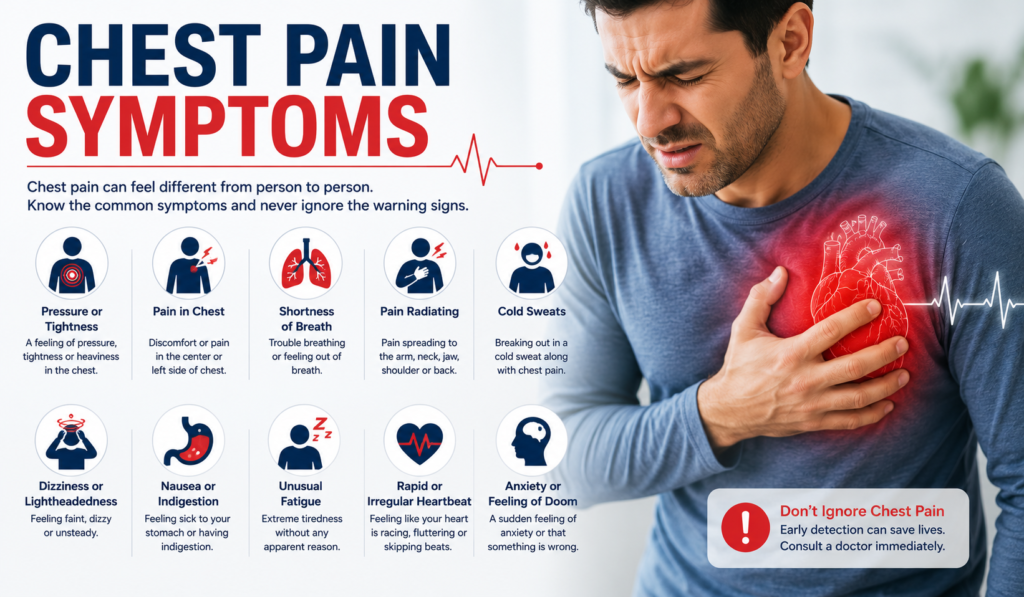
Chest pain may vary depending on the underlying cause.
These are the common symptoms are included
- Pressure, or tightness in the chest
- Sharp, or stabbing pain
- Burning sensation
- Pain spreading to the arm, jaw, neck, shoulder, or back
- Shortness of breath
- Excessive sweating
- Nausea, or vomiting
- Dizziness, or fainting
- Fatigue
- Rapid, or irregular heartbeat
- Cough, or fever
- Difficulty swallowing
The presence of additional symptoms helps doctors determine the likely cause.
When we need medical attention?
Quick treatment can be life-saving in heart-related emergencies.
These are the warning signs are included
- Severe, or sudden
- Lasts more than a few minutes
- Spreads to the left arm, jaw, neck, shoulder, or back
- Accompanied by difficulty breathing
- Associated with cold sweats
- Occurs with dizziness, or fainting
- Accompanied by nausea, or vomiting
- Occurs after intense physical activity
Associated with a rapid, or irregular heartbeat
How Doctors Diagnose Chest Pain?
An accurate diagnosis begins with a detailed medical history, and physical examination. These investigations help identify the exact cause, and guide appropriate treatment.
Depending on your symptoms, your doctor may recommend
- Electrocardiogram
- Echocardiogram
- Blood tests to check for heart damage
- Chest X-ray
- CT scan
- Stress test
- Coronary angiography
- Holter monitoring
- Pulmonary function tests
- Endoscopy, if digestive problems are suspected
Treatment Options for Chest Pain
Treatment depends on the underlying condition causing the pain.
Medications for Chest Pain
Doctors may prescribe
- Blood pressure medications
- Blood thinners
- Cholesterol-lowering medicines
- Antacids for acid reflux
- Antibiotics for infections
- Pain relievers
- Anti-inflammatory medications
- Asthma inhalers if breathing problems are present
Lifestyle Changes
Healthy lifestyle habits play an important role in preventing several causes of chest pain.
These are the Recommendations are included
- Eat a heart-healthy diet
- Exercise regularly
- Maintain a healthy weight
- Quit smoking
- Limit alcohol intake
- Manage stress effectively
- Control diabetes, blood pressure, and cholesterol
- Get adequate sleep
- Stay physically active
Medical Procedures
Your doctor will recommend the most appropriate procedure based on your diagnosis.
Some patients, may require advanced treatment.
It includes
- Coronary angioplasty
- Heart stent placement
- Coronary artery bypass surgery
- Treatment for pulmonary embolism
- Surgery for lung conditions
- Endoscopic treatment for digestive disorders
Can Chest Pain Be Prevented?
Although not all cases are preventable, many can be reduced by adopting healthy habits. Early prevention significantly lowers the risk of serious heart, and lung diseases.
These are the preventive measures are included
- Regular health check-ups
- Managing chronic diseases
- Following prescribed medications
- Eating nutritious foods
- Staying physically active
- Reducing stress, and Avoiding tobacco products
- Recognizing warning symptoms early
When Should You Visit a doctor?
Do not delay seeking medical care, if your symptoms are severe, or unusual.
Schedule a medical evaluation, if you experience
- Recurrent chest pain
- Pain during exercise
- Persistent chest discomfort
- Chest pain with shortness of breath
- Pain associated with dizziness
- New, or unexplained chest pain
- Frequent acid reflux with chest burning
FAQs about Causes of Chest Pain
- Is every chest pain a heart attack?
No. Chest pain can be caused by heart disease, lung conditions, digestive disorders, muscle strain, anxiety, or other medical conditions. However, it should always be evaluated if severe, or persistent. - When should I go to the emergency room for chest pain?
Seek emergency medical care immediately if chest pain is severe, lasts more than a few minutes, spreads to your arm or jaw, or is accompanied by shortness of breath, sweating, dizziness, or nausea. - Can acid reflux cause chest pain?
Yes. Acid reflux can cause a burning sensation in the chest that may resemble heart-related pain, especially after meals, or when lying down. - How is chest pain diagnosed?
Doctors diagnose chest pain through a physical examination, medical history, ECG, blood tests, chest X-ray, echocardiogram, CT scan, stress test, or other investigations depending on the suspected cause. - Can lifestyle changes help prevent chest pain?
Yes. Eating a balanced diet, exercising regularly, quitting smoking, managing stress, controlling blood pressure, and cholesterol, and attending regular health check-ups can reduce the risk of many conditions that cause chest pain.