

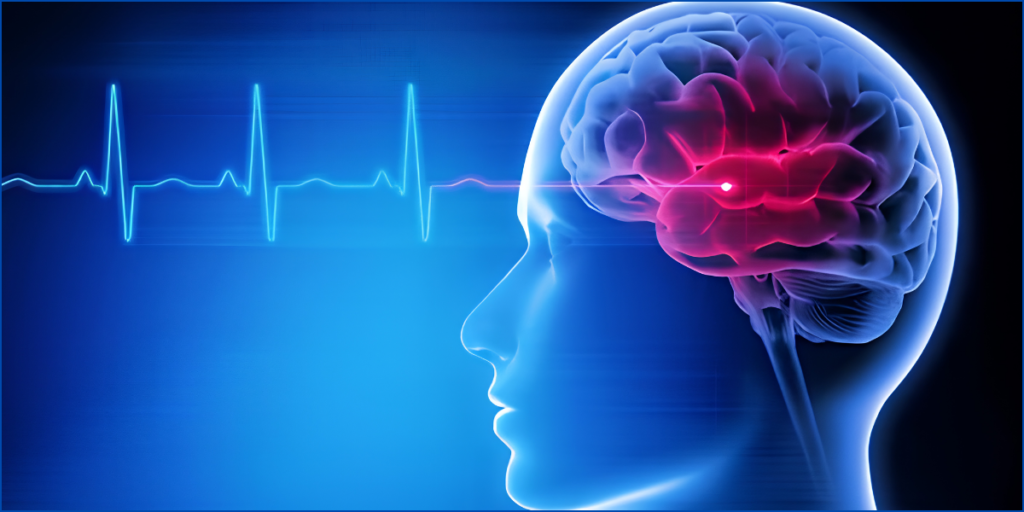
Brain Stroke Treatment – A brain stroke is a medical emergency, that requires immediate attention. A stroke can damage millions of brain cells if blood flow is interrupted. Quick diagnosis, and timely treatment can significantly improve recovery, and reduce the risk of permanent disability.
This article briefly explains about the stroke, and helps in understanding the early warning signs, emergency treatment options, and rehabilitation process can help save lives and improve long-term outcomes.
What Is a Brain Stroke?
A brain stroke, occurs when the blood supply to part of the brain is blocked or when a blood vessel in the brain bursts. Without oxygen, and nutrients, brain cells begin to die within minutes, affecting movement, speech, memory, and other body functions.
There are three types of strokes
- Ischemic Stroke – Caused by a blockage in a blood vessel supplying the brain. This accounts for nearly 85% of all strokes.
- Haemorrhagic Stroke – Occurs when a blood vessel in the brain ruptures which results in bleeding.
- Transient Ischemic Attack – It is often called as mini-stroke, it is a temporary blockage that serves as an important warning sign of a future stroke.
Early recognition, and treatment can greatly improve the chances of recovery.
Brain Stroke – Early signs
Recognising the symptoms of a stroke, can help you seek emergency medical care immediately.
Warning signs included
- Sudden weakness, or numbness on one side of the face, arm, or leg
- Difficulty speaking, or understanding speech
- Sudden confusion
- Blurred, or double vision
- Severe headache with no known cause
- Loss of balance, or coordination
- Difficulty walking
- Sudden dizziness
- Drooping of one side of the face
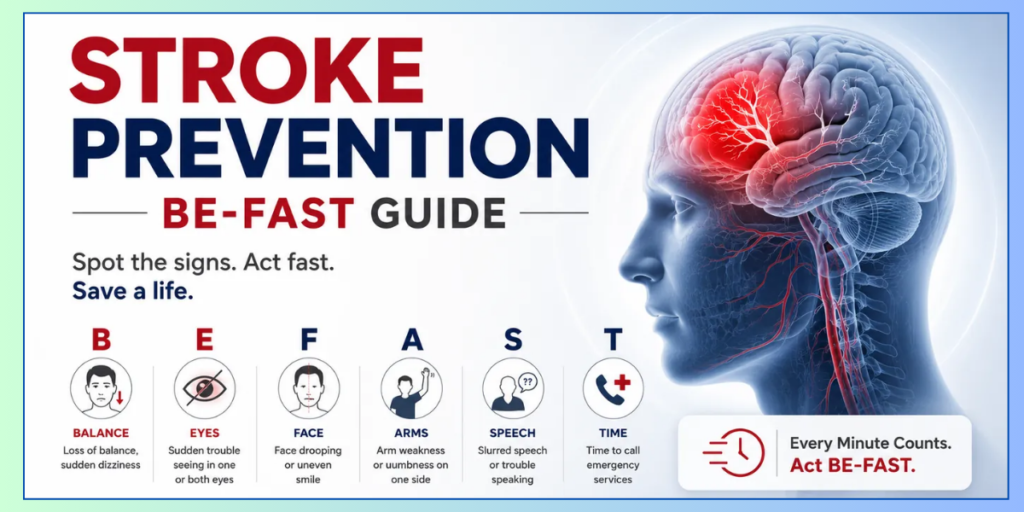
A simple way to remember the warning signs is the FAST method
- F – Face: Ask the person to smile. Is one side drooping?
- A – Arms: Ask them to raise both arms. Does one arm drift downward?
- S – Speech: Is speech slurred or difficult?
- T – Time: Call emergency medical services immediately
What Causes a Brain Stroke?
Some medical conditions, and lifestyle factors increase the risk of stroke.
Brain stroke causes
- High blood pressure
- Diabetes
- High cholesterol
- Heart disease
- Smoking
- Obesity
- Lack of physical activity
- Excessive alcohol consumption
- Family history of stroke
- Increasing age
- Irregular heartbeat managing these risk factors, can significantly reduce the likelihood of experiencing a stroke
Emergency Care for Brain Stroke
We need to start stroke treatment once the symptoms appear. One should not wait for the symptoms to improve on the own. Start the hospital care immediately to prevent extensive brain damage.
Immediate steps included
- Call emergency medical services immediately
- Note the exact time when symptoms started
- Keep the patient calm, and comfortable
- Do not give food, drinks, or medications unless advised by healthcare professionals
- If the patient becomes unconscious but is breathing, place them on their side until help arrives
How Doctors Diagnose a Brain Stroke
Doctors perform several tests to determine the type of stroke, and begin the correct treatment.
These are the Diagnostic tests are included
- Physical, and neurological examination
- Blood pressure assessment
- Blood tests
- CT scan of the brain
- MRI scan
- CT angiography
- Carotid ultrasound
- Electrocardiogram, and Echocardiogram, when necessary
Accurate diagnosis helps doctors decide the most effective treatment plan.
Brain Stroke Treatment Options
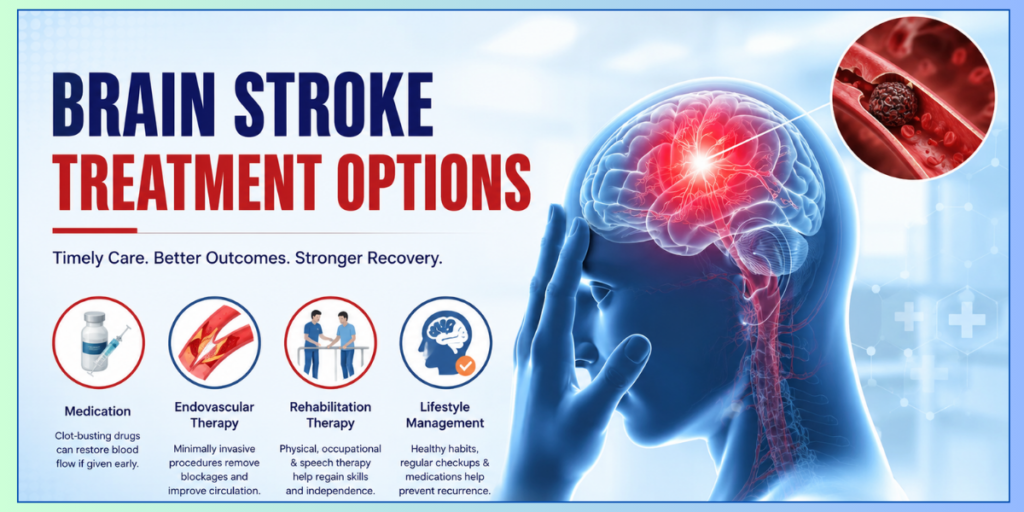
Treatment depends on the type of stroke, and how quickly the patient reaches the hospital.
Treatment for Ischemic Stroke
The main goal is to restore blood flow to the brain. Early treatment offers the best chance of full recovery.
These are the common treatments are included
- Clot-dissolving medication
- Mechanical thrombectomy to remove large blood clots
- Blood-thinning medications
- Antiplatelet medicines
- Cholesterol-lowering medications, and Blood pressure control
Treatment for Haemorrhagic Stroke
Treatment focuses on stopping the bleeding, and reducing pressure inside the brain.
Management may include
- Blood pressure control
- Medications to reduce brain swelling
- Reversal of blood-thinning medicines when necessary
- Surgical removal of blood clots
- Repair of ruptured blood vessels
- Intensive monitoring in specialised stroke units
Stroke Rehabilitation
Recovery continues even after emergency treatment. Rehabilitation helps patients regain independence. Recovery varies from person to person, and may continue for months or even years.
Stroke Rehabilitation may involve
- Physiotherapy
- Occupational therapy
- Speech, and language therapy
- Cognitive rehabilitation
- Psychological counselling
- Nutritional guidance
- Family education, and support
Lifestyle Changes After a Stroke
Making healthy lifestyle changes can lower the risk of another stroke.
Suggested habits include
- Monitor blood pressure regularly
- Control blood sugar levels
- Eat a balanced diet rich in fruits, and vegetables
- Reduce salt intake
- Exercise regularly. Maintain a healthy body weight
- Quit smoking
- Limit alcohol consumption
- Take prescribed medications consistently
- Attend regular follow-up appointments
These changes support both recovery, and long-term brain health.
Possible Complications of Stroke
Without timely treatment, a stroke can lead to serious complications.
Potential complications include
- Paralysis
- Difficulty speaking
- Memory problems
- Difficulty swallowing
- Vision loss
- Depression
- Muscle stiffness
- Balance disorders
- Long-term disability
- Recurrent stroke
Early treatment, and rehabilitation help reduce these complications.
Tips to Prevent Brain Stroke
Although not all strokes can be prevented, many risk factors can be controlled.
Prevention tips include
- Keep blood pressure under control
- Manage diabetes effectively
- Lower high cholesterol
- Exercise for at least 30 minutes most days
- Eat heart-healthy foods
- Maintain a healthy weight
- Avoid tobacco products
- Limit alcohol intake
- Get adequate sleep
- Manage stress effectively
- Attend regular health check-ups
Prevention is the best strategy for protecting brain health.
When Should You See a doctor?
Seek immediate emergency medical care if you or someone nearby experiences
- Sudden weakness on one side of the body
- Difficulty speaking
- Sudden vision changes
- Severe headache
- Loss of consciousness
- Sudden confusion
- Difficulty walking or maintaining balance
Never ignore these symptoms, even if they disappear within a few minutes.
Frequently Asked Questions (FAQs)
- What is the first sign of a brain stroke?
The most common early signs include sudden facial drooping, weakness on one side of the body, slurred speech, and sudden difficulty speaking or understanding language. - Can a brain stroke be treated successfully?
Yes. If treatment begins quickly—especially within the first few hours—the chances of recovery are much higher. - How long does stroke recovery take?
Recovery varies from person to person. Some recover within weeks, while others may require several months or longer with rehabilitation. - Who is at the highest risk of stroke?
People with high blood pressure, diabetes, heart disease, high cholesterol, obesity, smoking habits, or a family history of stroke are at greater risk. - Can a second stroke be prevented?
Yes. Controlling blood pressure, managing diabetes, and cholesterol, taking prescribed medications, exercising regularly, eating a healthy diet, and avoiding smoking can significantly reduce the risk of another stroke.