

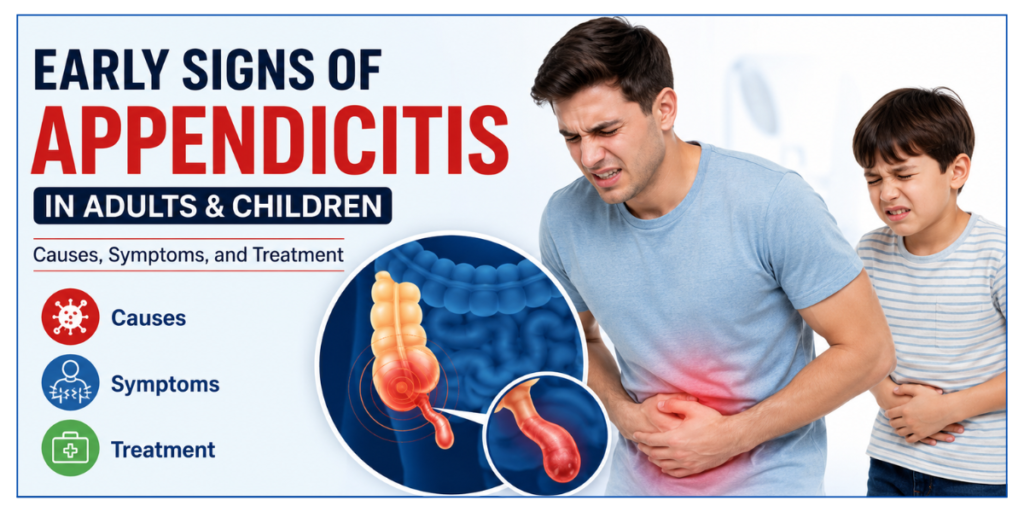
Early Signs of Appendicitis in Adults, and Children – Appendicitis is a common medical emergency that occurs when the appendix becomes inflamed or infected. If left untreated, the appendix can rupture, leading to serious complications such as abdominal infections.
Recognising the early signs of appendicitis in both adults, and children is essential for prompt diagnosis, and treatment. This article briefly explained the causes, symptoms, diagnosis, treatment options, and prevention tips to help you understand this condition better.Read more.
What Is Appendicitis?
The appendix is a small, finger-shaped pouch attached to the large intestine in the lower right side of the abdomen. Although its exact function is not fully understood, it can become blocked by stool, infection, or swollen lymph tissue, causing inflammation. This condition is known as appendicitis, and usually requires urgent surgical removal of the appendix.
Early Signs of Appendicitis
The symptoms of appendicitis often begin suddenly, and worsen over time. Early recognition can help prevent complications. If these symptoms continue to worsen, immediate medical attention is necessary.
These are the early signs include
- Pain around the belly button that gradually moves to the lower right side of the abdomen
- Loss of appetite
- Mild fever
- Nausea or vomiting
- Abdominal bloating, and Constipation or diarrhoea
- Difficulty passing gas
- Pain that worsens while walking, coughing, or sneezing
Symptoms of Appendicitis in Adults

Adults usually experience more noticeable symptoms that progress quickly. Without treatment, the appendix may rupture within 24 to 72 hours after symptoms begin.
These are the common symptoms are included
- Sharp pain in the lower right abdomen
- Pain that becomes severe within a few hours
- Fever, and chills
- Nausea, and vomiting
- Loss of appetite
- Abdominal swelling
- Pain that increases with movement
- Tenderness when the abdomen is touched
Symptoms of Appendicitis in Children
Children may not always describe their pain clearly, making diagnosis more challenging.
Warning signs in children include
- Persistent stomach pain
- Refusal to eat
- Vomiting
- Fever
- Irritability
- Difficulty walking because of abdominal pain
- Swollen abdomen
- Excessive crying in younger children
Parents should seek medical care immediately, if these symptoms are present.
What Causes Appendicitis?
Appendicitis develops when the appendix becomes blocked, leading to infection, and inflammation. Although anyone can develop appendicitis, it is most common between the ages of 10, and 30 years.
These are the causes are included
- Hardened stool blocking the appendix
- Bacterial or viral infections
- Swollen lymph tissue
- Intestinal parasites
- Digestive tract inflammation
- Rarely, tumours affecting the appendix
Risk Factors
Certain factors may increase the risk of appendicitis. While these factors may increase risk, appendicitis can occur in anyone.
These are the risk factors are included
- Family history of appendicitis
- Young age
- Gastrointestinal infections
- Low-fibre diet
- Inflammatory bowel disease
How Is Appendicitis Diagnosed?
Doctors use a combination of physical examination, and diagnostic tests to confirm appendicitis.
Diagnostic methods include
- Medical history evaluation
- Physical examination
- Blood tests
- Urine tests
- Ultrasound scan
- CT scan
- MRI scan
Early diagnosis helps prevent complications, and allows for timely treatment.
Treatment for Appendicitis
Appendicitis is usually treated with surgery because delaying treatment increases the risk of rupture.
Appendectomy (Surgical Removal)
This is the most effective treatment.
Types of surgery include:
- Laparoscopic appendectomy: A minimally invasive procedure with smaller incisions, less pain, and faster recovery.
- Open appendectomy: Recommended if the appendix has already ruptured or there is widespread infection.
Antibiotics
Antibiotics are given before, and after surgery to treat or prevent infection. In selected mild cases, antibiotics alone may be considered, but surgery remains the standard treatment for most patients.
What Happens, If Appendicitis Is Left Untreated?
Ignoring appendicitis can lead to serious health problems.
Possible complications include
- Ruptured appendix
- Peritonitis
- Abscess formation
- Severe abdominal infection
- Sepsis
- Prolonged hospital stays
These complications can become life-threatening without immediate treatment.
Recovery After Appendix Surgery
Most patients recover well after surgery with proper care.
These are the recovery tips are included
- Get plenty of rest
- Follow your doctor’s instructions
- Keep the surgical wound clean, and dry
- Avoid heavy lifting for several weeks
- Eat a balanced diet
- Drink enough fluids
- Attend follow-up appointments
- Gradually return to normal activities
Many people return to their regular routine within one to three weeks after laparoscopic surgery.
Can Appendicitis Be Prevented?
There is no guaranteed way to prevent appendicitis, but healthy lifestyle habits may support digestive health.
These are the helpful tips are included
- Eat a diet rich in fruits, and vegetables
- Increase fibre intake
- Stay hydrated, and exercise regularly
- Maintain good digestive health
- Seek medical attention for persistent abdominal pain
When Should You See a doctor?
Prompt treatment can prevent serious complications.
Seek emergency medical care, if you experience
- Sudden severe abdominal pain
- Pain that moves to the lower right abdomen
- Persistent vomiting
- Fever with abdominal pain
- Difficulty walking due to pain
- Severe abdominal tenderness
- Swollen or rigid abdomen
FAQs about Early Signs of Appendicitis in Adults, and Children
- What is the first sign of appendicitis?
The first sign is usually pain around the belly button that gradually moves to the lower right side of the abdomen. - Can appendicitis go away without surgery?
Most cases require surgery. While some mild cases may respond to antibiotics, surgery is the standard, and most effective treatment. - How long can appendicitis symptoms last before it becomes serious?
Symptoms often worsen within 24–48 hours, and a ruptured appendix can occur within 24–72 hours if untreated. - Is appendicitis common in children?
Yes. Appendicitis commonly affects children and teenagers, particularly between the ages of 10 and 19 years. - How long does it take to recover after appendix surgery?
Most people recover within 1–3 weeks after laparoscopic surgery, while recovery from open surgery may take 4–6 weeks, depending on the individual’s condition.