

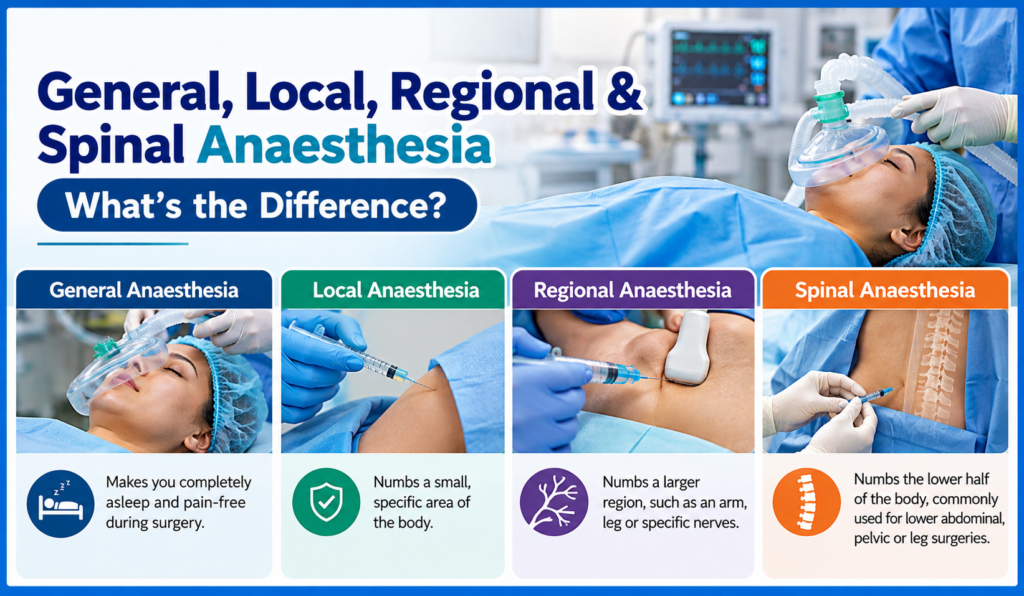
General, Local, Regional, and Spinal Anaesthesia – Anaesthesia is an important part of many medical, and surgical procedures. It helps control pain, reduce discomfort, and keep patients comfortable, and safe during treatment. Depending on the type of procedure, the area being treated, and the patient’s health, doctors may use different types of anaesthesia.
The four commonly discussed types are general, local, regional, and spinal anaesthesia. Although they all help control pain, they work differently, and are used for different situations. This article briefly explained, understanding these options can help patients feel more prepared before surgery or other medical procedures.Read more.
Anaesthesia
Anaesthesia involves using medicines to prevent or reduce pain during a medical procedure. Depending on the type, anaesthesia may affect a small area of the body, a larger region, or the entire body.
The choice of anaesthesia depends on several factors, including
- Type, and duration of the procedure
- Location of the surgery
- Patient’s age, and overall health
- Medical history, and medications
- Expected level of pain
- Patient, and surgical requirements
- Anaesthesiologist’s assessment
What Is General Anaesthesia?
General anaesthesia produces a controlled state of unconsciousness during surgery. The patient is not awake, and generally does not feel or remember the procedure.
General anaesthesia may be used for major or lengthy operations where complete unconsciousness, and muscle relaxation are required.
It may be administered through,
- Intravenous medicines
- Inhaled anaesthetic gases
- A combination of medicines
During general anaesthesia, the anaesthesia team continuously monitors important functions such as heart rate, blood pressure, oxygen levels, and breathing.
When Is General Anaesthesia Used?
General anaesthesia may be considered for procedures such as,
- Major abdominal surgery
- Certain orthopaedic surgeries
- Some chest or cardiac procedures
- Certain brain or spine surgeries
- Operations that require complete immobility
The specific approach varies depending on the operation, and the patient’s condition.
What Is Local Anaesthesia?
Local anaesthesia numbs a small, specific area of the body. The patient usually remains awake, and aware during the procedure.
The anaesthetic medicine is generally injected around the area being treated. In some situations, topical anaesthetic medicines may also be used.
Local anaesthesia may be used for
- Minor skin procedures
- Wound repair
- Dental procedures
- Small biopsies
- Removal of certain superficial lesions
- Minor surgical procedures
The patient may feel pressure or movement but should have significantly reduced or no pain in the numbed area.
What Is Regional Anaesthesia?
Regional anaesthesia blocks sensation in a larger part of the body by affecting specific nerves or groups of nerves. The patient may remain awake, although sedation can sometimes be provided if appropriate.
Examples include; nerve blocks used for procedures involving the
- Arm
- Shoulder
- Hand
- Leg, and foot
Regional anaesthesia can provide effective pain control during, and sometimes after surgery.
Unlike local anaesthesia, which generally targets a small area, regional techniques can numb a much larger region.
What Is Spinal Anaesthesia?
Spinal anaesthesia is a type of regional anaesthesia. It involves injecting anaesthetic medicine into the fluid surrounding the nerves in the lower part of the spinal canal.
It produces numbness, and temporary weakness in the lower part of the body while the patient can remain awake.
Spinal anaesthesia is commonly used for certain procedures.
It includes
- Lower abdomen
- Pelvis
- Hips
- Legs
- Knees
- Lower urinary or reproductive system
The exact area affected depends on the medication, dose, and procedure.
General vs Local Anaesthesia
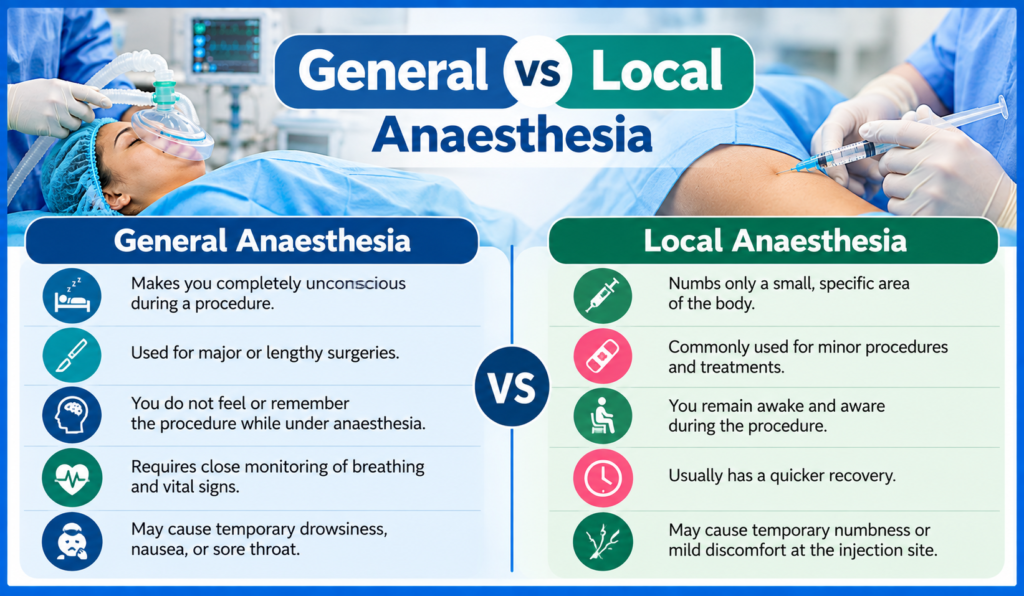
The main difference between general, and local anaesthesia is the extent of its effect.
General anaesthesia
- Produces unconsciousness
- Affects the entire body
- Commonly used for major operations
- Requires close monitoring of breathing, and other vital functions
Local anaesthesia
- Numbs a small area
- The patient generally remains awake
- Commonly used for minor procedures
- Usually allows a quick return to normal activities
Regional vs Spinal Anaesthesia
Regional, and spinal anaesthesia are closely related, but they are not the same.
Regional anaesthesia is a broad term for techniques that numb a specific region by blocking nerves. It includes several types of nerve blocks as well as spinal, and epidural techniques.
Spinal anaesthesia specifically involves injecting anaesthetic into the fluid surrounding the nerves in the lower spine.
Therefore, spinal anaesthesia can be considered one specific form of regional anaesthesia.
Can Sedation Be Used with Anaesthesia?
Yes. Sedation may sometimes be used alongside local or regional anaesthesia.
Sedation helps the patient feel relaxed, and sleepy while the area being treated remains numb. The level of sedation can vary from mild relaxation to deeper sleep-like sedation.
The anaesthesia team determines whether sedation is appropriate based on the procedure. and the patient’s individual needs.
How Do Doctors Choose the Right Type of Anaesthesia?
There is no single anaesthesia technique that is appropriate for every patient or procedure. The anaesthesia team considers multiple factors before recommending an approach.
These may include
- Type of surgery
- Expected duration of surgery
- Surgical location
- Patient’s age
- Existing medical conditions
- Previous reactions to anaesthesia
- Current medications
- Allergies
- Airway, and breathing considerations
- Patient preferences when appropriate
The final decision is made by the healthcare team after assessing the individual situation.
Are There Risks Associated with Anaesthesia?
Modern anaesthesia is generally considered safe when administered, and monitored appropriately, but all medical procedures can have potential risks.
Possible effects vary according to the type of anaesthesia, and the patient’s health.
Some people may experience
- Nausea or vomiting
- Drowsiness
- Temporary sore throat after certain general anaesthesia techniques
- Headache
- Temporary numbness or weakness
- Low blood pressure
- Shivering
- Discomfort at an injection site
Serious complications are uncommon but can occur. The anaesthesia team monitors patients closely to identify, and manage problems promptly.
What Should You Tell Your Anaesthesiologist?
Before surgery, provide complete, and accurate information about your health.
Tell your healthcare team about
- Previous anaesthesia experiences
- Allergies
- Current medicines, and supplements
- Existing medical conditions
- Previous surgeries
- Pregnancy or possibility of pregnancy
- Smoking or alcohol use
- Any previous complications related to anaesthesia
You should also follow instructions regarding fasting, medications, and preparation before the procedure.
Recovery After Anaesthesia
- Recovery depends on the type of anaesthesia used, and the procedure performed
- After general anaesthesia, patients may temporarily feel sleepy, dizzy, or nauseated. After regional or spinal anaesthesia, numbness or weakness may gradually disappear as the medicine wears off
Patients should follow their healthcare team’s instructions regarding
- Eating, and drinking
- Walking, and physical activity
- Driving
- Taking medications
- Wound care
- Follow-up appointments
If you receive anaesthesia as an outpatient, arrange for appropriate assistance if your healthcare team advises you not to drive or travel alone afterward.
FAQs about General, Local, Regional, and Spinal Anaesthesia
- What is the main difference between general, and local anaesthesia?
General anaesthesia makes the patient unconscious, while local anaesthesia numbs only a small area, and the patient usually remains awake. - Is spinal anaesthesia a type of regional anaesthesia?
Yes. Spinal anaesthesia is a specific type of regional anaesthesia that numbs the lower part of the body. - Will I be awake during regional anaesthesia?
Usually, patients can remain awake, but sedation may be used when appropriate. - Is anaesthesia safe?
Anaesthesia is generally safe when provided by trained professionals with appropriate monitoring, although risks can vary depending on the patient, and procedure. - How are the right anaesthesia chosen?
The anaesthesia team considers the procedure, patient’s medical history, medications, health status, and other individual factors before choosing an appropriate technique.