

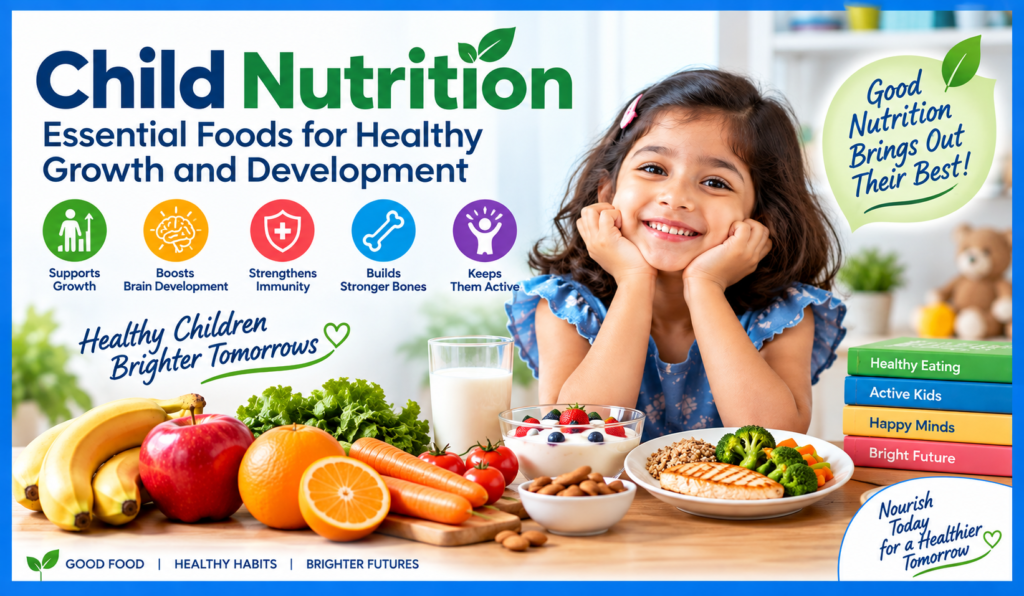
Child Nutrition – Good nutrition is most important for a child’s growth, and development. During childhood, the body, and brain are developing regularly, so they need a balanced diet that provides enough energy, protein, vitamins, minerals, healthy fats, and other essential nutrients.
Eating pattern should be healthy which support strong bones, healthy muscles, brain development, immunity, and overall health. It doesn’t mean that parents need to complicate the meal. Pattern should include variety of fresh, nutritious foods, and encouraging healthy eating habits during early age can make a huge difference.
Why is good nutrition important for children?
Children need proper nutrition, because their bodies are growing rapidly. Nutrients rich foods help provide energy for playing, learning, and daily activities. They also support the development of bones, teeth, muscles, the nervous system, and the immune system.
Poor nutrition may contribute to tiredness, poor concentration, slow growth, frequent illness, or nutritional deficiencies. On the other hand, regularly consuming foods high in added sugar, salt, and unhealthy fats can increase the risk of unhealthy weight gain, and other health problems.
A balanced diet, along with adequate sleep, and regular physical activity, provides a strong foundation for healthy development.
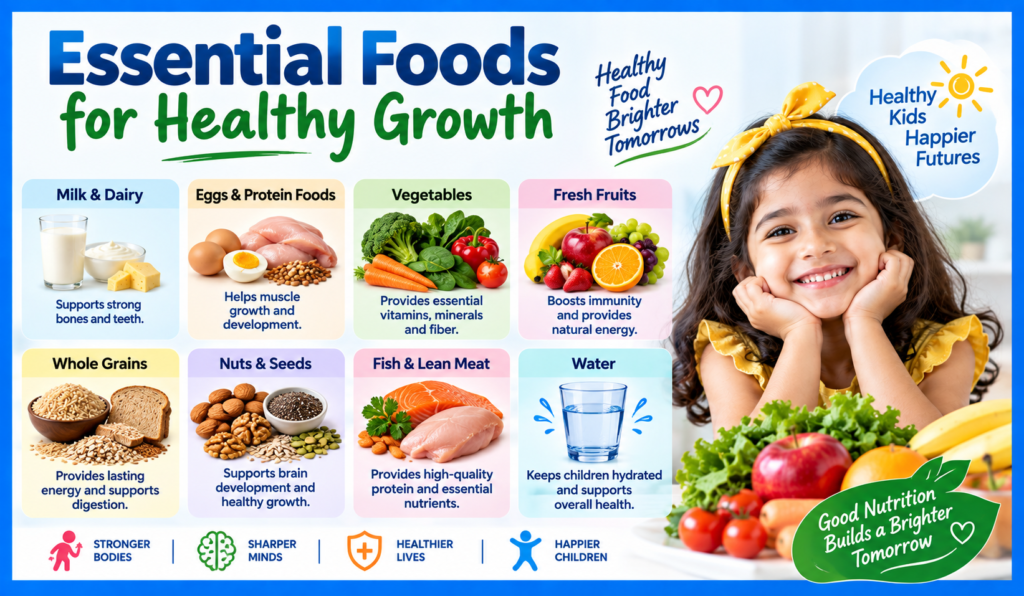
Essential Foods for Healthy Growth
Protein-Rich Foods
Protein is essential for building, and repairing muscles, and tissues. It is particularly important during periods of rapid growth. Including a source of protein in each main meal can help children get the nutrients they need for growth.
Protein rich foods are as follows
- Eggs
- Milk, and curd
- Paneer, and cheese
- Dal, and lentils
- Beans, and peas
- Soy, and tofu
- Fish, and chicken
- Nuts, and seeds
Fruits, and Vegetables
Fruits, and vegetables provide vitamins, minerals, fibre, and antioxidants. They also add variety, colour, and natural flavour to a child’s meals. Instead of forcing a child to eat a particular vegetable, parents can offer small portions repeatedly, and allow children to gradually develop eating for different foods.
Different Fruits and Vegetables are as follows
- Bananas
- Apples
- Oranges
- Papaya
- Guava
- Carrots
- Spinach, and other leafy greens
- Beans
- Pumpkin
- Tomatoes
- Broccoli
Whole Grains, and Healthy Carbohydrates
Carbohydrates are an important source of energy for active children. Whenever possible, choose whole, or minimally processed sources.
These foods can also provide fibre, and other important nutrients
- Brown rice
- Oats
- Whole wheat roti
- Millets
- Whole grain bread
- Dalia
- Corn, and Quinoa
Milk, and Other Calcium Rich Foods
Calcium, and vitamin D are important for developing strong bones, and teeth. Depending on the child’s age, and dietary preferences, calcium can come from milk, curd, paneer, fortified foods, tofu, and some leafy vegetables. Parents can discuss with healthcare professionals if particular child is not getting enough nutrients.
Healthy Fats
Healthy fats are important for brain development, and also help the body absorb certain vitamins. However, portion sizes matter because fats are energy-dense. Nuts, and seeds should also be offered in an age-appropriate form to reduce choking risk in young children.
These are the sources include
- Nuts
- Seeds
- Nut butters
- Avocado
- Fish
- Eggs
- Plant-based oils
Iron
Iron is particularly important during childhood because it helps produce haemoglobin, which carries oxygen throughout the body. Iron deficiency can affect energy levels, and concentration.
Combining plant-based iron sources with foods rich in vitamin C, such as citrus fruits, tomatoes, or guava can help improve iron absorption.
Foods containing iron are as follows
- Green leafy vegetables
- Beans
- Eggs
- Meat, and poultry
- Fish
- Fortified cereals
- Nuts, and seeds
Drink enough Fluids
Children need enough water throughout the day. Water should be our main drink. Milk can also contribute important nutrients as part of a balanced diet.
Limit sugary drinks, packaged juices, soft drinks, and other sweetened beverages. These can add a lot of sugar without providing the nutritional value as whole foods.
Foods to Limit
Children can enjoy treats occasionally, but foods which high in added sugar, salt, and unhealthy fats should not make up a large part of their diet. Rather than completely banning favourite foods, parents can teach children about moderation, and help them understand the importance of balanced choices.
Foods to limit are as follows
- Sugary drinks
- Candies, and chocolates
- Cakes, and pastries
- Packaged snacks
- Chips
- Fast food
- Deep-fried foods
- Highly processed foods
Healthy Eating Habits for Children
Nutrition is not only about what children eat, but also about developing positive eating habits. Children may reject a new food several times before accepting it. Patience, and repeated exposure are often more effective than forcing them to eat.
Parents can
- Maintain regular meal, and snack times
- Offer different types of nutritious foods
- Encourage children to eat slowly
- Allow children to recognize their hunger, and fullness signals
- Avoid using sweets as a reward
- Make meals a family activity whenever possible
- Reduce distractions such as television, and mobile phones during meals
- Encourage children to drink water regularly
- Set a good example by eating healthy foods themselves
A Simple Balanced Plate
A child’s meal can include a combination of
- Vegetables, and fruits for vitamins, minerals, and fibre
- Whole grains, or other healthy carbohydrates for energy
- Protein-rich foods for growth, and tissue repair
- Calcium-rich foods for bones, and teeth
- Healthy fats in appropriate amounts
- Water for hydration
The exact amount of food a child needs depends on age, growth pattern, activity level, appetite, and individual nutritional needs.
When should parents seek Professional Advice?
Every child is different. If a child has poor weight gain, excessive weight gain, persistent tiredness, frequent illness, significant food restrictions, difficulty eating, or suspected nutritional deficiencies, parents should consult a paediatrician, or qualified nutrition professional.
Children with allergies, chronic medical conditions, developmental concerns, or special dietary requirements may need an individualized nutrition plan.
Frequently Asked Questions (FAQs)
- What are the most important foods for a child’s growth?
Protein-rich foods, fruits, vegetables, whole grains, dairy, or calcium rich foods, and healthy fats are important for healthy growth. - How much water should children drink?
Water needs vary by age, activity, weather, and diet. Encourage the children to drink enough water regularly throughout the day. - Is protein important for children?
Yes, protein supports muscle growth, tissue repair, and overall development. - Which foods are rich in iron for children?
Lentils, beans, leafy vegetables, eggs, meat, fish, nuts, seeds, and iron fortified foods are good sources of iron. - Should children avoid junk food completely?
Not necessarily. Occasional treats are fine, but limit having sugary drinks, processed foods, and fast food.