

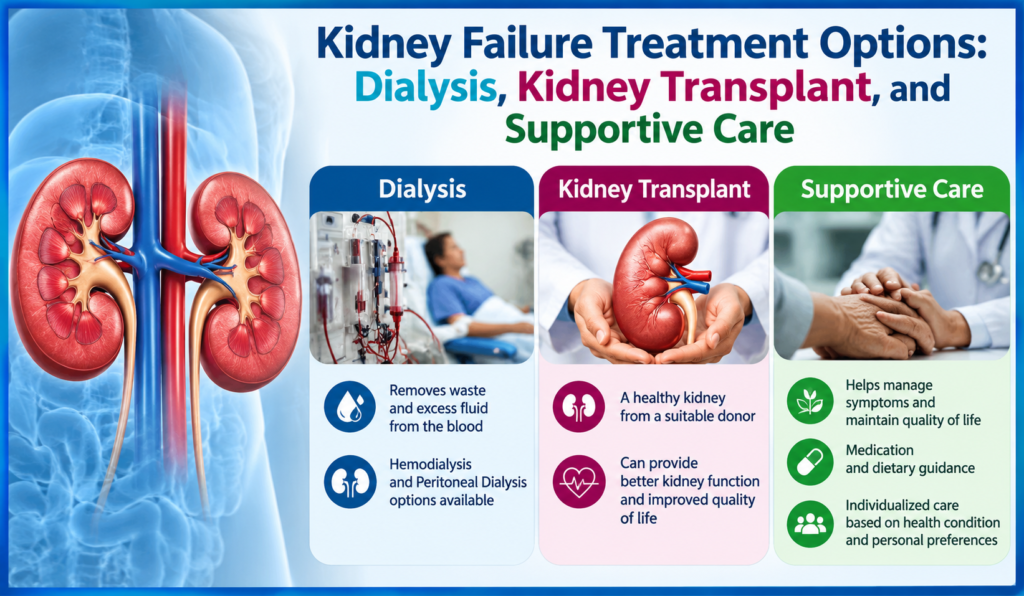
Kidney Failure Treatment – Kidney failure is a serious health condition where kidneys lose its ability to perform the essential functions effectively. Usually, kidneys help in removing waste products, and excess fluid from the blood. This function helps maintaining electrolyte balance, regulate blood pressure, and support the production of red blood cells.
When kidneys’ function is severely reduced, waste and fluid build-up in the body, resulting in serious health problems. The appropriate treatment depends on the various factors and based on the current scenario of the patient.
Kidney failure
Kidney failure occurs when the kidneys lose its ability to filter waste, and excess fluid from the blood. This is because of acute kidney injury which results in sudden kidney failure or chronic kidney disease which affects the kidney gradually.
Causes of kidney failure
We cannot observe the symptoms very early. When kidneys failed to filter, or remove waste from blood, causes such as tiredness, swelling of the legs, or feet, changes in urination, nausea, poor appetite, itching, muscle cramps, or difficulty concentrating occurs. Regular medical evaluation can help identify declining kidney function earlier.
It includes
- Diabetes, and uncontrolled blood sugar levels
- Long-term high blood pressure
- Chronic kidney disease
- Repeated kidney infections
- Certain autoimmune diseases
- Polycystic kidney disease
- Severe urinary tract obstruction
- Some medications, or substances that can damage the kidneys
How is kidney failure diagnosed?
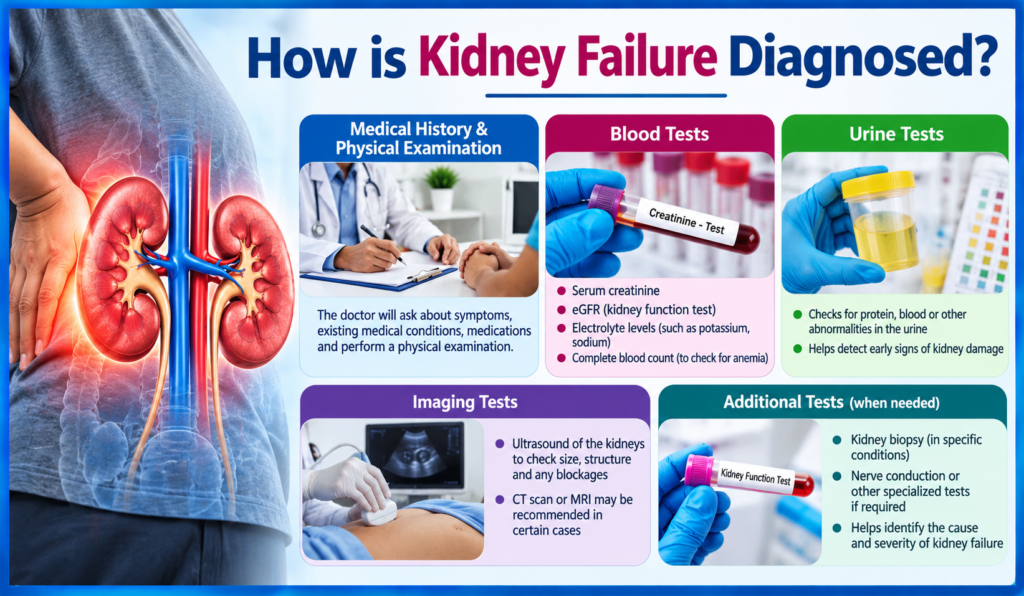
Doctors usually evaluates kidney’s function using various factors such as medical history, physical examination, blood tests, urine tests and imaging when required. After evaluation of result, doctor design the treatment plan.
Diagnosis treatments are as follows
- Serum creatinine – A kind of urine test which measures a waste product that normally leaves the body through the kidneys
- Estimated glomerular filtration rate – This test helps estimate about how well the kidneys are filtering blood
- Urine tests – Can detect protein, blood, or other abnormalities
- Electrolyte tests – Help identify imbalances involving substances such as potassium, and sodium
- Ultrasound, or other imaging – May be used to examine the kidneys, and urinary tract
Dialysis for Kidney failure
Dialysis is one of the possible treatments which works functions similar to kidney, but externally. It can help control certain complications of advanced kidney failure, but it does not restore normal kidney function.
There are two major types of dialysis
Haemodialysis
Haemodialysis uses a dialysis machine, and a special filter called a dialyzer to remove waste, and excess fluid from the blood. Blood is circulated through the machine, and then returned to the body.
Haemodialysis is commonly performed at a dialysis centre, although some patients may be eligible for home treatment after appropriate training, and medical assessment.
Peritoneal Dialysis
Peritoneal dialysis uses the lining of the abdomen, called the peritoneum, as a natural filtering membrane. A special dialysis solution is introduced into the abdomen through a catheter. Waste products, and excess fluid move into the solution, which is later drained.
Peritoneal dialysis can be performed at home, and may offer greater flexibility for some patients.
The choice between dialysis methods depends on medical factors, lifestyle, home circumstances, and the recommendations of the healthcare team.
Kidney transplantation
A kidney transplant involves placing a healthy kidney from a suitable donor into a person whose kidneys have failed. A successful transplant can provide kidney function that is closer to normal than dialysis.
A kidney may come from a living donor, or a deceased donor, depending on availability, and medical suitability.
However, kidney transplantation requires careful evaluation. Patients are assessed to determine whether transplantation is medically appropriate. After transplantation, patients need lifelong follow-up, and medicines called immunosuppressants to reduce the risk of rejection. A transplant is not a cure for the underlying causes of kidney disease, and ongoing medical care remains essential.
Important features of kidney transplant care include
- Donor, and recipient compatibility assessment
- Pre-transplant medical evaluation
- Surgery performed by a specialist transplant team
- Regular blood, and urine tests after transplantation
- Taking prescribed anti-rejection medicines consistently
- Monitoring for infections, and other complications
- Maintaining regular follow-up appointments
Supportive, or Conservative Kidney Care
Not every person with kidney failure chooses, or is suitable for dialysis, or transplantation. Supportive care, sometimes called conservative kidney management, focuses on controlling symptoms, and maintaining quality of life without dialysis, or transplant.
This approach may be considered based on a person’s overall health, medical circumstances, treatment goals, and preferences. Supportive care can also involve dietary guidance, medication management, emotional support, and assistance with advance care planning when appropriate.
These are the symptoms are included,
- Swelling, and fluid retention
- Breathlessness
- Nausea, and vomiting
- Pain
- Itching
- Sleep problems
- Loss of appetite
- Anaemia
Medicines, and Lifestyle Management
Medicines do not replace dialysis, or transplantation when kidney function has reached advanced failure, but they can help manage complications, and underlying conditions. Lifestyle, and dietary recommendations should always be individualized. A kidney specialist, or renal dietitian may recommend adjustments to sodium, fluid, protein, potassium, or phosphorus intake depending on kidney function, and laboratory results.
Depending on the individual’s needs, treatment may address,
- High blood pressure
- Anaemia
- Abnormal potassium, or mineral levels
- Fluid retention
- Diabetes
- Heart problems
- Blood vessel problems
- Bone
- Mineral disorders
Choosing the Right Kidney Failure Treatment
There is no single treatment that is suitable for everyone. The healthcare team considers several factors before recommending a treatment approach. Patients should discuss the benefits, limitations, risks, and practical requirements of each option with a nephrologist before making treatment decisions.
These may include
- Current kidney function
- Cause of kidney failure
- Age, and general health
- Heart, and blood vessel health
- Other medical conditions
- Ability to undergo surgery
- Availability of a suitable kidney donor
- Lifestyle, and family circumstances
- Personal treatment preferences
Can kidney failure be prevented, or delayed?
Some causes of kidney failure can be managed to slow the progression of kidney disease. Controlling blood pressure, and blood sugar, following prescribed medications, avoiding unnecessary medicines that can harm the kidneys, maintain a healthy lifestyle, and attend regular medical checkups can all support kidney health.
People who already have kidney disease should follow their healthcare provider’s recommendations, and have their kidney function monitored regularly.
When should you see a kidney specialist?
Anyone with known chronic kidney disease, persistent protein in the urine, unexplained changes in kidney function, or conditions such as diabetes, and long-standing high blood pressure may benefit from medical evaluation.
Seek urgent medical attention if symptoms such as severe breathing difficulty, chest pain, confusion, very little, or no urine, severe weakness, or significant swelling occur.
FAQs about kidney failure treatment
- Can kidney failure be treated without dialysis?
Yes. Depending on the person’s condition, and treatment goals, kidney transplantation, or supportive/conservative care may be options. - Is kidney transplantation a permanent cure?
A successful transplant can restore kidney function, but it requires lifelong medical follow-up, and anti-rejection medicines. - How long can a person live on dialysis?
Survival varies considerably depending on age, overall health, underlying diseases, and treatment response. The nephrologist can provide individualized guidance. - What are the warning signs of kidney failure?
Common symptoms can include swelling, tiredness, changes in urination, nausea, itching, poor appetite, and shortness of breath, although symptoms vary between individuals. - Can kidney failure be prevented?
Some cases can be delayed, or prevented by controlling diabetes, and blood pressure, managing kidney disease early, following medical advice, and avoiding factors that can damage the kidneys.