

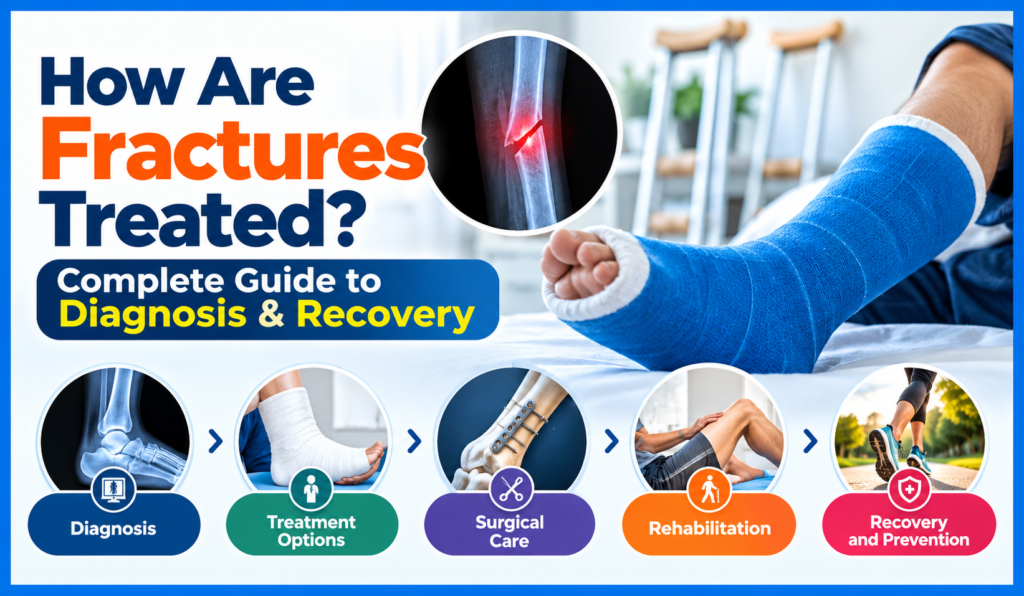
How are Fractures treated – A fracture is a break, or crack in a bone which happens because of a fall, accident, sports injury, or a direct blow. Fractures can also occur when bones become weak due to conditions such as osteoporosis. Treatment depends on the type, location, and severity of the fracture, as well as the person’s age, and overall health. Getting the right diagnosis, and treatment early can help the bone heal properly, and reduce the risk of complications.
What is Fracture?
A fracture is a bone injury, when it is subjected to more force than it can withstand. The injury may result in a small crack, or a complete break. Some fractures may cause the bone to move out of its normal position, while others remain aligned. If a fracture is suspected, we try to limit the movement of the affected area, and seek medical attention immediately.
Common symptoms are as follows
- Severe, or persistent pain at the injury site
- Swelling, and bruising
- Difficulty moving the affected body part
- Tenderness when touched
- Deformity, or an unusual shape
- Difficulty putting weight on the injured limb
- An open wound where the bone has damaged the skin
How are fractures diagnosed?
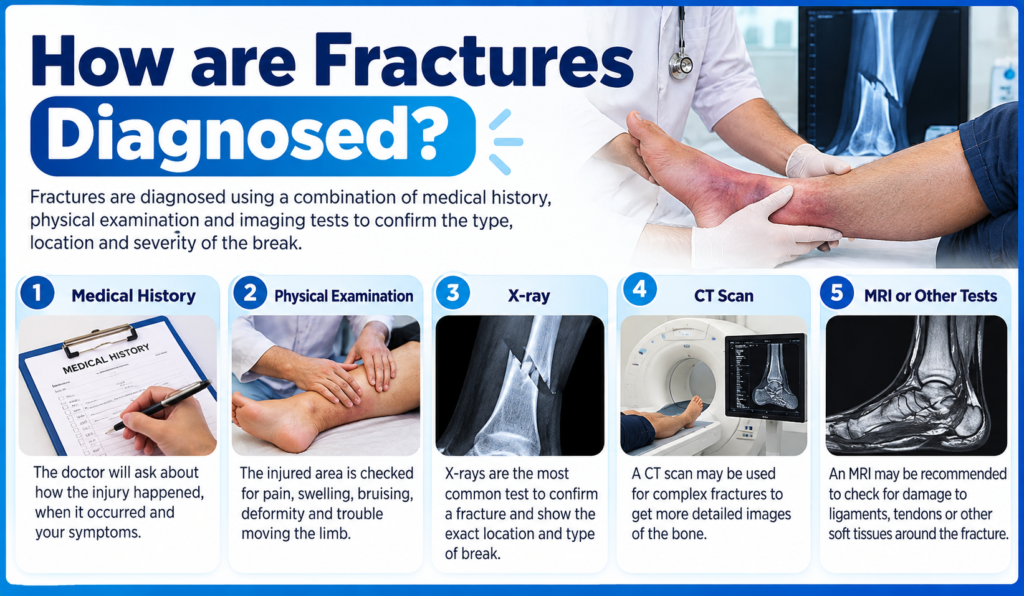
The first step in fracture treatment is identifying the exact location, and nature of the injury. An orthopaedic doctor usually examines the affected area, and asks about how the injury occurred.
Diagnostic methods may include
- Physical Examination
The doctor checks for swelling, tenderness, deformity, restricted movement, and changes in circulation, or sensation. - X-Ray
X-rays are commonly used to identify broken bones, and determine whether the bone fragments are properly aligned. - CT Scan
A CT scan can provide detailed images of complicated fractures, particularly those involving joints, or areas that are difficult to evaluate with a standard X-ray. - MRI Scan
MRI may be recommended when doctors need to assess soft tissues, ligaments, cartilage, or fractures that may not be clearly visible on an X-ray.
What are the main treatments for Fractures?
Treatment varies according to the type of fracture. The primary goal is to place the bone in the correct position, keep it stable, and allow it to heal naturally.
- Immobilization
Immobilization of a fracture is the medical process of stabilizing a broken bone to stop movement and allow it to heal correctly. Simple fractures may be treated by keeping the affected bone still while it heals. A cast, splint, brace, or other support may be used. The duration of immobilization depends on the bone involved, and the severity of the fracture.
Immobilization helps as follows
- Keep the bone properly aligned
- Reduce movement, and pain
- Give the bone time to heal
- Reduction
When broken bone fragments are displaced, or no longer properly aligned, a procedure called reduction may be required. During a closed reduction, the doctor moves the bones back into position without surgery. Pain relief, or sedation may be used depending on the injury, and procedure.
- Surgical Treatment
Some fractures require surgery, especially when the bones are significantly displaced, unstable, or involved in a joint. Surgery may also be necessary for certain open, or complicated fractures. The choice of surgical technique depends on the fracture location, bone condition, and individual patient factors.
Common surgical treatments are as follows
- Plates, and screws
- Rods, or nails placed inside the bone
- Pins, or wires
- External fixation devices
What is an open fracture?
An open fracture occurs when the broken bone, or injury creates a wound that communicates with the outside environment. These fractures require urgent medical treatment because there is an increased risk of infection. An open fracture should always be treated as a medical emergency.
Treatment may involve
- Cleaning the wound thoroughly
- Antibiotics when indicated
- Stabilizing the broken bone
- Surgical cleaning, and removal of damaged tissue
- Regular monitoring during recovery
How long does a fracture take to heal?
Bone healing time varies considerably. Simple fractures may heal within several weeks, while more complicated fractures can take several months. Even after the healing, the bone may not yet be strong enough for normal activities. Patients should follow their doctor’s instructions regarding movement, and weight-bearing.
Healing time varies based on following
- Age
- Type, and location of the fracture
- Severity of the injury
- Overall health
- Nutrition
- Smoking
- Certain medical conditions
- Blood supply to the injured area
- Following the treatment plan
What happens during fracture recovery?
Recovery does not end when the cast, or splint is removed. Muscles can become weak, and joints may become stiff after a period of immobilization.
A gradual rehabilitation program may help restore normal movement, and strength.
Important recovery steps include
- Follow the recommended activity restrictions
- Keep casts, and braces in good condition
- Take prescribed medicines as directed
- Attend follow-up appointments
- Begin exercises only when advised by the healthcare professional
- Gradually increase activity as healing progresses
- Follow physiotherapy recommendations when required
Nutrition for better bone healing
Good nutrition supports the body’s natural healing process. A balanced diet containing adequate protein, calcium, vitamin D, and other nutrients can support bone health. If a person has a nutritional deficiency, a doctor may recommend appropriate supplements.
Foods which are better for bone healing are as follows
- Milk, yogurt, and other dairy products
- Leafy green vegetables
- Pulses, and beans
- Eggs
- Fish
- Nuts, and seeds
- Fruits, and vegetables
What should you avoid during Fracture recovery?
Trying to return to normal activities too quickly can interfere with healing, or increase the risk of another injury.
Patients should avoid
- Putting weight on the injured limb before medical clearance
- Removing a cast, or brace without professional advice
- Returning to sports too early
- Smoking, which can negatively affect bone healing
- Ignoring persistent, or worsening pain
- Skipping follow-up appointments
It is important to remember that recovery is gradual. The absence of pain does not always mean the bone has completely healed.
When should you seek immediate medical attention?
Some fracture symptoms require urgent medical care. Prompt treatment can help reduce complications, and improve the chances of proper recovery.
Seek immediate attention if there is
- A visible deformity
- An open wound near the suspected fracture
- Severe, or increasing pain
- Numbness, or loss of sensation
- Pale, blue, or cold fingers, or toes
- Heavy bleeding
- Inability to move the affected limb
- Significant swelling after an injury
How can fractures be prevented?
Not every fracture can be prevented, but several measures can help reduce the risk of injury, and support stronger bones.
Regular physical activity, strength, and balance exercises, adequate nutrition, and appropriate safety precautions can all contribute to better bone health. Older adults should also take steps to reduce fall risks at home.
For people at risk of osteoporosis, or weak bones, a healthcare professional can recommend appropriate evaluation, and preventive measures.
FAQs about How are Fractures treated
- Can a fracture heal without surgery?
Yes. Many fractures can heal with a cast, splint, brace, or other non-surgical treatment when the bones are properly aligned. - How long does a broken bone take to heal?
Healing time varies, but many uncomplicated fractures heal within several weeks. Complex fractures may take longer. - Is surgery always required for a fracture?
No. Surgery is generally considered when a fracture is displaced, unstable, complicated, or cannot be properly treated with non-surgical methods. - Can I exercise after a fracture?
Exercise should be resumed gradually, and only according to your healthcare professional’s advice. Physiotherapy may help restore strength, and movement. - What helps bones heal after a fracture?
Following the treatment plan, getting adequate nutrition, avoiding smoking, attending follow-up appointments, and completing recommended rehabilitation can support recovery.