

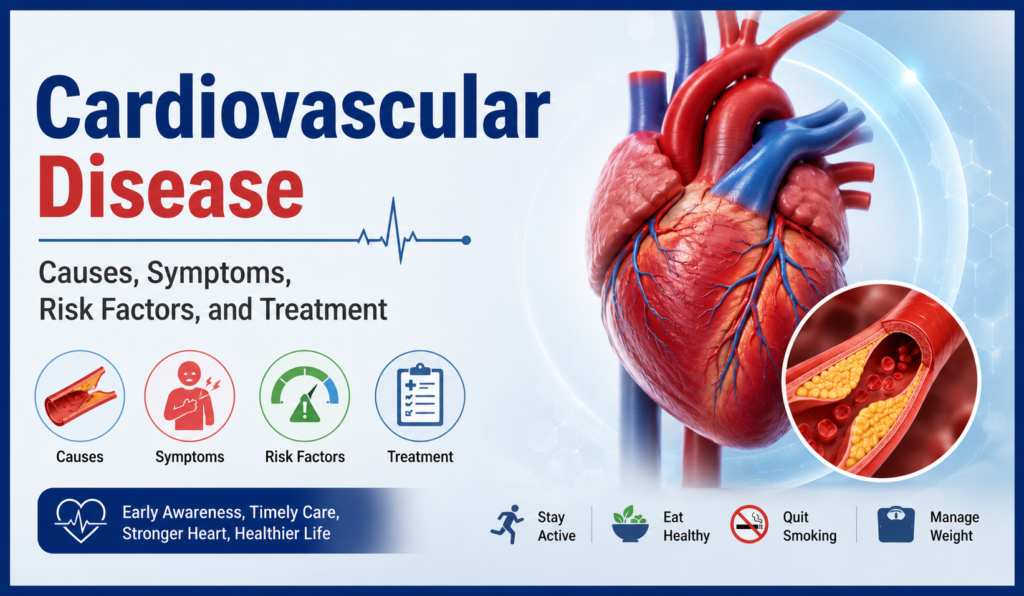
Cardiovascular disease refers to a group of conditions that affect the heart, and blood vessels. It develops gradually, and may not always cause noticeable symptoms in the early stages. Early awareness, regular health checkups, and a healthy lifestyle can help reduce the risk of serious heart problems.
Cardiovascular Disease
It affects the heart, or the blood vessels that carry blood throughout the body. Common conditions include coronary artery disease, heart failure, heart rhythm disorders, and heart valve problems.
These are the common conditions are included
- Coronary artery disease
- Heart failure
- Arrhythmia
- Heart valve disease
- Cardiomyopathy
- Peripheral artery disease
Cardiovascular Disease causes
Some factors can contribute to cardiovascular disease. Some can be controlled through lifestyle changes, while others, such as age, and family history, cannot be changed.
Causes, and contributing factors included as follows
- High blood pressure
- High cholesterol
- Smoking, and tobacco use
- Unhealthy diet
- Lack of physical activity
- Diabetes, and Obesity
- Excessive alcohol consumption
- Family history of heart disease
Cardiovascular Disease Symptoms
Symptoms can vary depending on the type of heart condition. Some people may have no symptoms until the disease becomes more advanced. Sudden, or severe chest pain, breathing difficulty, fainting, or other possible signs of a heart attack require immediate emergency medical attention.
Symptoms included are as follows
- Chest pain, or discomfort
- Shortness of breath
- Fast, or irregular heartbeat
- Dizziness, or light-headedness
- Unusual tiredness
- Swelling in the legs, ankles, or feet
- Reduced ability to exercise
- Pain spreading to the arm, back, neck, or jaw
Risk Factors for Cardiovascular Disease
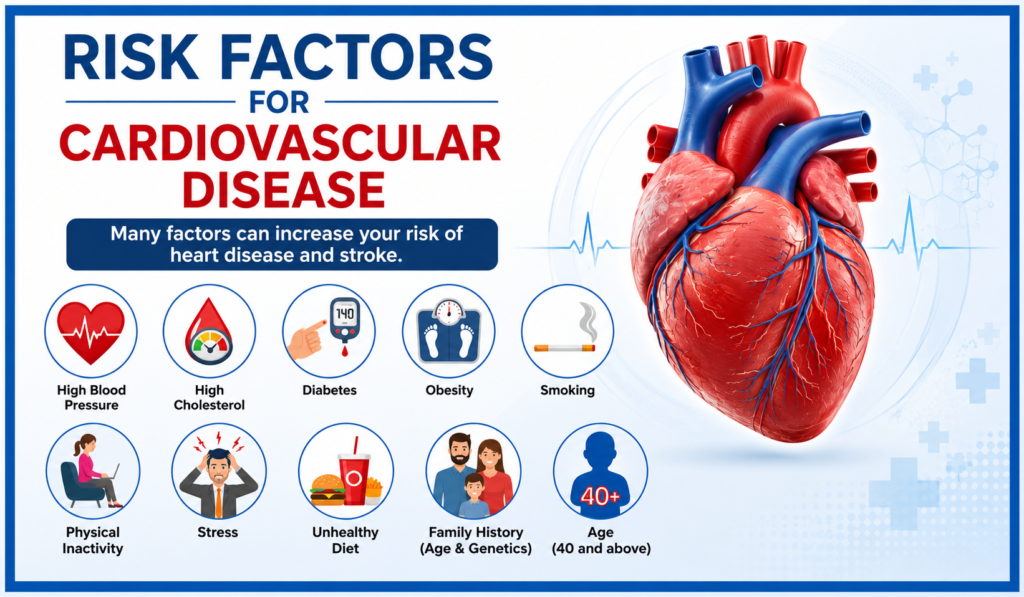
Certain factors can increase the likelihood of developing cardiovascular disease. Some risk factors can be managed with lifestyle changes, and medical treatment.
Risk factors included are as follows
- High blood pressure
- High cholesterol
- Diabetes
- Smoking
- Obesity
- Physical inactivity
- Unhealthy eating habits
- Increasing age
- Family history
- Chronic stress
How Is Cardiovascular Disease Diagnosed?
A doctor may review your symptoms, medical history, family history, and lifestyle before recommending tests. Early diagnosis can help identify cardiovascular problems, and guide appropriate treatment.
Diagnostic Tests
The tests required depend on your symptoms, and individual risk factors.
Common diagnostic tests included are as follows
- Blood pressure measurement
- Blood tests
- ECG, or EKG
- Echocardiogram
- Stress test
- Holter monitoring
- Cardiac imaging
- Coronary angiography
Treatment for Cardiovascular Disease
- heart-healthy diet
- Lifestyle Changes
- Exercise
- Maintain a healthy weight
- Avoid smoking, and tobacco
- Limit excess salt, and unhealthy fats
- Stress Management
- Get adequate sleep
Medications
Doctors may prescribe medicines to control blood pressure, cholesterol, blood clots, abnormal heart rhythms, or other cardiovascular conditions.
Medical Procedures
Some patients may require procedures, or surgery depending on their condition.
Possible treatments include
- Angioplasty
- Stent placement
- Bypass surgery
- Pacemaker implantation
- Heart valve procedures
How to Prevent Cardiovascular Disease?
Many cardiovascular risk factors can be reduced through healthy daily habits. Regular medical checkups can also help identify problems such as high blood pressure, high cholesterol, and diabetes early.
It includes
- Eat more fruits, and vegetables
- Choose whole grains, and healthy protein sources
- Exercise regularly
- Maintain a healthy weight
- Avoid tobacco, and Limit alcohol
- Manage blood pressure, and cholesterol
- Keep diabetes under control
- Regular health checkups
When should you see a Cardiologist?
Consult a doctor, or cardiologist if you experience repeated chest discomfort, unexplained shortness of breath, frequent tremors, dizziness, fainting, or other concerning symptoms.
People with significant risk factors, such as high blood pressure, diabetes, high cholesterol, or a strong family history of heart disease, may also benefit from regular cardiovascular evaluation.Read more.
FAQs about Cardiovascular Disease
- What is cardiovascular disease?
cardiovascular disease is a group of conditions that affect the heart, and blood vessels. - What are the common symptoms?
Chest discomfort, shortness of breath, tremors, dizziness, fatigue, and swelling can be common symptoms. - What are the main risk factors?
High blood pressure, high cholesterol, diabetes, smoking, obesity, inactivity, and family history are important risk factors. - Can cardiovascular disease be prevented?
Risk can often be reduced through a healthy diet, regular exercise, avoiding tobacco, maintaining a healthy weight, and managing existing health conditions. - When should I seek emergency care?
Seek emergency medical help for sudden severe chest pain, severe breathing difficulty, fainting, or symptoms suggestive of a heart attack, or stroke.