

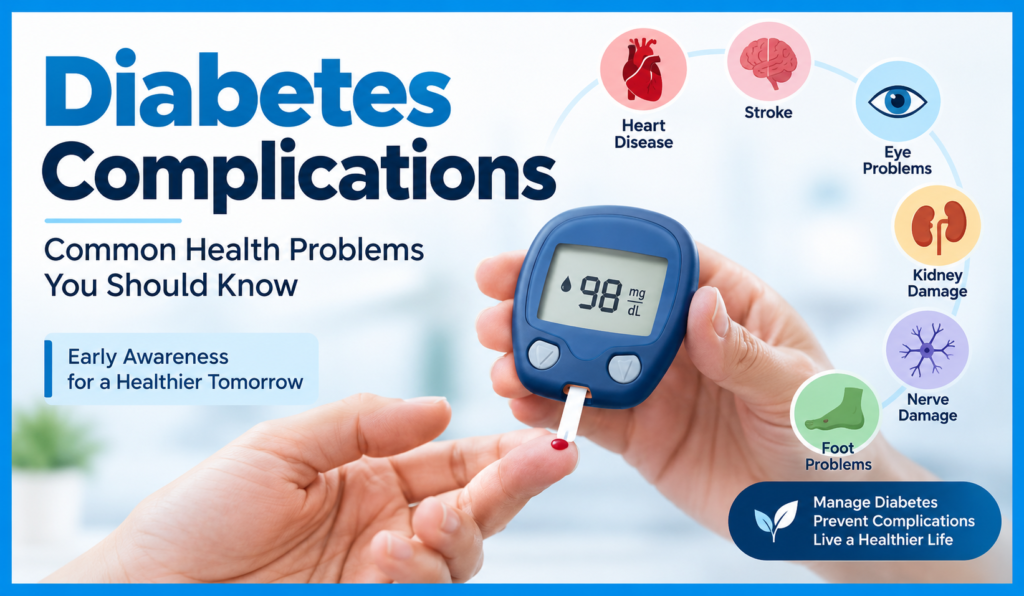
Diabetes Complications – Diabetes is a long-lasting condition. It changes how the body controls blood sugar. If glucose stays too high for months or years, it can slowly harm small blood vessels, nerves, and some organs. These harms are called diabetes complications.
Not every problem shows up right away. Some issues grow over time and may not cause clear symptoms at first. Going to routine check-ups helps catch changes early. Keeping blood sugar under control also matters. Eating well and staying active can lower the chance of complications. Learning the common warning signs can help someone get medical help sooner.
What Are Diabetes complications?
Diabetes complications are health problems that may develop when diabetes is not well controlled over time. High blood sugar can affect both small, and large blood vessels, which can eventually impact different parts of the body.
The risk of complications may be higher in people who have had diabetes for many years, or who also have high blood pressure, high cholesterol, obesity, or a sedentary lifestyle.
Common factors that increase the risk include
- Poorly controlled blood sugar
- High blood pressure
- High cholesterol
- Smoking
- Being overweight
- Lack of physical activity
- Skipping periodical check ups
Heart Disease, and Stroke
Diabetes can increase the risk of cardiovascular disease. High blood sugar can contribute to the buildup of fatty deposits inside arteries.
People with diabetes may also have high blood pressure, and unhealthy cholesterol levels, which can further increase the risk of heart attack, and stroke.
Points to remember
- Diabetes can increase the risk of heart disease
- High blood pressure can make the risk higher
- High cholesterol can contribute to blocked arteries
- Regular exercise supports heart health
- A balanced diet can help manage blood sugar, and cholesterol
- Chest pain, or severe breathing difficulty requires urgent medical attention
Diabetic Kidney Disease

The kidneys help in removing waste, and excess fluid from the blood. Diabetes damages the small blood vessels inside the kidneys.
This condition is commonly called diabetic kidney disease. It may not cause obvious symptoms during its early stages, making regular testing important.
Signs, and prevention points
- Kidney damage can develop without early warning symptoms
- Regular blood, and urine tests can help detect kidney problems
- Controlling blood sugar can help protect kidney function
- Blood pressure should be monitored regularly
- Swelling of the feet, or ankles should be discussed with a doctor
- Changes in urination should not be ignored
Diabetic Retinopathy, and Eye Problems
Diabetes can affect the small blood vessels in the retina, which is the light-sensitive layer at the back of the eye. Damage to these vessels can cause diabetic retinopathy.
If left untreated, severe eye disease can affect vision. Diabetes can also increase the risk of cataracts, and glaucoma.
Watch for these symptoms
- Blurred vision
- Sudden changes in eyesight
- Difficulty seeing at night
- Dark spots, or floaters
- Reduced vision
- Difficulty focusing
Regular eye examinations are important because some diabetes-related eye problems may begin before noticeable symptoms appear.
Diabetic Neuropathy
Long-term high blood sugar can damage nerves, particularly those in the legs, and feet. This is known as diabetic neuropathy.
Some people may experience numbness, tingling, burning, or pain. Reduced sensation can make it difficult to notice injuries.
Common symptoms include
- Tingling in the feet, or hands
- Numbness
- Burning sensation
- Sharp, or shooting pain
- Increased sensitivity
- Loss of feeling in the feet
Good blood sugar management, and regular medical check-ups can help reduce the risk of nerve damage.
Diabetes-Related Foot Problems
Foot problems are an important concern for people with diabetes. Nerve damage can reduce sensation, while poor circulation can make wounds slower to heal.
A small cut, or blister can become infected if it is not noticed, and treated promptly.
Good foot-care habits include
- Check your feet every day
- Look for cuts, blisters, swelling, and redness
- Keep your feet clean, and dry
- Wear comfortable, and properly fitting shoes
- Avoid walking barefoot if you have reduced sensation
- Do not ignore wounds that are slow to heal
- Seek medical advice if you notice signs of infection
Skin Problems
People with diabetes may be more likely to experience certain skin problems. High blood sugar, and changes in circulation can affect the skin’s ability to stay healthy, and heal properly.
Dry skin, itching, bacterial infections, fungal infections, and slow-healing wounds may occur.
Helpful skin-care tips
- Keep the skin clean, and moisturized
- Avoid very hot water, if your skin is dry
- Treat cuts, and minor injuries carefully
- Watch for redness, swelling, or discharge
- Seek medical advice for persistent skin infections
Oral, and Dental Problems
Diabetes can also affect, oral health. People with poorly controlled diabetes may have a higher risk of gum disease, tooth decay, dry mouth, and, oral infections.
Good dental hygiene should therefore be part of regular diabetes care.
Protect your, oral health by
- Brushing your teeth twice a day.
- Cleaning between your teeth regularly.
- Visiting the dentist for routine check-ups.
- Drinking enough water.
- Informing your dentist that you have diabetes.
- Getting treatment for bleeding, or swollen gums.
Digestive Problems
Diabetes-related nerve damage can sometimes affect the digestive system. When the nerves controlling digestion are affected, some people may experience digestive symptoms.
Possible symptoms include
- Bloating
- Nausea
- Constipation
- Diarrhea
- Feeling full quickly
- Abdominal discomfort
Persistent digestive problems should be discussed with a healthcare professional because they can have many possible causes.
Sexual, and Bladder Problems
Diabetes can sometimes affect the nerves, and blood vessels involved in sexual, and bladder function. Both men, and women may experience related problems.
Possible concerns include
- Erectile difficulties in men
- Reduced sexual function
- Urinary problems
- Frequent urinary infections
- Difficulty controlling the bladder
These problems can be uncomfortable to discuss, but medical evaluation can help identify the cause, and appropriate treatment.
How to Reduce the Risk of Diabetes Complications
Good diabetes management is one of the most important ways to reduce the risk of long-term complications.
Follow these healthy habits
- Monitor your blood sugar as recommended
- Take prescribed medicines regularly
- Eat a balanced, and nutritious diet
- Limit foods high in added sugar, and unhealthy fats
- Exercise regularly
- Maintain a healthy weight
- Monitor blood pressure
- Check cholesterol levels when advised
- Avoid smoking
- Limit alcohol, if you drink
- Get adequate sleep
- Attend regular medical appointments
Importance of Regular Diabetes Screening
Many diabetes complications can develop silently. Regular screening allows healthcare professionals to identify changes before they become more serious.
Important health checks may include
- Blood sugar testing
- Blood pressure monitoring
- Cholesterol testing
- Kidney function tests
- Urine tests
- Comprehensive eye examinations
- Foot examinations
- Dental check-ups
The exact frequency of these tests depends on your individual health, type of diabetes, age, treatment, and other risk factors.
When Should You See a doctor?
Do not ignore new, or unusual symptoms if you have diabetes. Early medical attention can help prevent minor problems from becoming serious.
Contact a healthcare professional, if you notice
- Persistent blurred vision
- Numbness, or severe pain in your feet
- A wound that does not heal
- Repeated infections
- Unexplained swelling
- Significant changes in urination
- Persistent digestive problems
- New, or worsening symptoms
Seek emergency medical attention for symptoms such as severe chest pain, sudden difficulty breathing, sudden weakness, confusion, or sudden loss of vision.
Diabetes management is not only about controlling blood sugar. It is also about protecting your overall health, and identifying potential complications as early as possible.
If you have diabetes, speak with your healthcare professional about your individual risk factors, and the regular screenings you need.
FAQs About Diabetes Complications
- What are the common complications of diabetes?
Common complications include heart disease, kidney disease, eye problems, nerve damage, foot problems, skin infections, and dental problems. - Can diabetes complications be prevented?
Many diabetes complications can be prevented, or delayed through good blood sugar control, healthy eating, regular physical activity, prescribed treatment, and routine health screenings. - How does diabetes affect the kidneys?
Long-term high blood sugar can damage the small blood vessels in the kidneys, and gradually reduce kidney function. - Why is foot care important for people with diabetes?
Diabetes can cause nerve damage, and poor circulation. This can make injuries difficult to notice, and slow down healing, increasing the risk of infection. - How often should people with diabetes have health check-ups?
The frequency depends on individual health needs. Regular blood sugar, blood pressure, kidney, eye, foot, and dental checks are commonly recommended as part of diabetes care.