

Early Symptoms of Kidney Failure – Kidneys are two vital organs that play an essential role in maintaining overall health. They filter waste products, remove excess fluid, balance electrolytes, regulate blood pressure, and support healthy red blood cell production.
When the kidneys begin to lose their ability to function properly, the condition is known as kidney failure, or chronic kidney disease. Unfortunately, kidney disease often develops gradually, and may not show obvious symptoms in its early stages.
This article briefly explain about the causes, risk factors, and warning signs can encourage people to seek medical attention at the right time.
What is kidney failure?
Kidney failure occurs, when the kidneys can no longer effectively filter waste, and excess fluids from the blood. Because of this failure, waste products build up in the body. This failure will affect nearly every organ system. Kidney failure may develop slowly over several months, or years – chronic kidney disease, or happen suddenly due to injury – acute kidney injury, or illness.
Early diagnosis is essential, because kidney damage is often irreversible, but proper treatment. can help preserve the remaining kidney function.
Early symptoms of kidney failure
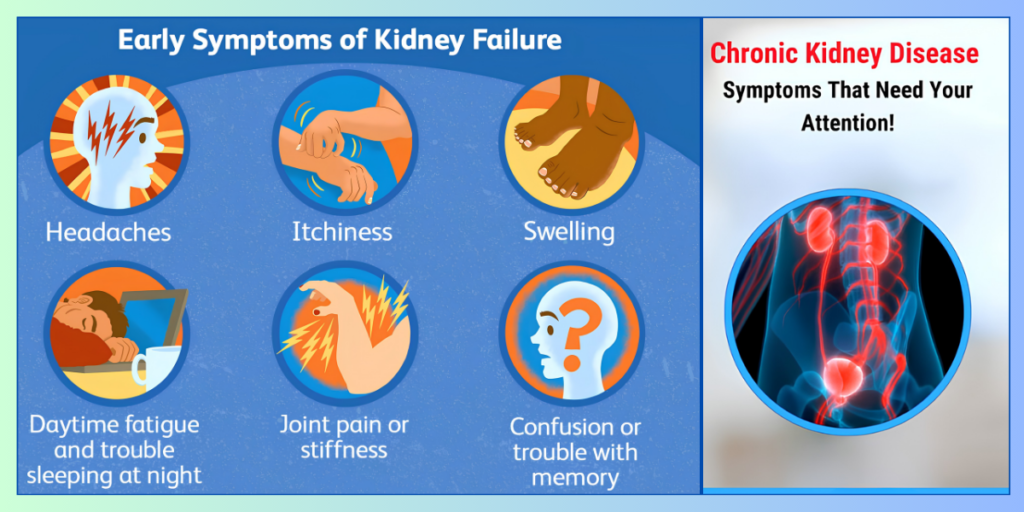
The symptoms of kidney failure may appear gradually, and often mistaken for common health problems. Paying attention to the warning signs can help identify kidney disease early.
These are the warnings signs are included
Persistent Fatigue
Healthy kidneys produce a hormone called erythropoietin, which helps make red blood cells. Damaged kidneys produce less of this hormone which leads to anaemia, and reduced oxygen supply throughout the body.
Common signs are included
- Constant tiredness
- Weakness
- Low energy levels
- Difficulty concentrating
Swelling in the Feet, Ankles, or Face
When the kidneys cannot remove excess fluid properly, fluid builds up in different parts of the body.
Common problems include
- Puffy eyes in the morning
- Swollen feet
- Swollen ankles
- Tight shoes, or rings
Changes in Urination
Changes in urine pattern are often among the earliest signs of kidney problems.
Monitor this
- Frequent urination, especially at night
- Reduced urine output
- Foamy, or bubbly urine
- Blood in urine
- Dark-coloured urine
- Pain, or burning while urinating
Loss of Appetite
Toxins accumulate in the bloodstream, because of this many people lose interest in eating.
These are the symptoms are included
- Feeling full quickly
- Nausea
- Poor appetite
- Weight loss
Nausea
Waste products that remain in the blood can irritate the digestive system.
This may cause
- Morning nausea
- Vomiting
- Bad taste in the mouth
- Digestive discomfort
Muscle Cramps
Kidney disease often causes electrolyte imbalances, especially low calcium, and abnormal potassium levels.
These are the symptoms are included
- Leg cramps
- Muscle spasms
- Muscle weakness
Dry, and Itchy Skin
Healthy kidneys maintain proper mineral balance. Kidney damage can lead to dry, itchy skin due to mineral imbalance, and toxin buildup.
You may notice
- Persistent itching
- Dry patches
- Flaky skin
Shortness of Breath
Fluid accumulation in the lungs, or anaemia caused by kidney disease may lead to breathing difficulties.
These are the warning signs are included
- Breathlessness while walking
- Difficulty climbing stairs
- Shortness of breath while lying down
Difficulty Sleeping
People with kidney disease often experience poor sleep quality because toxins remain in the bloodstream.
Sleep problems are included
- Insomnia
- Restless sleep
- Sleep apnea
- Frequent waking during the night
High Blood Pressure
The kidneys help regulate blood pressure. Kidney disease may cause uncontrolled hypertension, while high blood pressure can also worsen kidney damage. Regular blood pressure monitoring is essential for early detection.
Risk factors for kidney failure
Some people have a higher risk of developing kidney disease. People with these risk factors should undergo regular kidney function testing.
Major risk factors
These are the risk factors are included
- Diabetes
- Family history of kidney disease
- Heart disease
- Obesity
- Smoking
- Older age
- High cholesterol
- Frequent kidney infections
- Long-term use of certain medications
When should you see a doctor?
Early medical evaluation can prevent serious complications. Immediate medical attention is necessary if symptoms become severe, or urine production stops completely.
Consult a healthcare provider, if you experience.
- Swelling in the legs, or face
- Blood in urine
- Persistent foamy urine
- Frequent urination at night
- Ongoing fatigue
- Loss of appetite
- Unexplained nausea
- Difficulty breathing, and Persistent high blood pressure
- Sudden reduction in urine output
How is kidney failure diagnosed?
Doctors use several tests to evaluate kidney function. Early diagnosis allows treatment before significant kidney damage occurs.
Common diagnostic tests are included
- Blood tests (Creatinine, and eGFR)
- Urine analysis
- Urine protein test
- Blood pressure measurement
- Kidney ultrasound
- CT scan, or MRI – when required
- Kidney biopsy in selected cases
Can Kidney failure be prevented?
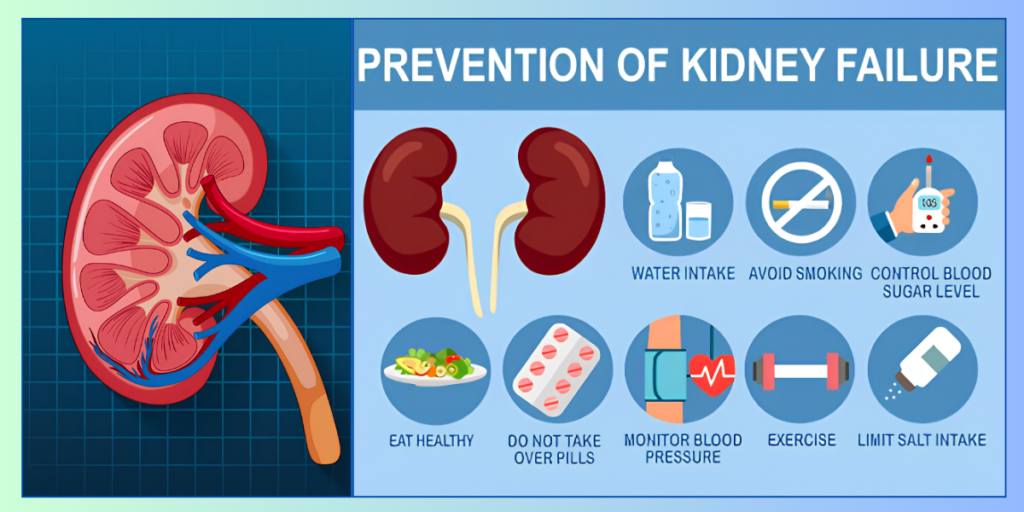
Although not all kidney diseases are preventable, healthy lifestyle choices can significantly reduce the risk.
Preventive measures
- Keep blood sugar under control
- Maintain healthy blood pressure
- Drink adequate water
- Eat a balanced, and kidney-friendly diet
- Limit salt, and processed foods
- Exercise regularly
- Avoid smoking, and excessive alcohol
- Body weight balance
- Avoid unnecessary painkiller use
- Regular health check ups
Treatment
Treatment depends on the cause, and stage of kidney disease. Early treatment can delay, or even prevent the need for dialysis.
Doctor references of medications are as follows
- Blood pressure
- Diabetes
- Dietary changes
- Fluid restriction
- Swelling
- Anaemia
- Dialysis in advanced kidney failure
- Kidney transplantation for suitable patients
Frequently Asked Questions about Kidney Failure
- What is the first symptom of kidney failure?
The earliest symptoms often include fatigue, changes in urination, swelling in the feet, or ankles, and persistent high blood pressure. - Can kidney failure be reversed?
Acute kidney injury may be reversible with prompt treatment, but chronic kidney disease usually cannot be reversed. Early treatment can slow its progression. - Who is most at risk of kidney failure?
People with diabetes, high blood pressure, obesity, heart disease, a family history of kidney disease, or those who smoke are at greater risk. - Which test is best to check kidney function?
Blood tests measuring serum creatinine, and estimated glomerular filtration rate (eGFR), along with urine protein tests are commonly used to assess kidney function. - How can I keep my kidneys healthy?
Maintain healthy blood pressure, blood sugar levels by staying hydrated as well as eating a balanced diet. Exercise regularly, avoid smoking, limit unnecessary painkiller use, and schedule routine health check-ups.