

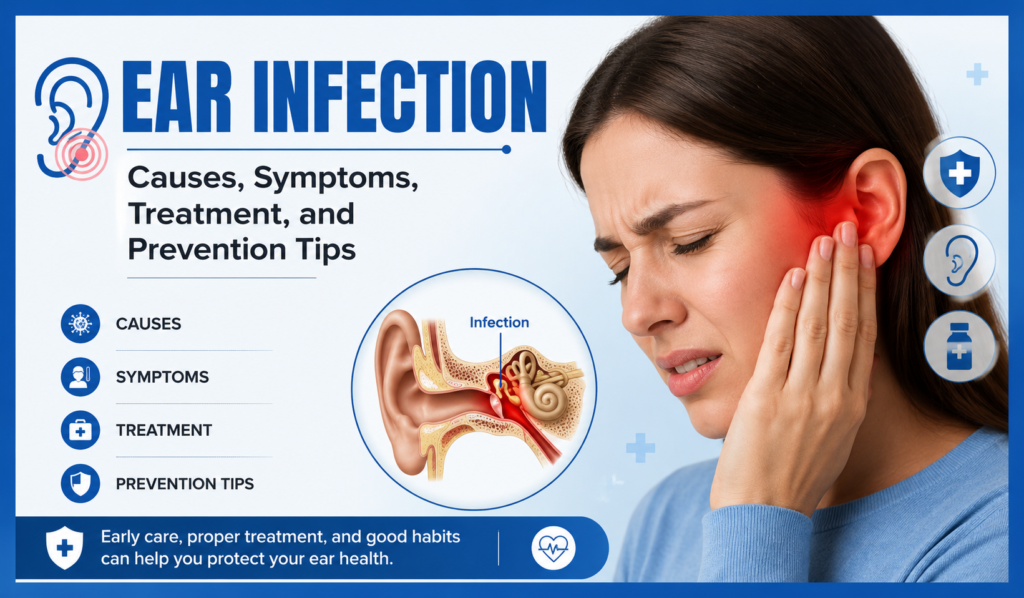
Ear Infection – Ear infections are seriously one of the most common health problems, they can affect the people of all ages. They might bring ear pain, an annoying sense of pressure, temporary hearing trouble, and yes sometimes fever, or fluid coming out.
Even though quite a few ear infections finally improve with careful at home care, some of them really do need a medical checkup and proper treatment, so it doesn’t turn into complications later.
If you already know what triggers these problems, what the usual symptoms feel like, how treatment is actually handled, along with some prevention thoughts, you can often notice an ear infection early, then get the right kind of medical help.
Ear Infection
An ear infection comes about when bacteria, viruses, or other small microorganisms stir up inflammation, or an infection in one or more parts of the ear. Ear infections are often sorted depending on which part is involved. Like for instance middle ear infections, also known as otitis media, are really quite common especially in children.
Causes of Ear Infection
Some factors can contribute to an ear infection. Children are more prone to middle ear infections, because their Eustachian tubes are smaller, and positioned differently from those of adults. This can make it easier for fluid to become trapped behind the eardrum.
The most common causes include
- Bacterial, or viral infections – Colds, flu, and other respiratory infections can cause inflammation, and allow infection-causing, organisms to reach the middle ear
- Fluid buildup – Fluid can collect behind the eardrum when the Eustachian tube becomes blocked. Bacteria, and virus may grow on this fluid
- Allergies – Allergic reactions may cause swelling, and congestion around the Eustachian tubes, increasing the risk of fluid accumulation
- Water exposure – Frequent swimming, or water trapped inside the ear canal can increase the risk of outer ear infections
- Ear injury – Scratching, or inserting objects into the ear canal can damage the skin, and make infection more likely
- Smoking, and second-hand smoke – Exposure to cigarette smoke can increase the risk of ear infections, particularly in children
Ear Infection symptoms
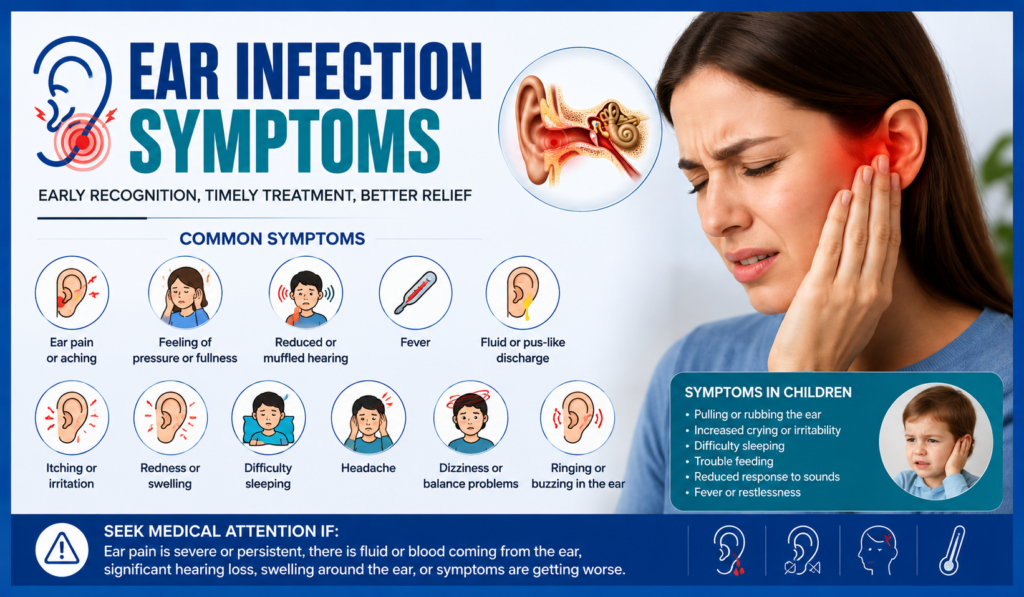
The symptoms of an ear infection may vary depending on the type, and severity of the infection. In young children, symptoms may be less obvious.
If these symptoms occur along with fever, or persistent pain, medical evaluation is recommended.
These are the Common symptoms include
- Ear ache
- A feeling of pressure, or fullness in the ear
- Reduced, or muffled hearing
- Fever
- Fluid, or pus-like discharge from the ear
- Difficulty sleeping
- Irritability, especially in young children
- Headache
- Dizziness, or problems with balance
- Ringing, or unusual sounds in the ear
Ear Infections Types
Ear infections can affect different areas of the ear.
Middle ear infection – This is common among children, and often develops after a cold, or respiratory infection. It can cause pain, fever, pressure, and temporary hearing problems
Outer ear infection – Also known as swimmer’s ear, this affects the ear canal. It is often associated with water exposure, and may cause pain, itching, redness, swelling, or discharge
Inner ear infection – Infections, or inflammation involving the inner ear are less common, and can cause dizziness, balance problems, nausea, and hearing changes. Similar symptoms can also have other causes, so proper medical assessment is important
Ear Infection Diagnosis?
A healthcare professional usually diagnoses an ear infection by examining the ear with an instrument called an otoscope. The doctor may look for redness, swelling, fluid behind the eardrum, or changes in the appearance of the eardrum. A proper diagnosis is important because ear pain does not always mean that an infection is present.
Depending on the symptoms, the doctor may also assess hearing, and balance. In recurrent, or complicated cases, additional tests may be recommended.
Ear Infection Treatment
How treatment is handled really depends on what kind of ear infection it is, why it happened, how severe it seems, and how long it has been going on. Some mild ear infections, especially the ones that show up with viral illnesses, might start getting better by themselves. In those situations, doctors often suggest watching how symptoms evolve, plus using suitable pain relief, and general supportive care.
If a bacterial infection is suspected, or if the infection is severe, or it just keeps lasting, then sometimes antibiotics are prescribed. Still, antibiotics should only be taken if a healthcare professional says they’re necessary. If antibiotics are advised, it’s important to finish the full course even if symptoms settle down early.
For infections of the outer ear, clinicians may prescribe medicated ear drops. Those drops may include antibiotics, antifungal medicines, or anti-inflammatory medication, depending on what’s actually driving the problem.
Also, reducing pain is often a big piece of treatment. Doctors or pharmacists can help pick pain-relief options that fit the patient’s age, overall health, and any other medicines already in use.
Finally, don’t pour oil, herbal mixes, leftover medicines, or other substances into the ear unless a qualified healthcare professional tells you to. Avoid putting cotton swabs, or any other objects into the ear canal, because that can make irritation worse, or even lead to injury.
When should you see a doctor?
Medical attention is especially important when ear pain is severe, symptoms are getting worse, or the infection does not improve. You should consider seeking medical advice if there is persistent fever, fluid, or blood coming from the ear, significant hearing loss, severe dizziness, swelling around the ear, or repeated ear infections.
Babies, and young children with significant ear pain, fever, unusual sleepiness, persistent crying, or feeding difficulties should be evaluated by a healthcare professional.
Prompt medical attention can help identify complications, and ensure that the appropriate treatment is provided.
Prevention Tips for Ear Infections
Although not every ear infection can be prevented, several simple measures can reduce the risk.
Prevention tips are as follows
- Wash your hands regularly to reduce the spread of viruses, and bacteria.
- Treat colds, and allergies appropriately to reduce congestion.
- Avoid exposing children to cigarette smoke.
- Keep ears dry after swimming, or bathing.
- Do not insert cotton buds, hairpins, or other objects into the ear canal.
- Avoid sharing personal items such as earphones when hygiene may be compromised.
- Keep vaccinations up to date as recommended by your healthcare provider.
- For babies, breastfeeding may provide protection against some infections.
- Seek medical advice for frequent, or recurring ear infections.
Good ear hygiene does not mean cleaning deep inside the ear. Earwax naturally protects the ear canal, and usually does not need to be removed unless it causes a problem.
Can Ear Infections Cause Hearing Problems?
An ear infection can sometimes cause temporary hearing difficulty because fluid, or inflammation interferes with the normal movement of the eardrum, and middle-ear structures. Hearing usually improves as the infection, and fluid resolve.
Repeated, or untreated infections may occasionally lead to complications that affects hearing. Children with persistent hearing difficulties should be evaluated because untreated hearing problems can interfere with speech, language development, learning, and communication.
FAQs
- What is the most common symptom of an ear infection?
Ear pain is one of the most common symptoms, although fever, pressure, hearing changes, and discharge may also occur. - Can an ear infection go away on its own?
Some mild ear infections may improve without antibiotics, but persistent, or severe symptoms should be evaluated by a healthcare professional. - Can ear infections cause hearing loss?
Yes. Fluid, and inflammation can cause temporary hearing difficulty. Persistent hearing loss requires medical evaluation. - Can I use cotton buds to clean an infected ear?
No. Cotton buds can irritate the ear canal, push earwax deeper, or cause injury. Avoid putting objects inside the ear unless advised by a professional. - When should I see a doctor for an ear infection?
Seek medical advice for severe, or persistent pain, high, or ongoing fever, ear discharge, significant hearing loss, dizziness, swelling around the ear, or recurrent infections.