


Childhood Allergies – More, and more kids are getting different kinds of allergies, and yes, they seem way more common nowadays. Some children might have mild, almost annoying symptoms like sneezing, itching, or skin rashes but others can run into digestive problems, or even breathing difficulties.
For parents, it’s kind of a crucial to spot the early warning signs sooner rather than later. That way it becomes easier to manage the situation, and also help to avoid the complications proactively.
At the same time, some allergies are pretty common, and mild in a general way, but on the other side we should still look for healthcare expert advice, when things don’t feel normal.
Childhood Allergies
Childhood Allergies – Basically, the immune system of a child, mistakenly treats some harmless substance as danger, and it releases chemicals such as histamine which causes allergic symptoms.
Some common allergens are certain foods, pollen, dust mites, pet hair particles, insect stings, and some medicines. Allergies can show up at different ages, and the symptoms may shift over time as children grow.
Some kids may have one allergy, while other children react to several triggers, kind of all at once.Read more.
Early Warning Signs of Childhood Allergies
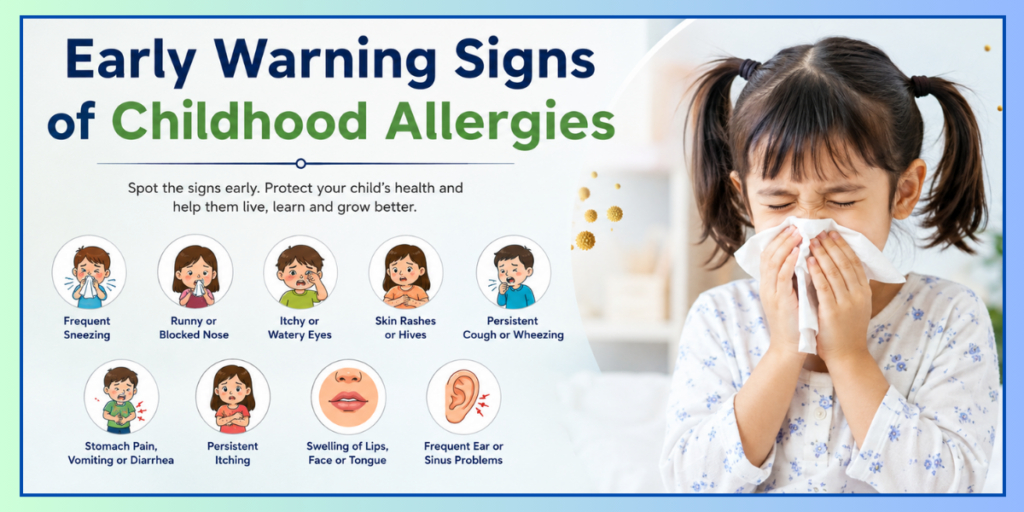
These are the Warning signs are included
Frequent Sneezing
Frequent, or repeated sneezing can be one of the earliest signs of an allergy. Allergy is a possible cause, if your child sneezes regularly, especially after exposure to dust, pollen, pets, or other environmental triggers.
Blocked, or Runny Nose
Children with allergies, may have a runny, stuffy, or itchy nose. The nasal discharge is often clear, and watery. Some children may also breathe through their mouth because their nose remains congested.
If nasal symptoms continue for weeks, or keep returning in certain environments, parents should discuss them with paediatrician.
Itchy, and Watery Eyes
Allergies can cause itchy, red, watery, or irritated eyes. Children may frequently rub their eyes because of the discomfort.
Sometimes this makes the irritation worse. Parents should pay attention, if these symptoms repeatedly occur during particular seasons, or after exposure to dust, pets, or outdoor environments.
Skin Rashes, and Hives
Skin reactions are another common sign of allergies. A child may develop red, itchy patches, raised bumps, or hives after exposure to a particular allergen.
Food, medicines, insect bites, and contact with certain substances may cause allergic skin reactions.
Persistent Itching
Some children may experience itching without an obvious rash. Repeated scratching can damage the skin, and may leads to irritation, or infection.
Parents should take a note of when the itching occurs, and whether it follows exposure to a particular substance. Itching can affect the skin, eyes, nose, or throat depending on the type of allergy.
Coughing, and Wheezing
Few allergies make the children having recurring cough, particularly during night, during exercise, or exposure to dust, pollen, or pets. Children may also experience wheezing, or chest stiffness.
Allergy-related respiratory symptoms can overlap with asthma, and other conditions. Medical assessment is important, when a child has repeated coughing, wheezing, or breathing difficulties.
Stomach Pain, and Digestive Problems
Food allergies, may cause symptoms involving the digestive system. Depending on the reaction, a child may experience stomach pain, vomiting, diarrhoea, nausea, or abdominal discomfort after eating a particular food.
Parents should pay attention to repeated patterns. If similar symptoms occur after the same food on different occasions, it is important to discuss the pattern with a paediatrician rather than removing, major foods from the child’s diet without professional guidance.
Swelling of the Face, Lips, or Tongue
Sudden swelling of the lips, face, eyes, or tongue can occur during an allergic reaction. This may happen after eating a food, taking a medicine, or being stung by an insect.
Swelling of the tongue, or throat can interfere with breathing, and may indicate a severe allergic reaction. Such symptoms require immediate medical attention.
Allergy Triggers in Children
Identifying the specific trigger is an important part of allergy management. Parents should avoid assuming that a particular substance is responsible without discussing recurring symptoms with a healthcare professional.
Children can react to many different substances.
These are the common triggers include
- Cow’s milk, and eggs
- Peanuts, and tree nuts
- Fish, and shellfish
- Wheat, and soy
- Dust mites
- Pollen
- Mold
- Insect stings
- Certain medicines
- Some soaps
- Cosmetics, and skin-care products
Childhood Allergies, and the Common Cold
- Allergies, and colds can sometimes appear similar, particularly in younger children. Both can cause sneezing, a runny nose, congestion, and coughing
- However, allergies commonly cause itching of the nose, and eyes, and may continue as long as the child is exposed to the allergen. Colds are caused by viral infections, and may be accompanied by symptoms such as sore throat, tiredness, fever, or body aches
Because symptoms can overlap, parents should not rely on one symptom to determine whether a child has an allergy. A doctor can help identify the likely cause of recurring symptoms.
How Parents Can Identify Allergy Triggers
Identifying triggers can take time. Parents can keep a simple record of their child’s symptoms, including when symptoms begin, what the child ate, where the child was, and whether the child came into contact with animals, dust, plants, medicines, or other possible triggers.
These are the steps include
- Keep a symptom diary
- Note foods eaten before symptoms appear
- Observe whether symptoms occur during particular seasons
- Pay attention to symptoms after visiting homes with pets
- Keep track of reactions after medicines, or insect stings
- Discuss recurring patterns with a paediatrician
Ways to Reduce Allergy Exposure
- Once a trigger has been identified, reducing exposure can help control symptoms. Parents can take some practical steps at home
- Regularly washing bedding, reducing dust accumulation, keeping indoor spaces clean, and maintaining good ventilation may help children with environmental allergies
- If a child has a known food allergy, parents should carefully follow medical advice about avoiding the responsible food, and checking food labels
Children with allergies should also be taught, in an age-appropriate way, about their triggers. Parents should inform teachers, caregivers, and other adults who regularly look after the child.
When Should Parents Seek Medical Help?
Parents should consult a paediatrician if symptoms are frequent, persistent, severe, interfere with sleep, or school activities, or repeatedly occur after exposure to a particular substance.
Medical evaluation is especially important when a child experiences repeated wheezing, breathing difficulties, widespread hives, significant swelling, or reactions after eating certain foods.
Parents should avoid giving medicines, or making major dietary changes without appropriate medical guidance, particularly in young children.
Recognizing a Severe Allergic Reaction
If these symptoms occur, parents should seek emergency medical care immediately, and follow any emergency allergy plan prescribed for the child.
These are the warning signs are included
- Difficulty breathing
- Swelling of the tongue, or throat
- Severe dizziness, or fainting
- Widespread hives
- Repeated vomiting
- Sudden weakness, or unusual sleepiness
- Difficulty speaking, or swallowing
Helping Children Live Comfortably with Allergies
Having an allergy does not mean a child cannot participate in school, sports, travel, or other activities. With proper diagnosis, and management, most children can continue their normal routines.
Parents can help by understanding the child’s triggers, following the treatment plan, and recommended by the healthcare professional, keeping necessary medicines available when prescribed, and communicating clearly with schools, and caregivers.
FAQs about Childhood Allergies
- What are the early signs of allergies in children?
Common early signs include frequent sneezing, runny, or blocked nose, itchy eyes, skin rashes, itching, coughing, and digestive problems. - What commonly causes allergies in children?
Common triggers include certain foods, pollen, dust mites, pet dander, mild, insect stings, and some medicines. - How can I know what is causing my child’s allergy?
Keeping a symptom, and exposure diary can help identify patterns. A doctor may recommend allergy testing when necessary. - Can childhood allergies go away?
Some childhood allergies may improve as a child grows, while others can continue into adulthood. It depends on the type of allergy, and the individual child. - When is an allergic reaction an emergency?
Difficulty breathing, swelling of the tongue, or throat, fainting, severe weakness, or signs of anaphylaxis require immediate emergency medical attention.