

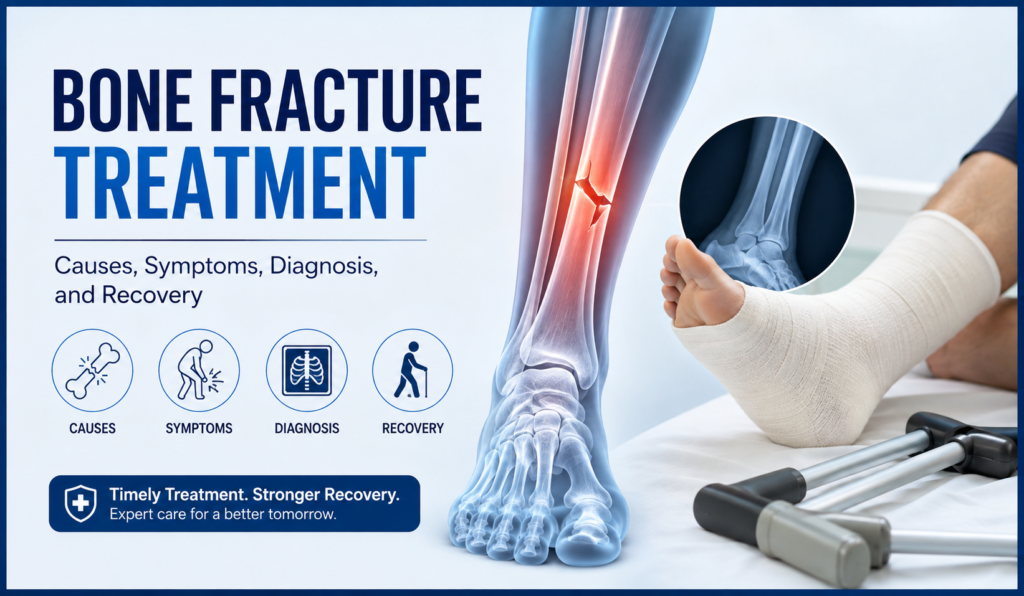
Bone Fracture Treatment – A bone fracture happens, when a bone breakdown, or grows a crack due to an injury, or excessive force, or certain medical conditions, that weaken the bones. Fractures happen to all people, and may affect any part of the body.
While some fractures are slight, and heal automatically, while others may require surgery, and specialized treatment. This article briefly explained, Bone fracture Treatment – Early diagnosis, and appropriate care are important for proper bone healing, and preventing long-term complications.Read more.
Bone Fracture
A bone fracture means a break in partial, or complete break in a bone. Fractures may happen after falls, road accidents, sporting injuries, or direct impacts. Fractures may also show up because of recurring stress, or because there is a calcium deficiency.
Now, the severity can change a lot. A simple fracture might be a clean break, with no real harm to the skin around it, while a complicated fracture can include several bone pieces, injured tissues, or even an open wound.
Causes of Bone Fractures
Bones are strong, and can withstand considerable pressure, but excessive force can cause them to break. It varies based on the age, Children may experience fractures during play, or sports, while older adults are more vulnerable to fractures following falls because bone density, and muscle strength can decrease with age.
These are the common causes include
- Road traffic accidents
- Falls from a height, or on slippery surfaces
- Sports-related injuries
- Direct impact, or blows
- Workplace accidents
- Repetitive stress, or overuse
- Osteoporosis, and other conditions that weaken bones
Types of Bone Fractures
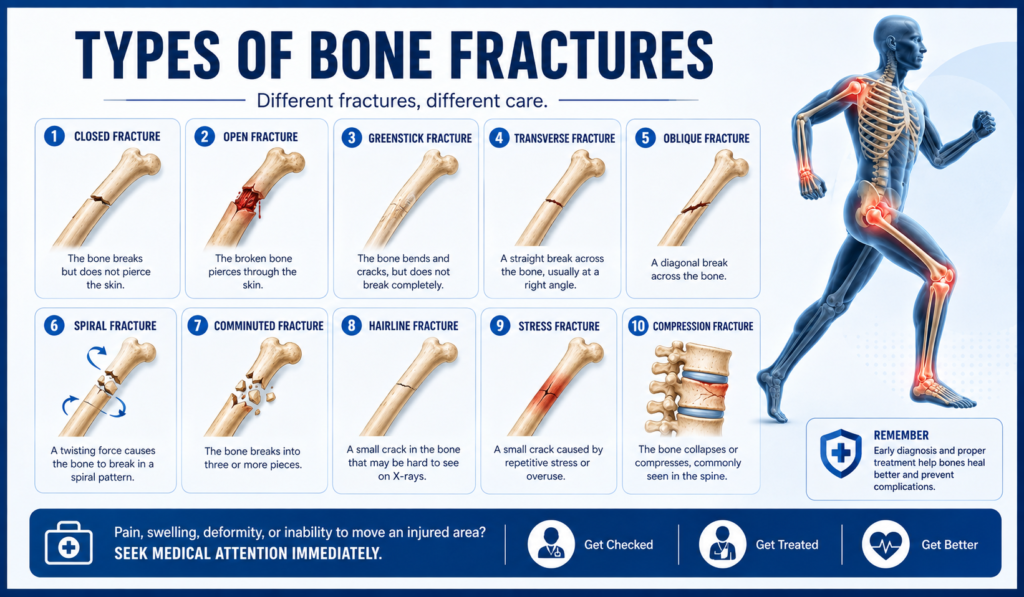
Bone fractures are classified by their break pattern, skin integrity, and alignment. The types are as follows
- Closed fracture – The bone is broken, but does not pierce the skin
- Open fracture – The broken bone is associated with an open wound, or communicates with the outside environment. These fractures require urgent medical attention because of the risk of infection
- Complete fracture – The bone is completely separated into two, or more pieces
- Partial fracture – The bone is cracked but not completely broken. This type is more commonly seen in children
- Comminated fracture – The bone breaks into several fragments, often following significant trauma
- Stress fracture – A small crack develops in the bone due to repeated stress, or overuse rather than major injury
Bone Fracture Symptoms
Fracture symptoms, may differ depending on the bone involved, and the severity of the injury. In some fractures, symptoms may be less obvious.
These are the common symptoms are included
- Sudden, and severe pain
- Swelling around the injured area
- Bruising, or discoloration
- Difficulty moving the affected body part
- Tenderness
- Weakness, or inability to put weight on the injured limb
- A grinding, or snapping sensation at the time of injury
- Abnormal movement of the affected area
Actions required after fracture
If you suspect that someone has suffered a fracture, avoid unnecessary movement of the injured area. Keep the affected area as still, and make them feel comfortable as possible, while waiting for medical assistance.
Do not attempt to straighten a visibly deformed bone, or push back the bone into place. If there is an open wound, cover it with a clean dressing without pressing directly on exposed bone.
If possible, support the injured limb in the position in which it was found. A suspected fracture should be medically evaluated, particularly when there is severe pain, deformity, numbness, significant swelling, or an open wound.
How are Bone fractures diagnosed?
Doctors usually begin with a physical examination, and ask about how the injury occurred. They may assess pain, swelling, movement, circulation, sensation, and the condition of the surrounding tissues.
An X-ray is commonly used to identify fractures, and determine their location, and pattern. Some fractures may not be clearly visible on an initial X-ray. In such cases, additional imaging such as a CT scan, or MRI may be recommended depending on the type of injury.
The diagnosis helps, the orthopaedic specialist determines most suitable treatment, and whether surgery is required.
Treatment options
Treatment depends on the type, and severity of the fracture, its location, whether the bone has moved out of position, and the patient’s overall health.
Immobilization
For many fractures, immobilization is an important part of treatment. A cast, splint, or brace may be used to keep the broken bone stable while it heals. The duration of immobilization varies depending on the fracture, and individual healing process.
Reduction
If the broken bone has moved out of its normal alignment, the doctor may need to reposition it. This is known as fracture reduction. It may be performed manually, or, in certain situations, during a surgical procedure.
Surgery
Some fractures require surgery to restore alignment, and stability. Orthopaedic surgeons may use plates, screws, rods, pins, or other fixation devices to hold the bone in the correct position while it heals.
Surgery may be considered for certain displaced, unstable, open, or complex fractures. The decision is based on the individual injury, and medical assessment.
Pain Management
Pain management is an important part of fracture care. Healthcare professionals may recommend appropriate pain-relieving medicines based on the patient’s age, medical history, and other medications.
Patients should follow medical instructions, and avoid taking medicines unnecessarily, or exceeding recommended doses.
Recovery, and Bone Healing
Bone healing generally occurs in several stages. Initially, the body forms a blood clot around the fracture. New tissue then develops around the broken area, followed by the formation of stronger bone. Over time, the bone continues to remodel, and regain strength.
Physiotherapy After a Fracture
After immobilization, muscles around the injured area may become weak, and joints may become stiff. Physiotherapy can help restore movement, flexibility, strength, balance, and function.
A physiotherapist may recommend specific exercises based on the fracture, and stage of recovery. Patients should not return to strenuous activity too quickly because doing so may interfere with healing, or increase the risk of another injury.
Following the rehabilitation plan carefully, can support a safer return to normal daily activities, and sports.
Nutrition for Bone Recovery
Good nutrition supports the body’s natural healing process. A balanced diet containing adequate protein, calcium, vitamin D, fruits, vegetables, and other essential nutrients can contribute to overall bone health.
People with nutritional deficiencies, or conditions affecting bone health may require individual dietary advice from a healthcare professional. Smoking can negatively affect bone healing, so avoiding tobacco is particularly important during recovery.
When Is a Fracture an Emergency?
Certain fracture-related symptoms require immediate medical attention. These include an open wound over the fracture, severe bleeding, significant deformity, loss of sensation, numbness, pale, or blue fingers, or toes, severe swelling, or an inability to move the affected limb.
Main injuries involving the head, neck, spine, pelvis, or multiple body parts also require urgent assessment.
Preventing Bone Fractures
Although accidents cannot always be prevented, several measures can help reduce fracture risk
- Maintain adequate calcium, and vitamin D intake
- Perform regular weight-bearing, and strength exercises when appropriate
- Use protective equipment during sports
- Follow workplace safety measures
- Keep floors, and stairways free of hazards
- Use appropriate footwear to reduce the risk of falls
- Have vision checked regularly
- Take precautions against falls, particularly among older adults
- Discuss bone health screening with a doctor when appropriate
Avoid smoking, and excessive alcohol consumption
FAQs About Bone Fracture Treatment
- How long does a bone fracture take to heal?
Most fractures take around 6–8 weeks to heal, but complicated fractures may require more time. - What are the common symptoms of a bone fracture?
Common symptoms include severe pain, swelling, bruising, tenderness, difficulty moving, and deformity around the injured area. - Does every bone fracture require surgery?
No. Many fractures can heal with splints, casts, or braces. Surgery may be needed for displaced, unstable, open, or complicated fractures. - Can I walk after a leg or foot fracture?
It depends on the type and location of the fracture. Do not put weight on the injured limb unless your doctor allows it. - Can physiotherapy help after a fracture?
Yes. Physiotherapy can help restore strength, flexibility, movement, balance, and normal function after the bone has sufficiently healed.