

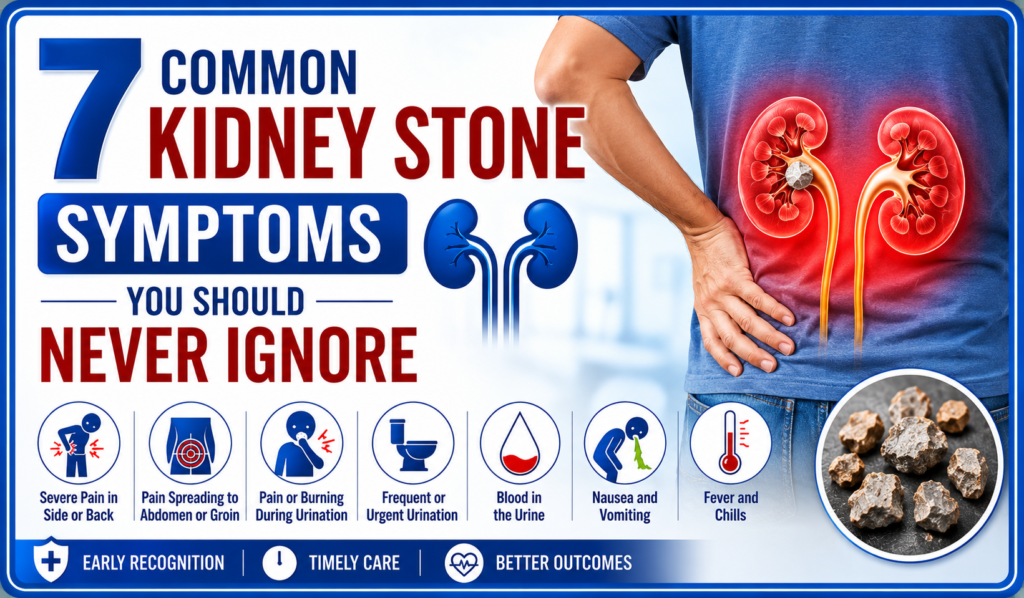
Kidney Stone Symptoms – Kidney stones are hard, crystal-like deposits, that form inside the kidneys, when certain minerals, and salts become concentrated in the urine. They can be very small, like a grain of sand, or much larger.
Some kidney stones, may pass without causing any visible symptoms, while others can cause severe pain, and urinary problems. Kidney stones are a common urinary system problem, and can affect people of different ages.
This article briefly explained, Common kidney symptoms, and knowing the early warning signs is important, because a stone can sometimes block the normal flow of urine or lead to an infection.
Kidney Stone Symptoms
Knowing the symptoms, can help you seek medical attention at the right time. These are the symptoms are included
Severe Pain in the Side or Back
One of the most common, and noticeable symptoms of a kidney stone is sudden, intense pain. The pain usually starts in the side or back, below the ribs. It may feel sharp, cramping, or extremely uncomfortable.
The pain may not remain in one place. As the stone moves through the urinary tract, the discomfort can change in location, and intensity. Some people experience pain that comes, and goes in waves rather than remaining constant.
You might notice
Severe or persistent pain should not be ignored, especially, if it is attended by other symptoms.
- Sudden pain in the side or lower back
- Sharp or severe cramping
- Pain that comes in waves
- Struggle finding a comfortable position
- Pain, that becomes stronger over time
Pain That Moves to the Lower Abdomen or Groin
Kidney stone pain can travel from the back or side toward the lower abdomen, pelvis, or groin. This usually happens as the stone moves from the kidney into the ureter.
The ureters are narrow tubes that carry urine from the kidneys to the bladder. When a stone moves through these tubes, it can cause irritation, and muscle spasms, resulting in pain that changes location.
Pain may be felt in
Pain that moves from the side or back toward the groin is a common pattern associated with kidney stones
- Lower abdomen, and Pelvic area
- Groin
- Side of the body, and Lower back
Pain or Burning While Urinating
Another symptom of kidney stones is pain or a burning sensation when passing urine. This can happen when a stone reaches the lower part of the urinary tract, and irritates the surrounding tissues.
You may experience discomfort every time, you urinate or notice a sharp sensation near the bladder or urinary opening.
Watch for
If these symptoms continue or become worse, consult a healthcare professional
- Burning, while urinating
- Pain during urination
- Discomfort around the bladder
- Increased urinary urgency
- Changes in normal urination
Frequent or Urgent Need to Urinate
Kidney stones can affect your normal urination pattern. When a stone moves close to the bladder, you may feel an increased need to urinate.
You may feel an urgent need to use the bathroom even, when only a small amount of urine is produced. Some people may also experience, pressure or discomfort in the lower abdomen.
Urinary changes are included
Frequent urination can have many causes, so persistent symptoms should be evaluated to determine the underlying problem,
- Frequent trips to the bathroom
- Sudden urgency to urinate
- Passing only a small amount of urine
- Discomfort, while urinating
- Feeling that your bladder is not completely empty
Blood in the Urine
Blood in the urine is another important symptom that should never be ignored. Kidney stones can have rough surfaces that irritate the lining of the urinary tract as they move, sometimes causing bleeding.
The urine may appear pink, red, or brown. In some cases, the amount of blood is very small, and can only be detected through a urine test.
These are the Possible signs include,
- Pink-coloured urine
- Red urine
- Brown or tea-coloured urine
- Blood detected during a urine test
- Blood accompanied by side or back pain
Blood in the urine does not always mean you have kidney stones. It can have several other causes, so medical evaluation is important.
Nausea, and Vomiting
- Kidney stones can sometimes cause nausea, and vomiting, particularly when the pain is severe
- The intense pain caused by a stone can affect the nerves connected to the digestive system, making you feel sick
Some people may experience nausea, during a severe episode of kidney stone pain, while others may actually vomit.
Repeated vomiting can also make it difficult to drink enough fluids. This may increase the risk of dehydration, which can make urinary problems more difficult to manage.
Seek medical attention, if you experience,
- Severe pain with nausea
- Repeated vomiting
- Difficulty keeping fluids down
- Signs of dehydration
- Worsening weakness or discomfort
Fever, and Chills
Fever, and chills are particularly important warning signs when kidney stones are suspected. They may indicate an infection in the urinary tract or kidneys.
A stone can sometimes block the normal flow of urine. If an infection develops behind a blockage, it can become a serious medical problem, and may require urgent treatment.
Do not ignore kidney stone symptoms combined with,
- Fever
- Chills or shivering
- Feeling unusually weak
- Severe or worsening pain
- Vomiting, and Difficulty passing urine
If you have these symptoms, seek medical attention promptly rather than waiting for the stone to pass naturally.
What Causes Kidney Stones?
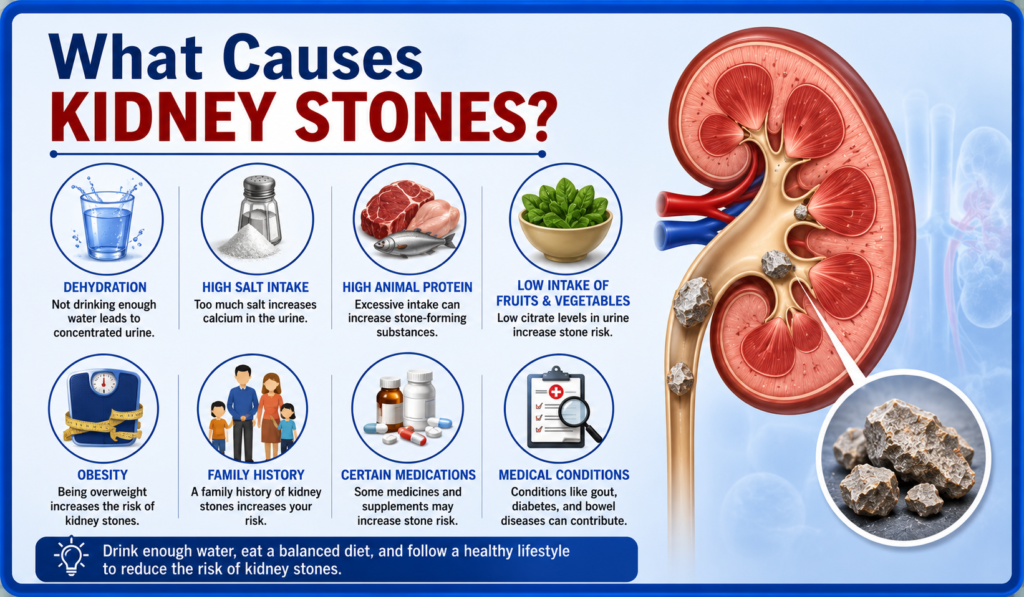
- Kidney stones develop when certain substances in the urine become highly concentrated, and form crystals. These crystals can gradually grow into stones
- Some factors can increase the risk of developing kidney stones
Risk factors
These are the common risk factors are included,
- Not drinking enough water
- Excessive salt intake
- Certain dietary habits
- Family history of kidney stones
- Previous history of kidney stones
- Certain medical conditions
- Obesity or being overweight
- Some medications
- Dehydration, especially in hot weather
The type of kidney stone can also influence its causes, and prevention. People who have repeated stones may need testing to identify the type of stone, and determine why they are forming.
When Should You See a doctor?
Not every kidney stone requires emergency treatment. Small stones may sometimes pass naturally with appropriate medical guidance. However, certain symptoms require prompt evaluation
Contact a healthcare professional, if you have,
- Severe or persistent side or back pain
- Blood in your urine
- Painful urination
- Repeated vomiting
- Difficulty passing urine
- Fever or chills
- Symptoms that are getting worse
Severe pain combined with fever or chills is particularly concerning, because it may indicate an infection associated with a urinary blockage.
How Are Kidney Stones Diagnosed?
A healthcare professional may ask about your symptoms, medical history, diet, fluid intake, and previous kidney stones. Urine tests can check for blood, infection, and substances that may contribute to stone formation.
Blood tests may also be performed to assess kidney function, and identify certain risk factors. Imaging tests such as an ultrasound or CT scan may be recommended to determine the size, and location of the stone, and whether it is blocking urine flow.
Treatment depends on factors, such as the stone’s size, location, symptoms, and whether complications are present.
How Can You Reduce the Risk of Kidney Stones?
Drinking enough water is one of the most important steps for reducing the risk of many kidney stones. Adequate fluid intake helps dilute substances in the urine that can form crystals
Helpful prevention measures
It includes,
- Drink sufficient water throughout the day
- Avoid excessive salt in your diet
- Maintain a balanced, and healthy diet
- Stay hydrated during hot weather, and physical activity
- Follow your doctor’s dietary recommendations, if you have had kidney stones
- Discuss recurrent kidney stones with a healthcare professional
People who frequently develop kidney stones may need personalized dietary advice based on the type of stone they have.
FAQs about Kidney Stone Symptoms
- What is the most common symptom of kidney stones?
Severe, sudden pain in the side or back is one of the most common symptoms of kidney stones. The pain may move toward the lower abdomen or groin as the stone travels. - Can kidney stones cause blood in the urine?
Yes. A kidney stone can irritate the lining of the urinary tract, and cause blood to appear in the urine. Blood may be visible or detected only through testing. - Can kidney stones cause frequent urination?
Yes. A stone that moves closer to the bladder may cause frequent or urgent urination, sometimes with only a small amount of urine being passed. - Is fever with kidney stones dangerous?
Fever, and chills can indicate an infection, especially when a kidney stone is blocking urine flow. This combination requires prompt medical evaluation. - How can kidney stones be prevented?
Drinking enough water, limiting excessive salt intake, maintaining a balanced diet, and following personalized medical advice can help reduce the risk of kidney stones.