

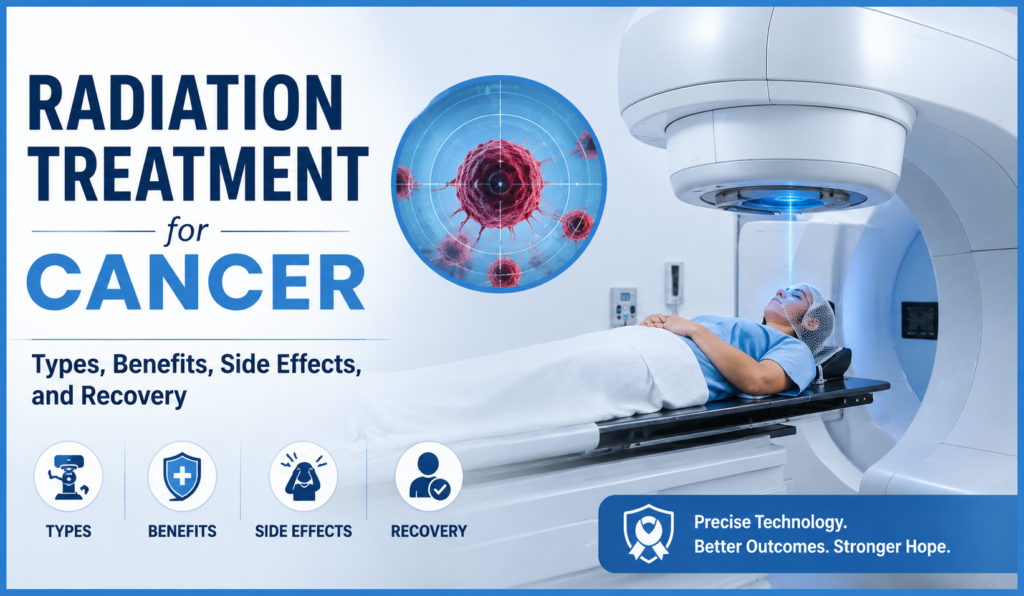
Radiation Treatment for Cancer – Radiation treatment, often called radiation therapy, is used a lot for cancer care. It sends high-energy radiation into the body. This can harm cancer cells so they cannot grow or keep dividing.
Radiation may be the only treatment, or it may be combined with other options. Those can include surgery, chemotherapy, targeted therapy, or immunotherapy.
Which plan is chosen depends on several things. Doctors look at the kind of cancer, where it is found, and how far it has spread. They also consider the patient’s general health.Read more.
Radiation Therapy
Radiation therapy delivers specific amounts of radiation to harm cancer cells. Today’s techniques focus on aiming the beams closely at the tumor. At the same time, they try to limit the dose that reaches normal tissue.
Doctors choose this treatment for several reasons. Sometimes the goal is cure. In other cases, it lowers the chance that cancer comes back after an operation. It can also shrink a mass before surgery.
Types of Radiation Treatment
External Beam Radiation Therapy
External beam radiation therapy is the most common type. A machine outside the body delivers radiation toward the cancerous area. Treatment is usually given in multiple sessions over several days or weeks, depending on the cancer, and treatment plan.
These are the Common forms are included
- 3D conformal radiation therapy – Uses imaging to shape radiation beams according to the tumor
- Intensity-modulated radiation therapy – Adjusts radiation intensity to target the tumor more precisely
- Image-guided radiation therapy – Uses imaging during treatment to improve accuracy
- Stereotactic radiation therapy – Delivers highly focused radiation to small or well-defined tumors in fewer treatment sessions
- Proton beam therapy – Uses protons rather than traditional X-rays, and may be appropriate for certain cancers
Internal Radiation Therapy
It is also known as brachytherapy, involves placing a radioactive source inside or close to the tumor.
It allows a high dose of radiation to be delivered directly to the cancerous area while limiting radiation exposure to surrounding tissues.
Systemic Radiation Therapy
Some radioactive medicines are taken by mouth or given through an injection or infusion. The radioactive substance travels through the body, and targets specific cancer cells.
This approach may be used for certain cancers, including some thyroid cancers, and other cancers that can be targeted with radioactive substances.
Benefits of Radiation Therapy
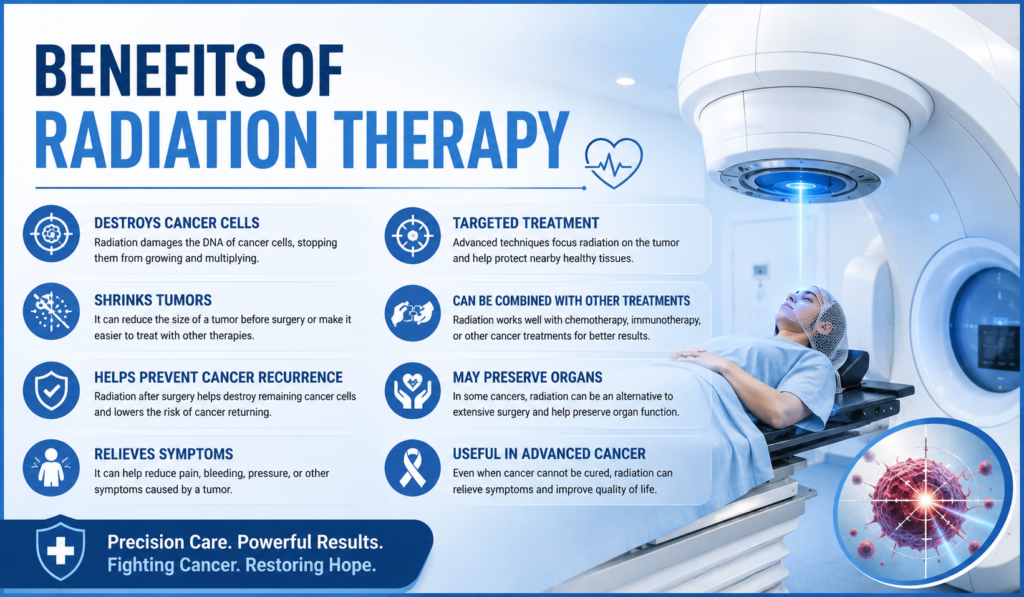
Radiation therapy can provide several important benefits depending on the individual cancer, and treatment goal.
- Tumor shrinkage – Radiation may reduce the size of a tumor before surgery or other treatment
- Reducing recurrence risk – Radiation may be recommended after surgery to destroy remaining microscopic cancer cells
- Symptom relief – Radiation can help relieve symptoms caused by advanced cancer, including pain, bleeding, or pressure
- Organ preservation – In some cancers, radiation may help treat the tumor while allowing certain organs or body structures to be preserved
- Cancer control – It can destroy cancer cells or slow their growth
Side Effects of Radiation Therapy
Side effects vary depending on the part of the body being treated, the radiation dose, the treatment schedule, and the individual’s health.
These are the side effects are included
- Tiredness or fatigue
- Skin redness, dryness, irritation, or sensitivity
- Hair loss in the treated area, and Changes in appetite
- Nausea or vomiting in some patients
- Swelling in the treated area
- Changes in bowel or bladder habits when the abdomen or pelvis is treated
- Mouth or throat irritation when the head or neck area is treated
How to Manage Side Effects
- Patients should discuss new or worsening symptoms with their cancer care team
- Helpful measures may include getting enough rest, maintaining adequate nutrition, and fluids, following recommended skin-care instructions, and taking prescribed medicines for symptoms such as nausea or pain
Patients should avoid applying creams, lotions, or other products to the treated skin unless their radiation team recommends them.
Radiation Therapy, and Recovery
Recovery, it depends on the type of cancer, treatment area, radiation dose, and whether radiation is combined with other treatments. Fatigue may continue for some time after treatment ends, so gradually returning to normal activities can be helpful.
Follow-up appointments are important after radiation therapy. Doctors may screen recovery, manage side effects, assess treatment response, and check for signs of cancer recurrence.
A balanced diet, it includes suitable hydration, appropriate physical activity, good sleep, and emotional support can also contribute to recovery.
Patients should follow individualized recommendations from their healthcare team.
When to see Your Doctor
Reach out to your cancer care team, if you have symptoms that get worse fast or feel severe. Call if you cannot eat or drink well. Also call for ongoing vomiting. Get help for major skin changes, strange bleeding, or a fever. Contact them for trouble breathing too.
If anything, else worries you, do the same. Getting prompt medical advice can help spot problems early and manage them.
FAQs about Radiation Treatment for Cancer
- Is radiation therapy painful?
The radiation treatment itself is generally painless, although some patients may develop side effects during or after treatment. - How long does radiation therapy take?
Treatment may range from a single session to several weeks, depending on the cancer, and treatment plan. - Does radiation therapy cause hair loss?
Hair loss usually occurs only in the area receiving radiation, and depends on the treatment dose, and location. - Can radiation therapy cure cancer?
For some cancers, radiation therapy can be part of a curative treatment plan. In other cases, it is used to control the disease or relieve symptoms. - Can I continue my normal activities during radiation therapy?
Many patients can continue some normal activities, but fatigue, and other side effects may require adjustments. Your oncology team can provide personalized guidance.