

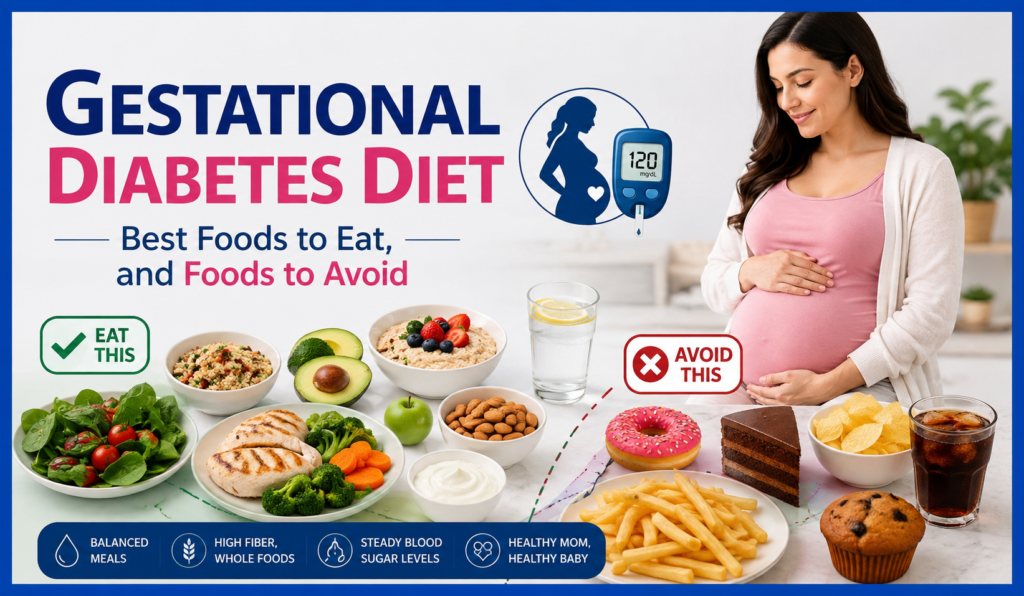
Gestational Diabetes Diet – Gestational diabetes diet means a balanced meal plan which helps in keep our blood sugar steady especially during pregnancy. One should monitor the quantity of carbohydrates they have.
Focusing on carbohydrates means not to avoid, but we may need a mix of protein, fibre, and good fats during every meal. This mix helps in maintaining the blood sugar steady and have a healthy life.
Gestational diabetes
Gestational diabetes often starts in the second or third trimester. During pregnancy hormones are less reactive to insulin. If the pancreas cannot make extra insulin fast enough, glucose in the blood may rise.
For many people, gestational diabetes can be controlled. Following healthy food choices, exercise leads to healthy life style. Checking blood sugar is also important. Some people also need medicine if it is recommended.
Why Diet Matters in Gestational Diabetes?
The foods you eat directly affect your blood glucose levels. Large portions of refined carbohydrates, and sugary foods can cause blood sugar to rise quickly. On the other hand, choosing high-fibre carbohydrates, and combining them with protein can help provide steady energy, and better blood sugar control.
A balanced diet can also help provide important nutrients needed for the baby’s growth, and the mother’s health.
Best Foods to Eat for Gestational Diabetes
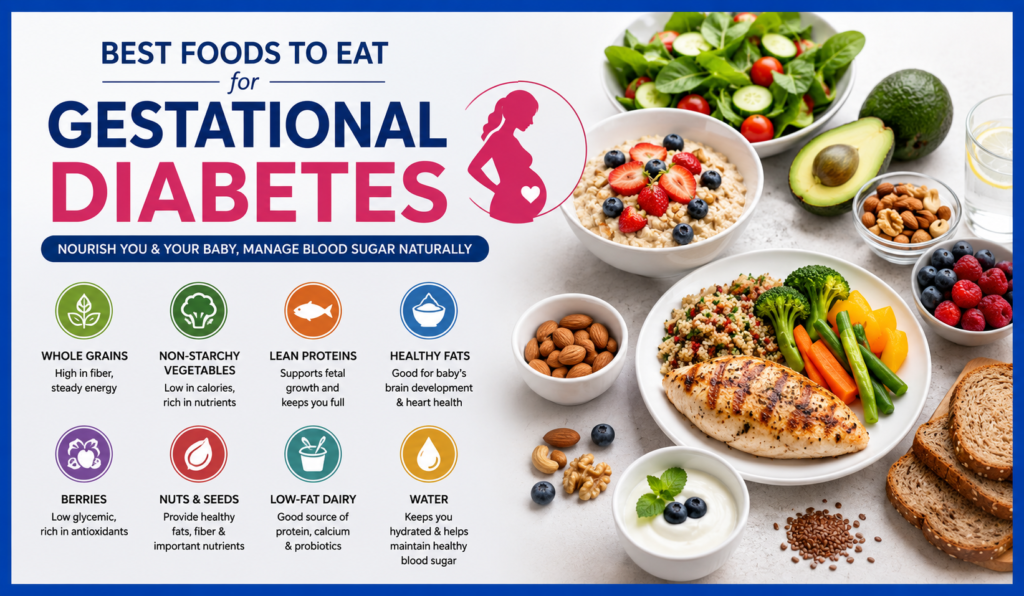
Non-Starchy Vegetables
Vegetables are an important part of a gestational diabetes meal plan because they provide fibre, vitamins, minerals, and antioxidants while generally being lower in carbohydrates.
These are the good choices include
- Spinach
- Broccoli
- Cauliflower
- Cabbage
- Cucumber, and Tomato
- Capsicum
- Green beans
- Carrots in moderate portions
- Bottle gourd
- Ridge gourd. And Bitter gourd
Try adding vegetables to lunch, and dinner, and including them in snacks when appropriate.
High-Fiber Carbohydrates
Carbohydrates are an important source of energy during pregnancy, but choosing minimally processed, high-fibre options can be beneficial for blood sugar management.
These are the good choices are included
- Whole-wheat roti
- Oats
- Brown rice
- Quinoa
- Barley
- Whole-grain bread
- Millets
- Beans, and lentils
Portion size still matters because even nutritious carbohydrates can raise blood glucose when eaten in large amounts.
Protein-Rich Foods
Protein can help make meals more filling, and can be combined with carbohydrate-containing foods as part of a balanced meal.
These are the healthy protein choices include
- Eggs
- Fish that is considered safe during pregnancy
- Skinless chicken
- Paneer in appropriate portions
- Unsweetened Greek yogurt
- Tofu
- Lentils
- Chickpeas
- Beans
- Nuts
- seeds
Vegetarian women can obtain protein from pulses, beans, tofu, paneer, eggs, nuts, and seeds according to their dietary preferences, and medical advice.
Healthy Fats
Healthy fats are important during pregnancy, and can be included in moderate amounts.
Options include
- Avocado
- Nuts, and Seeds
- Natural peanut butter without added sugar
- Olive oil
- Other unsaturated vegetable oils
Although healthy fats are nutritious, they are calorie-dense, so reasonable portions are important.
Whole Fruits in Moderate Portions
Fruit provides fibre, vitamins, minerals, and antioxidants. However, fruit still contains naturally occurring carbohydrates, so portion size, and timing can matter for people managing gestational diabetes.
Good options may include
- Apple
- Pear
- Orange
- Guava
- Kiwi
- Berries
- Peach
- Small portions of mango
Whole fruit is generally a better choice than fruit juice because it contains fiber, and takes longer to consume.
Foods to Limit, or Avoid
Sugary Drinks
Sugar-sweetened beverages can cause blood glucose to rise quickly, and provide little nutritional value.
Try to avoid, or limit
- Soft drinks
- Sweetened juices
- Energy drinks
- Sweetened iced tea
- Milkshakes
- Sweetened coffee beverages
Water is generally the best everyday drink. Unsweetened beverages can also be suitable depending on your healthcare provider’s advice.
Sweets, and Desserts
Foods high in added sugar should generally be limited.
Examples include
- Cakes, and Cookies
- Pastries
- Candy, and Ice cream
- Doughnuts
- Sweetened desserts
- Indian sweets such as Gulab jamun, jalebi, and laddu
These foods can contain considerable amounts of sugar, and refined carbohydrates.
Refined Grains
Highly refined carbohydrate foods can cause blood sugar to increase more rapidly than higher-fibre alternatives.
These are the limit foods are included
- White bread
- Refined flour products
- Large portions of white rice
- Regular noodles
- Bakery products
- Refined flour snacks
Instead, choose whole-grain, or higher-fibre alternatives when appropriate.
Processed, and Fried Foods
Many processed, and fried foods are high in calories, unhealthy fats, salt, or refined carbohydrates.
These are the examples are included,
- Chips. And Fried snacks
- French fries
- Packaged pastries
- Highly processed fast foods
Gestational Diabetes Meal Pattern
A practical meal can contain a combination of vegetables, protein, and a controlled portion of high-fibre carbohydrates.
For example,
Breakfast – Vegetable omelette with a small portion of whole-grain toast
Mid-morning snack – A small portion of fruit with nuts
Lunch – Vegetable salad, dal, or grilled chicken, vegetables, and a controlled portion of brown rice, or whole-wheat roti
Evening snack – Unsweetened yogurt with a few nuts
Dinner – non-starchy vegetables with paneer, tofu, fish, chicken, or dal, and an appropriate portion of whole grains
These are general examples rather than a personalized pregnancy meal plan. Individual carbohydrate requirements can vary considerably.
Important Tips for Managing Blood Sugar
It includes,
- Eat meals at regular times
- Avoid skipping meals
- Pay attention to carbohydrate portion sizes
- Choose whole grains, and fibre-rich foods more often
- Include protein with meals, and suitable snacks
- Prefer whole fruit over fruit juice
- Drink enough water
- Limit foods, and drinks containing added sugar
- Follow your recommended blood glucose monitoring schedule
- Stay physically active if your pregnancy care provider says it is safe
- Take prescribed medication exactly as directed
Can You Eat Rice, If You Have Gestational Diabetes?
Yes. Having gestational diabetes does not necessarily mean you must completely eliminate rice. The amount, and type of rice, as well as what you eat with it, can affect your blood glucose response.
Instead of eating a large serving of white rice alone, consider a smaller portion combined with vegetables, and a protein source such as dal, beans, tofu, eggs, fish, or chicken. Some people may find higher-fibre, or less-processed grains easier to incorporate into their blood sugar management plan.
Can You Eat Fruit with Gestational Diabetes?
Yes. Fruit can be part of a healthy pregnancy diet. However, portion size, and individual blood glucose responses are important.
Choose whole fruit rather than juice, and consider pairing a small portion of fruit with a protein, or healthy-fat source, such as nuts, or unsweetened yogurt. Your healthcare provider, or dietitian can help you determine suitable portions.
The Bottom Line
A gestational diabetes diet should provide enough nutrition for both mother, and baby while helping maintain healthy blood glucose levels.
Focus on vegetables, high-fibre carbohydrates, protein-rich foods, healthy fats, and whole fruits in appropriate portions. At the same time, limit sugary drinks, sweets, refined carbohydrates, and highly processed foods.
Most importantly, there is no single diet that works for every pregnant woman with gestational diabetes.
Your carbohydrate needs; blood sugar targets, activity level, pregnancy stage, and overall health should be considered, when creating a meal plan. A doctor, or registered dietitian can help develop an individualized plan that is safe for you, and your baby.
FAQs about Gestational Diabetes Diet
- What is the best diet for gestational diabetes?
A balanced diet containing vegetables, high-fibre carbohydrates, protein, healthy fats, and controlled portions is generally recommended. - Can I eat sweets if I have gestational diabetes?
Sweets should generally be limited because they are high in added sugar, and can raise blood glucose quickly. - Can I eat rice with gestational diabetes?
Yes, but portion size matters. Pairing a moderate portion with vegetables, and protein may help manage the meal’s blood glucose impact. - Which fruits are good for gestational diabetes?
Whole fruits such as apples, pears, guava, oranges, kiwi, and berries can be included in appropriate portions. - Can gestational diabetes be controlled with diet alone?
Some women can manage their blood glucose through diet, and physical activity, while others may need medication. Follow your healthcare provider’s recommendations.