

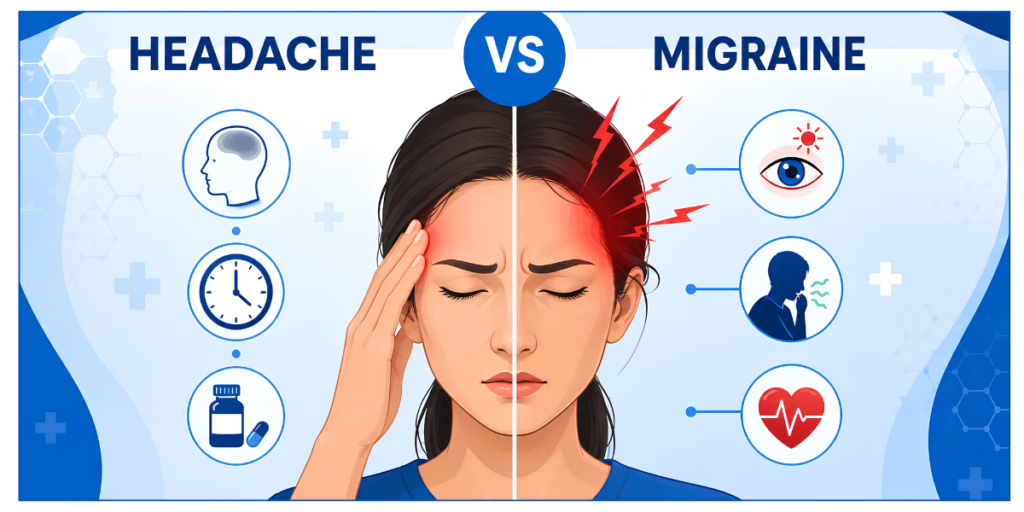
Migraine vs Headache – Headaches are one of the most common health complaints, not every headache is a migraine. While both can cause pain in the head, migraines are often more intense, and may come with the additional symptoms, such as nausea, sensitivity to light, or visual disturbances.
This article briefly explains about the difference between migraine, and regular headache. It also helps you identify the early symptoms, and seek for suitable treatment.
What Is a Headache?
A headache is a pain, or discomfort felt in the head, scalp, or neck. It can happen due to stress, lack of sleep, dehydration, eye strain, skipped meals, or other factors.
A common type is a tension headache, which usually causes mild to sensible pressure, or a tightening sensation around the forehead, temples, or back of the head.
Most, ordinary headaches improve with the rest, hydration, stress management, or through proper medication.
What is Migraine?
A migraine is a neurological condition that, can cause moderate to severe, often throbbing, or pulsating head pain. It may affect one, or both sides of the head, and can last for several hours, or even days.
Migraine attacks may also involve symptoms beyond head pain, including nausea, vomiting, sensitivity to light, and sound, and visual changes.
Some people experience an aura before, or during a migraine. Aura can include flashing lights, zigzag patterns, blind spots, tingling, or temporary difficulty speaking.Read more.
Migraine vs Headache - Key Differences
Feature | Regular Headache | Migraine |
Pain | Mild to moderate | Moderate to severe |
Pain type | Pressure, or tightness | Often throbbing, or pulsating |
Location | Often both sides | Often one side, but can affect both |
Nausea | Less common | Common |
Vomiting | Uncommon | May occur |
Light sensitivity | Sometimes | Common |
Sound sensitivity | Sometimes | Common |
Aura | Usually, absent | May occur |
Physical activity | Often does not worsen pain | May worsen pain |
Duration | Usually, shorter | Can last 4–72 hours |
Feature | Regular Headache | Migraine |
Pain | Mild to moderate | Moderate to severe |
Pain type | Pressure, or tightness | Often throbbing, or pulsating |
Location | Often both sides | Often one side, but can affect both |
Nausea | Less common | Common |
Vomiting | Uncommon | May occur |
Light sensitivity | Sometimes | Common |
Sound sensitivity | Sometimes | Common |
Aura | Usually, absent | May occur |
Physical activity | Often does not worsen pain | May worsen pain |
Duration | Usually, shorter | Can last 4–72 hours |

Symptoms of Headache
Tension headaches are commonly associated with stress, poor posture, fatigue, and prolonged screen use.
These are the symptoms included
- Pressure, or tightness around the head
- Pain around the forehead, or temples
- Pain at the back of the head, or neck
- Mild sensitivity to light, or sound
- Muscle tension
- Difficulty concentrating
Symptoms of Migraine
Migraine symptoms, can include
- Moderate to severe head pain
- Throbbing, or pulsating pain
- Pain that may be worse with physical activity
- Nausea, or vomiting
- Sensitivity to bright light
- Sensitivity to loud sounds
- Sensitivity to strong smells
- Visual disturbances
- Dizziness
- Fatigue
Common Causes, and Triggers
Headaches, and migraines can have different triggers, although some triggers overlap.
Headache Triggers
These are the common Headache triggers are included
- Stress, and anxiety
- Poor sleep
- Dehydration
- Skipping meals
- Eye strain
- Poor posture
- Long periods of screen use
- Muscle tension
Migraine Triggers
Migraine triggers vary from person to person. Keeping a headache, or migraine diary can help identify individual triggers.
These are the common triggers are included
- Stress
- Hormonal changes
- Lack of sleep, or changes in sleep schedule
- Skipping meals. And Dehydration
- Bright, or flashing lights
- Strong smells
- Certain foods, or beverages
- Weather, or environmental changes
How Are Migraines, and Headaches Treated?
Treatment depends on the type, severity, frequency, and underlying cause of the pain.
Managing Occasional Headaches
For mild headaches, helpful measures may include
- Drinking enough water
- Getting adequate sleep
- Taking breaks from screens
- Managing stress
- Maintaining regular meals
- Improving posture
- Using appropriate pain-relief medication when recommended
Migraine Treatment
- Migraine treatment may include medication to relieve an attack, and, for people with frequent, or disabling migraines, preventive treatment
- Doctors may recommend different medications depending on the person’s symptoms, and medical history
- Lifestyle measures such as regular sleep, hydration, exercise, stress management, and identifying triggers can also help reduce migraine attacks
Avoid taking pain-relief medicines too frequently, as regular overuse can itself contribute to medication-overuse headaches.
When Should You See a doctor?
Occasional headaches are usually not a cause for concern
However, medical evaluation is important when headaches
- Become frequent, or progressively worse
- Interfere with daily activities
- Change significantly from your usual pattern
- Require frequent pain medication
- Are accompanied by persistent vomiting, or other concerning symptoms
FAQS about Migraine vs Headache
- What is the main difference between a migraine, and a headache?
A migraine is usually more severe, and may cause throbbing pain, nausea, and sensitivity to light, or sound, while a common headache often causes mild to moderate pressure, or tightness. - What are the common symptoms of migraine?
Common symptoms include throbbing head pain, nausea, vomiting, sensitivity to light, and sound, dizziness, and sometimes visual disturbances. - What commonly triggers migraines?
Common triggers include stress, lack of sleep, dehydration, skipped meals, hormonal changes, bright lights, strong smells, and certain foods. - How can I relieve a headache, or migraine?
Resting in a quiet, dark room, staying hydrated, getting adequate sleep, managing stress, and using appropriate medication as advised can help relieve symptoms. - When should I see a doctor for a headache?
See a doctor, if headaches are frequent, severe, worsening, unusual for you, or interfere with daily activities. Sudden severe headaches, or headaches with neurological symptoms require urgent medical attention.